
Close Menu
  • MAKİNELER ve İMALAT
    • Tools & Equipment
    • Computer-Aided Drawing
    • CAD/CAM Education
    • CNC Machine Programming
    • Casting Technologies
    • Electrical & Electronics Technologies
    • Hydraulics & Pneumatics
    • Manufacturing Processes
    • Manufacturing Technologies
    • Occupational Safety
    • Mold & Die Design
    • Solid Modeling
    • Welding Technology
    • Machine Elements
    • Mechanical Trade Drawing
    • Materials Science
    • Automotive & Vehicle Technologies
    • Robotics Technologies
    • Health Technologies
    • Defense & Aerospace Technologies
    • Descriptive Geometry
    • Technical Drawing
    • Software & Hardware Technologies
    • Innovative Manufacturing Methods
  • TEKNOLOJİ ve YAŞAM
    • OTOMOBİLLER ve TAŞIT
      • Vehicle & Engine Knowledge
      • Safe Driving
      • Sürüş Destek Sistemleri
    • Genel Kültür
      • Movies & TV Shows
      • Görsel ve Grafik Sanat
      • Books & Literature
      • Music
      • Sports
      • History
      • History of Technology
    • GÜNDELİK YAŞAM TEKNOLOJİLERİ
    • Hobbies & Entertainment
    • Internet Technologies
    • Health
    • Mobile Technologies
Makine Eğitimi
  • Machines & Manufacturing
    Machine Elements
    Hydraulics & Pneumatics
    Technical Drawing
    Computer-Aided Design & Manufacturing
    Basic Manufacturing Processes
    Manufacturing Processes
    Industry Technologies
    Other Technical Courses
    Motion & Power Transmission
    Simple Machines
    Chains & Sprockets
    Shafts & Journals
    Gears
    Cams
    Couplings
    Belts & Pulleys
    Springs
    Bearings
    Keys
    Fastening Joining
    Retaining Rings
    Screws, Bolts & Nuts
    Cotter Pins
    Flanges
    Welding
    Rivets
    Pins & Bolts
    Washers
    Calculators
    Gear Ratio Calculator
    Spring Constant Calculator
    Belt Pulley Ratio Calculator
    Other Machine Elements
    Slides & Linear Guides
    Brakes
    Flywheels
    Clamps
    Shock Absorbers
    Gaskets & O-Rings
    Seals & Sealing Elements
    Hydraulics
    Introduction to Hydraulics & Principles
    Hydraulic Systems & Applications
    Accumulators
    Filters
    Motors
    Pumps
    Valves
    Pneumatics
    Introduction to Pneumatics & Principles
    Pneumatic Systems & Applications
    Pneumatic Circuit Components
    Valves
    Cylinders
    Silencers
    Motors
    Compressors
    Dryers
    Conditioning Units
    Common Topics & Maintenance
    Hydraulic & Pneumatic Maintenance
    Study Notes, Exams & Tests
    Technical Drawing
    Introduction to Technical Drawing
    Geometric Drawings
    Perspective & Projection
    Orthographic Views
    Dimensioning
    Sectioning
    Assembly & Detail Drawings
    Tolerances
    Surface Finish Symbols
    Mechanical Engineering Drawing
    Screws, Bolts & Nuts
    Pulley Drawings
    Gear Drawings
    Shafts & Journals
    Bearing Drawings
    Pins & Bolts
    Spring Drawings
    Welds in Technical Drawing
    Washers
    Cotter Pins
    Technical Drawing Exercises
    Mechanical Drawing Exercises
    Gear Exercises
    View Extraction Exercises
    Pulley Exercises
    Pin & Bolt Exercises
    Threaded Fastening Exercises
    Descriptive Geometry
    Computer-Aided Drawing
    AutoCAD Drawing Lessons
    Solid Modeling & Animation
    Solid Model Drawing Files
    Solid Model Assembly Examples
    Solid Model Drawing Lessons
    3D CAD Software Reviews
    Solid Modeling Exercises
    CNC Programming
    CAM
    Measurement & Inspection
    Dial Indicators
    Calipers
    Gauges
    Micrometers
    Materials Science
    Steels
    Cast Iron
    Aluminum
    Plastics
    Material Testing & Hardness Measurement
    Occupational Safety
    Workshop Safety
    Safety When Working With Electricity
    Machine Safety Rules
    Hand Operations
    Filing
    Marking
    Cutting Operations
    Reaming
    Tapping
    Threading With a Die
    Drill Bit Sharpening
    Working With Machines
    Basic Turning Operations
    Basic Milling Operations
    Shaper Machine
    Machining
    Turning
    Milling
    Grinding
    Innovative Manufacturing Methods
    EDM (Electrical Discharge Machining)
    Laser Machining
    Waterjet Machining
    3D Printing
    3D Scanners
    Welding
    Rolling
    Casting
    Mold & Die Design
    Mechanical & Hydraulic Presses
    Blanking & Piercing Dies
    Bending Dies
    Drawing Dies
    Plastic Injection Molds
    Extrusion Dies
    Compound Dies
    Progressive Dies
    Blow Molds
    Spinning Dies
    Spray Molds
    Manufacturing of Machine Parts
    Automotive & Vehicle Technologies
    Motor Vehicle Manufacturing
    Raw Material Production
    History of Technology
    Health & Medical Technologies
    Defense & Aerospace
    Robotics Technologies
    Software & Hardware Technologies
    Mechanics - Strength of Materials
    Physics Topics
  • Technology & Life
    Hobbies & Entertainment
    Sports
    Music
    Vehicle & Engine Knowledge
    Vehicle Maintenance & Repair
    Safe Driving
    Driver Assistance Systems
    History
    Movies & TV Shows
    Books & Literature
    Computers & Internet
    Computer Tips
    Software Reviews
    Hardware & Peripherals
    Practical & Safe Internet Use
    Visual & Graphic Art
    Mobile Technologies
    Travel
    Science
    Health
    First Aid Knowledge
    Everyday Technologies
Makine Eğitimi
Home»Software & Hardware Technologies»Differences Between Fusion 360 and AutoCAD
30 August 2026

Differences Between Fusion 360 and AutoCAD

fusion 360 interface

Fusion 360 and AutoCAD are CAD programs created by Autodesk. Although they’re comparable software from the same company, they have very different working principles and methods. Fusion 360 focuses on 3D modeling and manufacturing, while AutoCAD’s roots are in 2D modeling. Both programs are available for Windows and MacOS.

  • Fusion 360 – Intended Use
  • AutoCAD – Intended Use
    • Fusion 360 – requirements
    • AutoCAD – requirements
  • Related Questions

Fusion 360 – Intended Use

Fusion 360 is for modeling the parts and assemblies of a single machine; it’s not suitable or practical for large projects like buildings. Fusion 360 is for mechanical modeling and has tools for solid modeling.

Fusion 360 has tools for CAM, simulation, and animation. It’s a tool widely used especially by hobbyists and by engineering, CNC, 3D printing, and industrial design professionals.

Fusion 360 Cloud Integration


By storing designs in the cloud, Fusion 360 enables real-time collaboration in team work.

AutoCAD’s 2D Drafting Strength


AutoCAD is considered the industry standard, especially in 2D technical drafting and architectural projects.

Parametric Modeling


Thanks to its parametric modeling capability, Fusion 360 automatically propagates changes to design dimensions across the entire model.

AutoCAD – Intended Use

Unlike Fusion 360, AutoCAD’s working model is a bit different. AutoCAD has both 2D and 3D modeling options, but 3D is used mostly for visualization purposes, and all modeling and dimensioning is done in the 2D environment.

Today, even though this was its original purpose, AutoCAD is used for far more than just mechanical design. It has dedicated tools for architecture, interior design, mechanical, civil, and electrical engineering, as well as manufacturing.
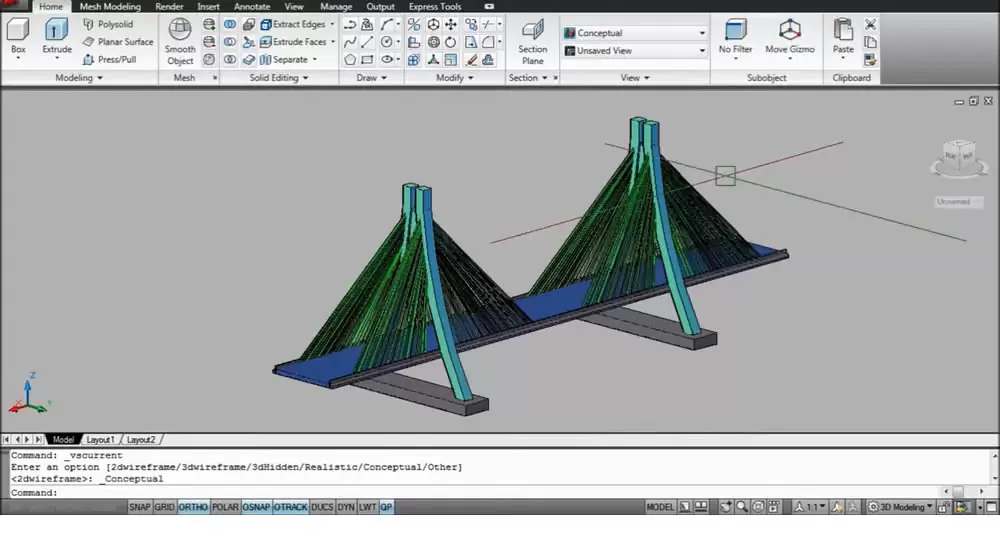
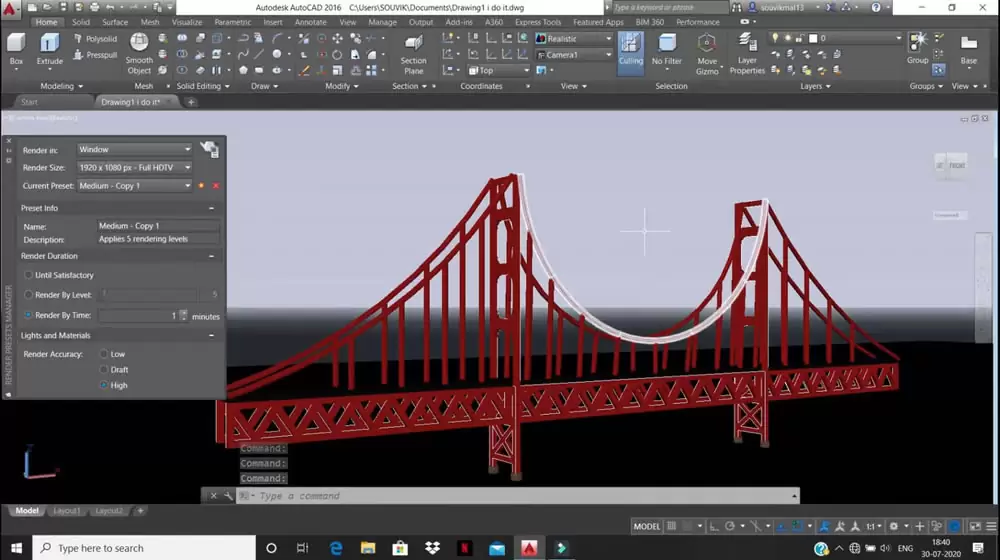
fusion 360 interface
Fusion 360 interface
AutoCAD interface
AutoCAD interface

Fusion 360 – requirements

  • Operating system: Windows 8.1 or 10 (64-bit); MacOS Mojave 10.14, Catalina 10.15, or Big Sur 11.0
  • Memory: At least 4 GB RAM
  • Storage: At least 3 GB of disk space

AutoCAD – requirements

  • Operating system: Windows 10 (64-bit); MacOS Mojave 10.14, Catalina 10.15, or Big Sur 11.0
  • Memory: At least 8 GB RAM (16 GB recommended for Windows)
  • Storage: At least 10 GB of disk space (4 GB for installation; 6 GB for data processing)

Both programs are very complete in the tools they offer; they simply serve different purposes.

AutoCAD costs more, but in return you also get a broader range of functionality. With a single subscription you get core AutoCAD and toolsets for Mechanical, Architecture, MEP, Map 3D, Plant 3D, and Raster Design, as well as mobile and web apps. It’s used especially for architecture and civil engineering work, by both professionals and people just starting to learn. Ultimately, AutoCAD is generally the preferred choice for professionals — especially in architecture, electrical engineering, and interior design — working on industry-level designs.

Fusion 360 is more affordable (and also has a limited free version for non-commercial users), yet it still offers comprehensive tools for 3D modeling, drafting, simulation, animation, CNC woodworking, and even 3D printing. Because of this, it’s widely used by hobbyists, 3D printing enthusiasts, independent design businesses, and people learning mechanical design.

Related Questions

AutoCAD was fundamentally developed for 2D technical drafting and architectural projects. Fusion 360, on the other hand, is oriented toward 3D mechanical part design, solid modeling, and manufacturing; that’s why the two serve different needs.

Since designs are stored in the cloud, team members can access and modify the same project simultaneously from different locations. This enables real-time collaboration without having to pass files back and forth.

Related Posts

Best Laptops Ranking The Best Laptops of 2022 how to extend laptop battery life power settings menu How to Extend Laptop Battery Life? How to Check RAM and Motherboard Compatibility How to Check RAM and Motherboard Compatibility Why Does a Laptop Run Noisy? Why Does a Laptop Run Noisy? Suggested Solutions laptop showing a SolidWorks screen and a solid model Catia vs SolidWorks Comparison motion capture technology Motion Capture Technology Tips for Speeding Up Windows Startup Tips for Speeding Up Windows Startup how to increase fps in games How to Increase FPS in Games
3D CAD Software Reviews
Share. Facebook Twitter WhatsApp Tumblr Email Telegram Copy Link

Leave A Reply Cancel Reply

The Life Story of Michael Jackson: The Legendary Journey of the King of Pop
The History of Weaving
  • Contact
  • Terms of Service
  • Privacy & Cookie Policy

Type above and press Enter to search. Press Esc to cancel.