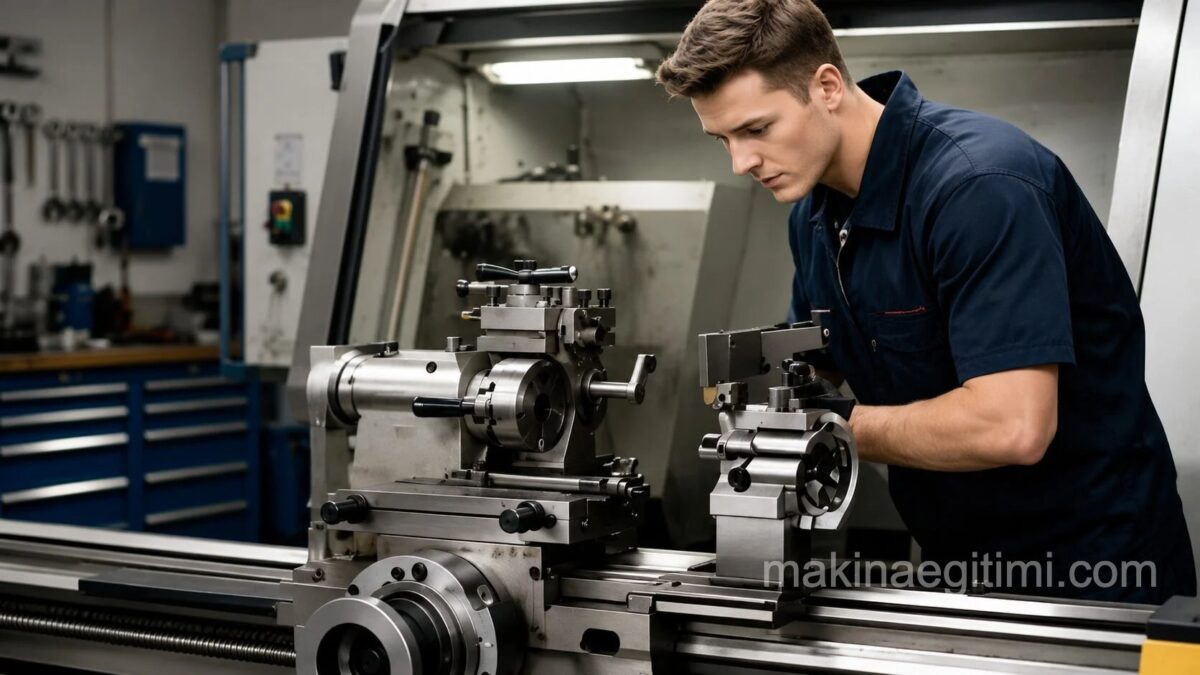
Tapping on a Lathe
We’ve dedicated this article to tapping on a lathe. In this article, where we’ll examine the details of cutting internal threads with a tap, we’ll cover what needs to be done when threading holes on a lathe, the rules for cutting threads on a lathe, and information about using a tap on a lathe.
How is tapping done on a lathe?
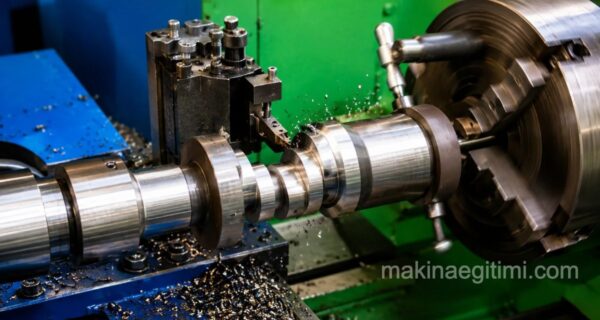
Tapping is the process of cutting a thread on the inner surface of a hole using a cutting tool called a tap. Small-diameter internal threads are usually cut by hand-turning a tap. To tap on a lathe, the workpiece must be firmly clamped in the chuck, or held in a steady rest.
A hole that has previously been drilled or bored out on the lathe must be cleaned of burrs before tapping.
For joining metal parts together, the tapped depth does not need to be great. A good rule of thumb is that this depth should not exceed one and a half times the thread diameter. This leaves an adequate safety margin so the thread does not strip. The shorter the length to be threaded, the easier the thread is to cut.
How is a tap used on a lathe?
This can be done in two ways: by hand or by machine tap. A hand tap is used for blind holes (holes that do not go all the way through). For parts that need a thread cut all the way through, a taper tap or machine tap is used. It is very difficult to turn a hand tap with automatic feed; the tap will most likely break under the strain of automatic feed.
Hand-tapping on a lathe is time-consuming. For this reason, it should only be used when strictly necessary. The tap should only be run into the hole to a depth appropriate to the strength of the thread. If possible, the hole to be tapped should be drilled slightly deeper than the length of the threaded section. This way, the taper tap completes most of the thread to size, making the tapping process easier.
If a suitable lubricant is used, the tap will not break easily. Mixtures of lard oil, sperm oil, graphite, and tallow are good lubricants for steel and iron.
Lard oil or soap compounds generally give good results when tapping cast iron material machined dry.
For the tap to start cutting, it must be pressed firmly enough toward the hole. Once the tap has started properly, it should not be pressed further. The tap follows the path cut by the initial cutting edges. If the tap has started well, it will continue to cut properly as desired. Use plenty of lubricant.
Steps for Tapping on a Lathe
- Clamp the part in the chuck and true it up to make sure it is centered.
- If a hole is to be drilled, use a center drill to make a center mark.
- Select and mount a drill of the appropriate diameter, and drill the hole.
- Select a tap set of the desired size, consisting of three taps.

We can tell which tap is the No. 1 tap in a tap set by looking at the taps’ cutting edges. Whichever tap has the most tapered cutting edge is the No. 1 tap.
5- Place the square-sectioned end of the No. 1 tap (the starting tap) between the jaws of the tap wrench.
6- Tighten the jaws of the tap wrench.
7- Insert the tip of the tap into the hole. Bring the tip of the tailstock center up to the center hole in the square-sectioned end of the tap. Advance the tailstock center enough to press the tap firmly so it enters the hole.
8- Lock the tailstock body onto the lathe bed.
9- Lubricate the tap and the hole.

10- Turn the handwheel to advance the tailstock center until it presses the tap into the hole. Be careful not to press harder than necessary.

11. Turn the tap wrench as far as possible around the tailstock center without breaking contact between the center tip and the part.
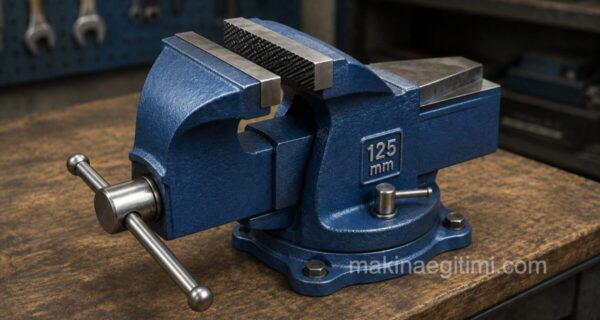
Note: It is not necessary to complete the entire tapping process on the lathe. If the tap has caught well and the threads have come out well, the finishing taps (No. 2 and No. 3) will follow the grooves cut by the starting tap. For this reason, the tapping process can be finished in a bench vise, where this task can be done more easily.
The figure below shows tapping on a lathe with a long part held between two centers and supported by a steady rest.

Tapping long parts supported in a steady rest on a lathe (above)
In this article, we covered how to perform the process known as tapping on a lathe, or cutting threads with a tap on a lathe. We covered the steps for tapping on a lathe, and the dos and don’ts while tapping. Until we meet again in a new article.
Synchronized Motion
Tapping on a lathe requires synchronizing the rotation of the spindle with the advance of the tool.
Tap Holder
The tap is attached to the tailstock spindle with a special tap holder and cuts the internal thread with axial motion.
Preventing Breakage Risk
Using a low speed and plenty of lubrication while tapping reduces the risk of the tap breaking.
Related Questions
Burrs remaining at the mouth of the hole can prevent the tap from entering straight and centered. Since this can cause the threads to come out crooked or the tap to break, cleaning is done as the first step.
This depth is enough for the threads to provide sufficient grip for a solid connection. Cutting deeper wastes unnecessary time, while going below this margin increases the risk of the thread stripping.
Related Posts