As is known, there are 3 types of hardness testing methods used to test the hardness of materials. In this article, we’ll cover one of them, the Brinell hardness testing method.
Which materials is the Brinell hardness test applied to?
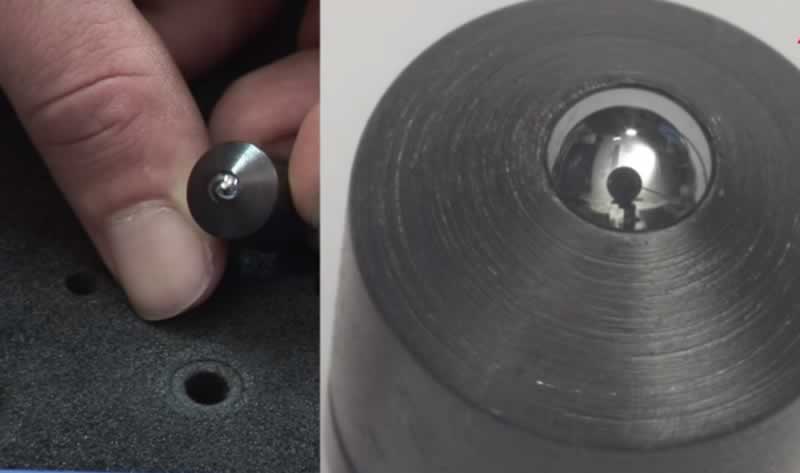
Brinell Hardness Testing Method (DIN 50351). The Brinell hardness testing method is applied to iron, steel, and non-metallic materials with a tensile strength of less than 150 kg/mm2. In this hardness testing method, spherical steel balls of various diameters are used.

The ball diameter and the load to be applied are selected according to the type and thickness of the material whose hardness is to be measured. For thick parts, the applied load ranges from 187.5 to 3000 kg.
When we divide the load (P) applied in Brinell hardness testing by the surface area (A) of the indentation left by the spherical steel ball, we get the hardness (HB), found with the formula below.
HB = P / A
When the indentation area is written in terms of ball diameter (D) and indentation diameter (d), the ball indentation area is

When we substitute the area formula into the first formula,

HB = Brinell hardness number, kg/mm²
P = Applied load, kg
A = Surface area of the indentation left by the ball, (mm²)
D = Diameter of the spherical steel ball, (mm)
d = Diameter of the indentation the ball leaves on the part, mm


Relationship between part thickness, ball diameter, and applied load in Brinell hardness testing (figure above)
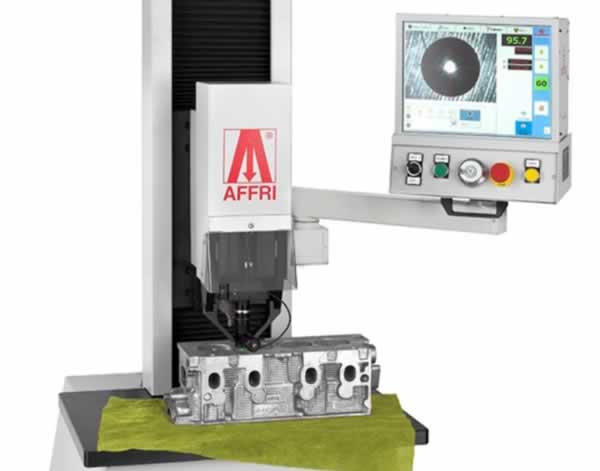
Brinell hardness test devices today are computerized and can process data taken from micro-level images to produce flawless results.
In this article, in the materials science category, we covered the Brinell hardness testing method, one of the hardness testing methods. We covered topics such as what the Brinell hardness test is and how it’s done, and how the Brinell hardness value is calculated. See you in new articles.
Spherical Indenter
In the Brinell method, a hardened steel or carbide ball, typically 10 mm in diameter, is pressed into the material’s surface.
Indentation Diameter Measurement
The Brinell hardness value is calculated by measuring the diameter of the indentation left by the ball and using the standard formula.
Suitability for Rough Surfaces
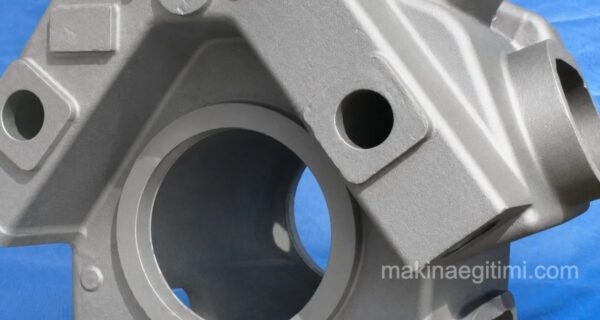
Since the Brinell method leaves a large indentation, it’s suitable for measurement on rough, uneven surfaces such as castings.
Related Questions
If a small load is applied to a very hard material, the ball won’t sink in enough and measurement precision drops. Selecting a load appropriate to the material’s type and thickness ensures the ball leaves a measurable, accurate indentation.
Under the same force, the ball sinks less into a hard material and forms a small indentation area, while in a soft material the indentation area is larger. Dividing the applied force by this indentation area numerically expresses the material’s resistance to deformation.
Related Posts