

Rear-end collisions are a leading cause of accidents worldwide. This means a vehicle moving on the road strikes the vehicle in front of it for some reason — this could be driver distraction or driver drowsiness. To reduce rear-end collisions, Mercedes-Benz was the first to develop a Collision Prevention Assist system. This is a new driver assistance system. It helps avoid mishaps of this kind.
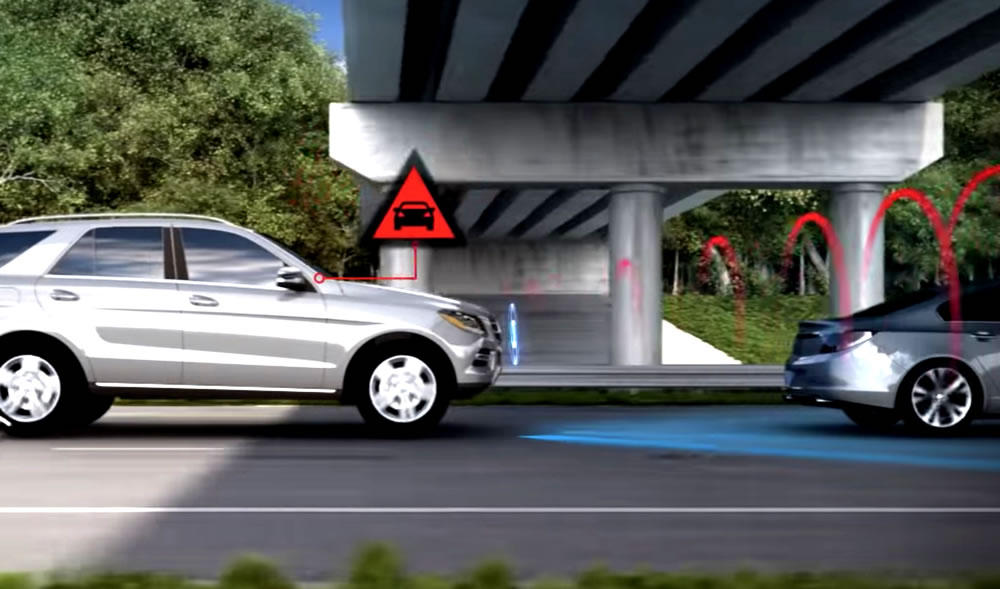
The most important part of this system is the radar-based sensor. It continuously monitors the speed of the vehicle ahead. It tracks whether the speed of the vehicle ahead is decreasing rapidly enough to create a collision threat. If so, the system warns the driver. It displays a warning light on the vehicle’s instrument panel. If the driver doesn’t heed the warning shown on the dashboard, an alarm chime sounds automatically. This system also operates while changing lanes during driving.
Most modern Collision Prevention Assist systems have the ability to optimize brake pressure. It does this to successfully counter the dangerous situation. In such a case, even if the driver brakes very lightly, the system ensures the required braking force is applied. If the system predicts that a collision is unavoidable, it sends a warning signal to passive safety systems such as the seatbelts.
The Collision Prevention Assist in Mercedes-Benz vehicles operates from a vehicle speed of 7 km/h up to 250 km/h.
Video About Collision Prevention Assist
Radar and Camera Combination
Collision prevention systems detect the vehicle ahead or obstacles using a combination of radar and camera sensors.
Automatic Emergency Braking
If the driver doesn’t respond, the system can automatically apply emergency braking to prevent a collision or reduce its severity.
Early Warning Stage
Before applying the brakes, the system generally alerts the driver to the danger in advance with audible and visual warnings.
Related Questions
The system uses radar to measure how sudden and how large the drop in the lead vehicle’s speed is. A slow, normal deceleration doesn’t trigger a warning, while an approach fast enough to create a collision risk does.
If the visual warning on the dashboard goes unnoticed, the system sounds an audible alarm. Some modern systems will also partially intervene on the brakes at this point, trying to reduce the impact of a collision.
Related Posts
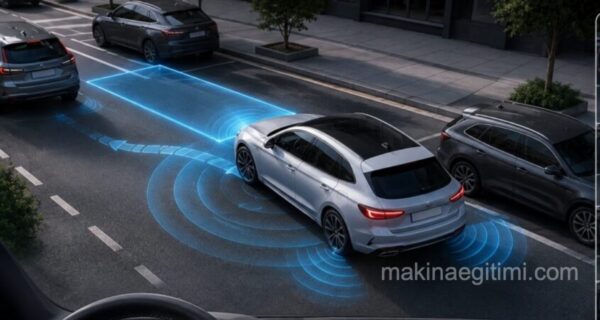 What Is Active Park Assist? How Does It Work?
 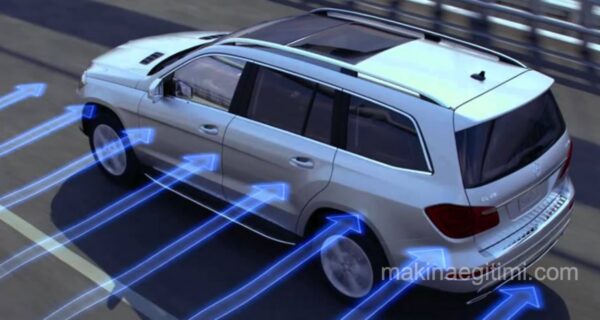 What Is Crosswind Assist in Vehicles. How Does It Work
 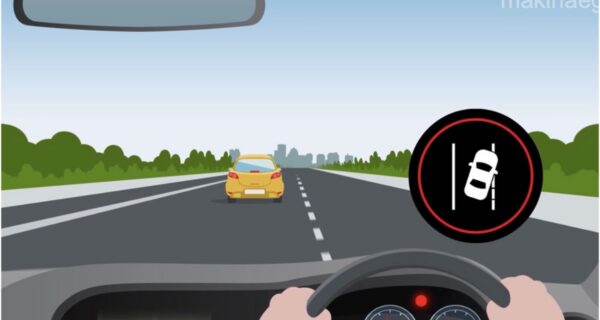 Lane Departure Warning System in Vehicles
  What Is Adaptive Cruise Control (Speed Control System). How Does It Work?
  Electric Power Assisted Steering (EPS)
  What Is Reverse Assist, How Does It Work?
  How Does the Start-Stop System Work?
  MBUX Hyperscreen: A Dashboard Beyond Imagination