
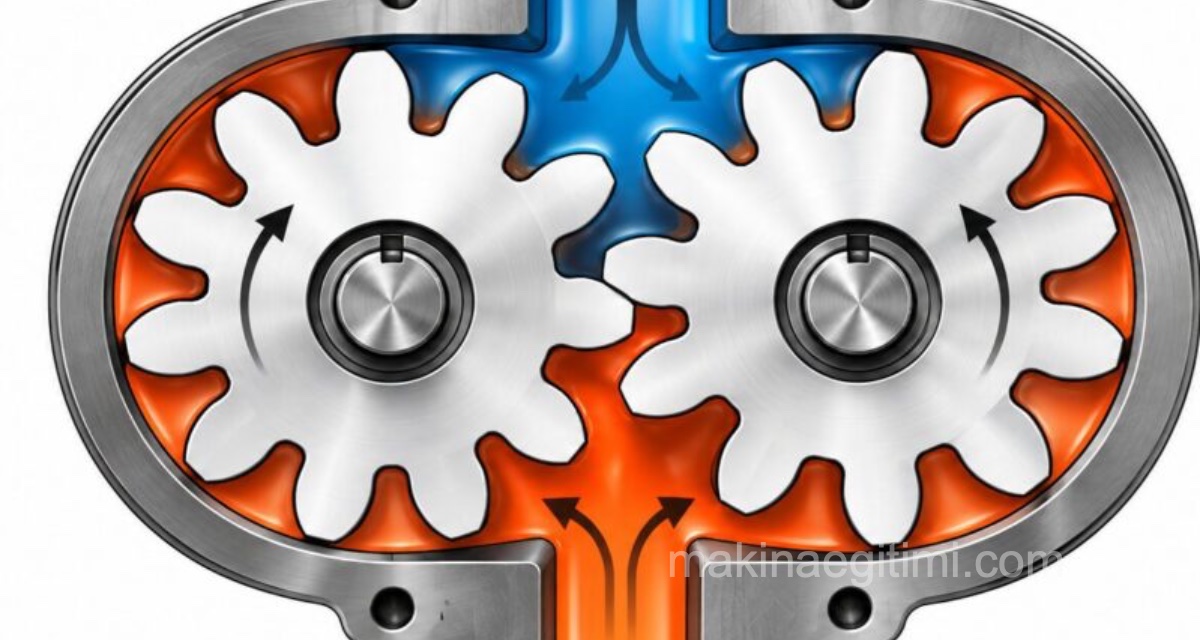
The topic of this article is hydraulic motors, the operating system of hydraulic motors, their strengths and weaknesses, applications, and types of hydraulic motors.
Let’s Get to Know Hydraulic Motors
A hydraulic motor is a circuit component that produces rotary motion using hydraulic energy. It makes use of the hydraulic energy produced by a hydraulic pump. Its operating principle is the reverse of that of a pump. Pumps convert mechanical energy into hydraulic energy, while motors convert hydraulic energy into mechanical energy.
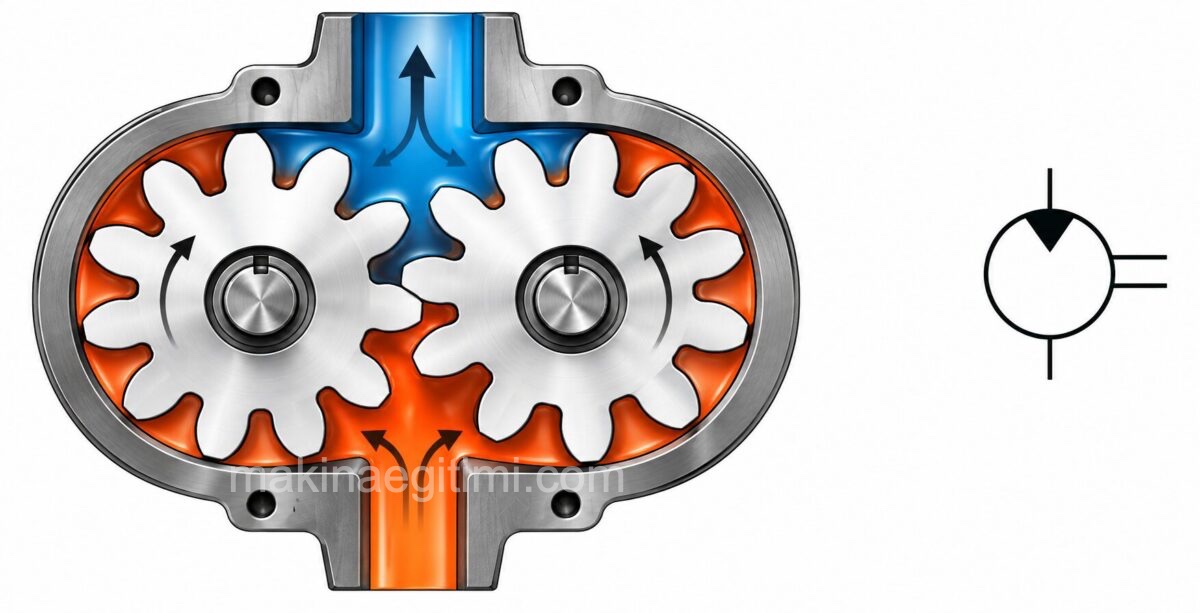
Pressure-to-Torque Conversion
Hydraulic motors convert the pressure of hydraulic oil into mechanical rotational motion and torque.
High Torque Density
Despite their small size, hydraulic motors can provide much higher torque density than electric motors.
Variable Speed Control
The speed of hydraulic motors can be controlled steplessly by varying the fluid flow rate.
The Operating System of Hydraulic Motors
In terms of their operating principle, hydraulic motors work in the reverse of hydraulic pumps. Unlike hydraulic pumps, fluid enters hydraulic motors under pressure. The pressurized fluid converts hydraulic energy into rotary motion through the motor’s internal mechanism.
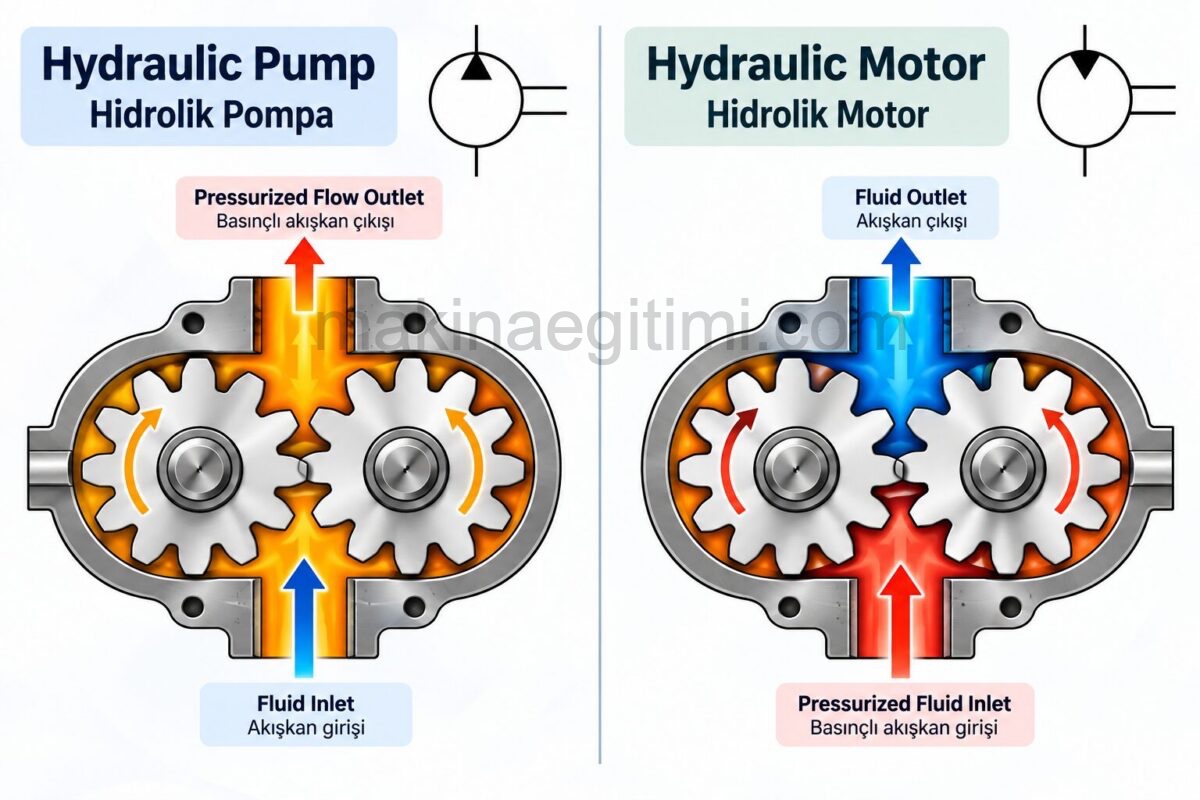
In hydraulic pumps, the gears are turned by an electric motor, converting mechanical energy into hydraulic energy, whereas in motors, the pressure produced by the pump is converted into mechanical energy.
The fluid entering a hydraulic motor at high pressure passes between the teeth of the gear set, turning the gear pair and converting hydraulic energy into rotary motion. Since one of the gears is connected to the motor shaft, any component mounted on it is made to rotate.
The rotational speed of hydraulic motors depends on the amount of fluid entering the motor. The greater the amount of fluid entering the hydraulic motor, the higher the motor’s speed. Directional control valves are used to reverse the direction of rotation of hydraulic motors.
Applications of Hydraulic Motors
Given the strengths mentioned above, the applications of hydraulic motors are spread across a very wide range. They have broad applications in areas such as machine tools, vehicles, the shipbuilding industry, the iron and steel industry, rolling mills and the foundry industry, and heavy equipment (such as graders, excavators, etc.).
As one of the applications of hydraulic motors, a machine used for soft-ground drilling operations (above)
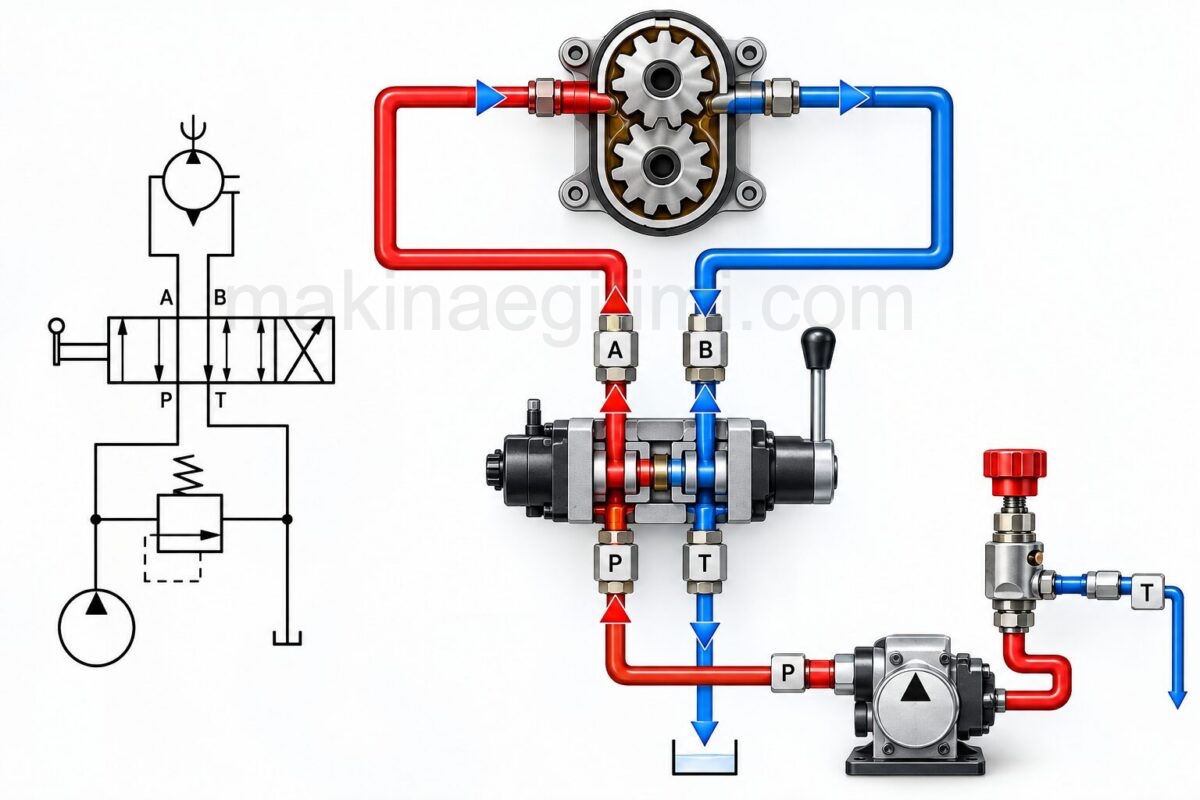
An example of using a hydraulic motor with a 4/3 directional control valve in a hydraulic circuit, along with the circuit diagram. (above)
Related Questions
Since hydraulic fluids are incompressible, the applied pressure converts into mechanical power almost without loss. This efficient energy transfer allows a small-volume motor to achieve much higher torque density than electric motors.
The motor’s rotational speed is directly related to the flow rate of the fluid going to it. Increasing or decreasing the flow rate steplessly with the help of a valve allows the motor’s speed to change smoothly along with it.
Related Posts
 How Hydraulic Brakes Work
 Hydraulic Applications – Pressure Reducing Valve
 Hydraulic Oils and Their Properties
 Controlling Multiple Cylinders with Directional Control Valves
 Maintenance and Repair Recommendations for Hydraulic Circuits
 Hydraulic Filtration Systems
 Cushioning in Pneumatic Cylinders
 Pneumatic Directional Control Valves