Close Menu
  • MAKİNELER ve İMALAT
    • Tools & Equipment
    • Computer-Aided Drawing
    • CAD/CAM Education
    • CNC Machine Programming
    • Casting Technologies
    • Electrical & Electronics Technologies
    • Hydraulics & Pneumatics
    • Manufacturing Processes
    • Manufacturing Technologies
    • Occupational Safety
    • Mold & Die Design
    • Solid Modeling
    • Welding Technology
    • Machine Elements
    • Mechanical Trade Drawing
    • Materials Science
    • Automotive & Vehicle Technologies
    • Robotics Technologies
    • Health Technologies
    • Defense & Aerospace Technologies
    • Descriptive Geometry
    • Technical Drawing
    • Software & Hardware Technologies
    • Innovative Manufacturing Methods
  • TEKNOLOJİ ve YAŞAM
    • OTOMOBİLLER ve TAŞIT
      • Vehicle & Engine Knowledge
      • Safe Driving
      • Sürüş Destek Sistemleri
    • Genel Kültür
      • Movies & TV Shows
      • Görsel ve Grafik Sanat
      • Books & Literature
      • Music
      • Sports
      • History
      • History of Technology
    • GÜNDELİK YAŞAM TEKNOLOJİLERİ
    • Hobbies & Entertainment
    • Internet Technologies
    • Health
    • Mobile Technologies
Makine Eğitimi
  • Machines & Manufacturing
    Machine Elements
    Hydraulics & Pneumatics
    Technical Drawing
    Computer-Aided Design & Manufacturing
    Basic Manufacturing Processes
    Manufacturing Processes
    Industry Technologies
    Other Technical Courses
    Motion & Power Transmission
    Simple Machines
    Chains & Sprockets
    Shafts & Journals
    Gears
    Cams
    Couplings
    Belts & Pulleys
    Springs
    Bearings
    Keys
    Fastening Joining
    Retaining Rings
    Screws, Bolts & Nuts
    Cotter Pins
    Flanges
    Welding
    Rivets
    Pins & Bolts
    Washers
    Calculators
    Gear Ratio Calculator
    Spring Constant Calculator
    Belt Pulley Ratio Calculator
    Other Machine Elements
    Slides & Linear Guides
    Brakes
    Flywheels
    Clamps
    Shock Absorbers
    Gaskets & O-Rings
    Seals & Sealing Elements
    Hydraulics
    Introduction to Hydraulics & Principles
    Hydraulic Systems & Applications
    Accumulators
    Filters
    Motors
    Pumps
    Valves
    Pneumatics
    Introduction to Pneumatics & Principles
    Pneumatic Systems & Applications
    Pneumatic Circuit Components
    Valves
    Cylinders
    Silencers
    Motors
    Compressors
    Dryers
    Conditioning Units
    Common Topics & Maintenance
    Hydraulic & Pneumatic Maintenance
    Study Notes, Exams & Tests
    Technical Drawing
    Introduction to Technical Drawing
    Geometric Drawings
    Perspective & Projection
    Orthographic Views
    Dimensioning
    Sectioning
    Assembly & Detail Drawings
    Tolerances
    Surface Finish Symbols
    Mechanical Engineering Drawing
    Screws, Bolts & Nuts
    Pulley Drawings
    Gear Drawings
    Shafts & Journals
    Bearing Drawings
    Pins & Bolts
    Spring Drawings
    Welds in Technical Drawing
    Washers
    Cotter Pins
    Technical Drawing Exercises
    Mechanical Drawing Exercises
    Gear Exercises
    View Extraction Exercises
    Pulley Exercises
    Pin & Bolt Exercises
    Threaded Fastening Exercises
    Descriptive Geometry
    Computer-Aided Drawing
    AutoCAD Drawing Lessons
    Solid Modeling & Animation
    Solid Model Drawing Files
    Solid Model Assembly Examples
    Solid Model Drawing Lessons
    3D CAD Software Reviews
    Solid Modeling Exercises
    CNC Programming
    CAM
    Measurement & Inspection
    Dial Indicators
    Calipers
    Gauges
    Micrometers
    Materials Science
    Steels
    Cast Iron
    Aluminum
    Plastics
    Material Testing & Hardness Measurement
    Occupational Safety
    Workshop Safety
    Safety When Working With Electricity
    Machine Safety Rules
    Hand Operations
    Filing
    Marking
    Cutting Operations
    Reaming
    Tapping
    Threading With a Die
    Drill Bit Sharpening
    Working With Machines
    Basic Turning Operations
    Basic Milling Operations
    Shaper Machine
    Machining
    Turning
    Milling
    Grinding
    Innovative Manufacturing Methods
    EDM (Electrical Discharge Machining)
    Laser Machining
    Waterjet Machining
    3D Printing
    3D Scanners
    Welding
    Rolling
    Casting
    Mold & Die Design
    Mechanical & Hydraulic Presses
    Blanking & Piercing Dies
    Bending Dies
    Drawing Dies
    Plastic Injection Molds
    Extrusion Dies
    Compound Dies
    Progressive Dies
    Blow Molds
    Spinning Dies
    Spray Molds
    Manufacturing of Machine Parts
    Automotive & Vehicle Technologies
    Motor Vehicle Manufacturing
    Raw Material Production
    History of Technology
    Health & Medical Technologies
    Defense & Aerospace
    Robotics Technologies
    Software & Hardware Technologies
    Mechanics - Strength of Materials
    Physics Topics
  • Technology & Life
    Hobbies & Entertainment
    Sports
    Music
    Vehicle & Engine Knowledge
    Vehicle Maintenance & Repair
    Safe Driving
    Driver Assistance Systems
    History
    Movies & TV Shows
    Books & Literature
    Computers & Internet
    Computer Tips
    Software Reviews
    Hardware & Peripherals
    Practical & Safe Internet Use
    Visual & Graphic Art
    Mobile Technologies
    Travel
    Science
    Health
    First Aid Knowledge
    Everyday Technologies
Makine Eğitimi
Home»Driver Assistance Systems»MBUX Hyperscreen: A Dashboard Beyond Imagination
30 August 2026

MBUX Hyperscreen: A Dashboard Beyond Imagination

Mercedes-Benz MBUX Hyperscreen technology

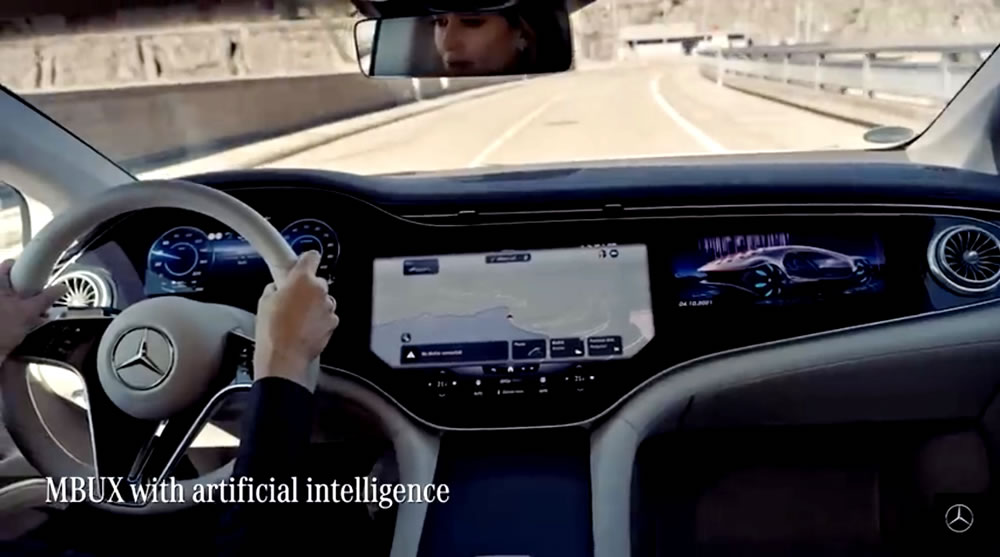
Mercedes Benz‘s next-generation vehicle dashboard and display system, the MBUX Hyperscreen, is an AI-powered, extremely user-friendly control panel design.

  • MBUX Hyperscreen Design
  • Advantages of MBUX Hyperscreen
  • Watch MBUX Hyperscreen in Action
  • Frequently Asked Questions

Hyperscreen also combines outstanding user-friendliness with a distinctive electrical aesthetic. The display also uses artificial intelligence so the entire operating system can adapt to the user. MBUX Hyperscreen is the hub for attention, control, entertainment, and personalized recommendations.
mercedes benz mbux hyperscreen technology
The MBUX Hyperscreen is AI-powered.

In addition, Hyperscreen’s real power lies in the system’s network architecture. This network is built on smart, adaptive software. In other words, it’s nothing less than the car’s brain. The display is connected to, and communicates with, every component in the vehicle.

MBUX Hyperscreen Design

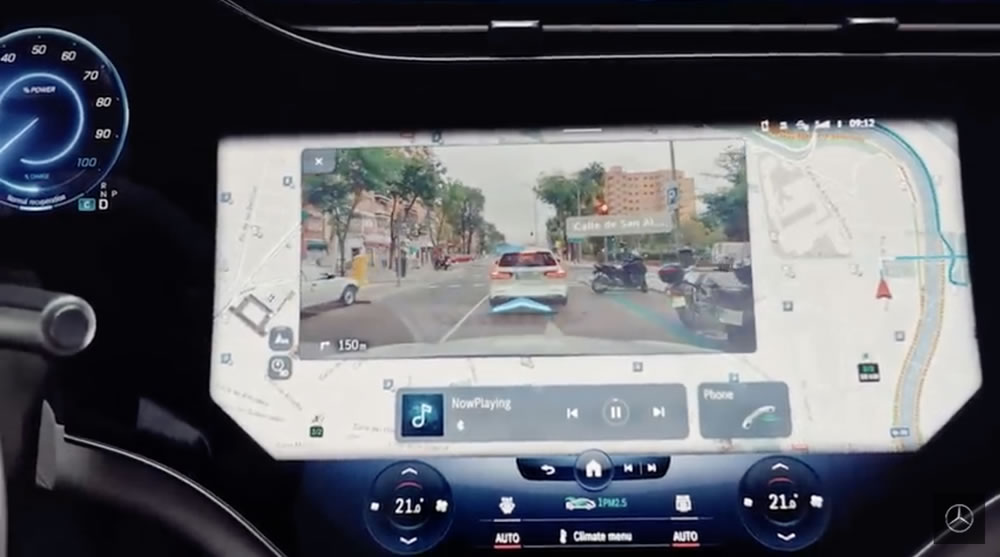
Hyperscreen is made up of three displays. All three sit beneath a single large, curved 56-inch pane of glass. So they all appear as one single entity. The three screens blend together seamlessly to create the look of one large display.

The ambient lighting integration on the Hyperscreen also creates a floating appearance. The clean, minimalist look makes it easy for users to access functions. Adaptive brightness ensures clear visibility in any lighting condition.
mbux hyperscreen display

What’s more, uncontrolled image pixels stay off to produce a deep black screen, while active OLED pixels glow brightly. An arrangement like this creates greater aesthetic value.

Display Width


MBUX Hyperscreen offers a seamless display roughly 141 cm (56 inches) wide beneath a single pane of glass.

Processing Power


The system runs on a powerful eight-core processor for smooth graphics and fast response times.

AI Personalization


MBUX learns the user’s habits and can automatically surface frequently used functions.

Advantages of MBUX Hyperscreen

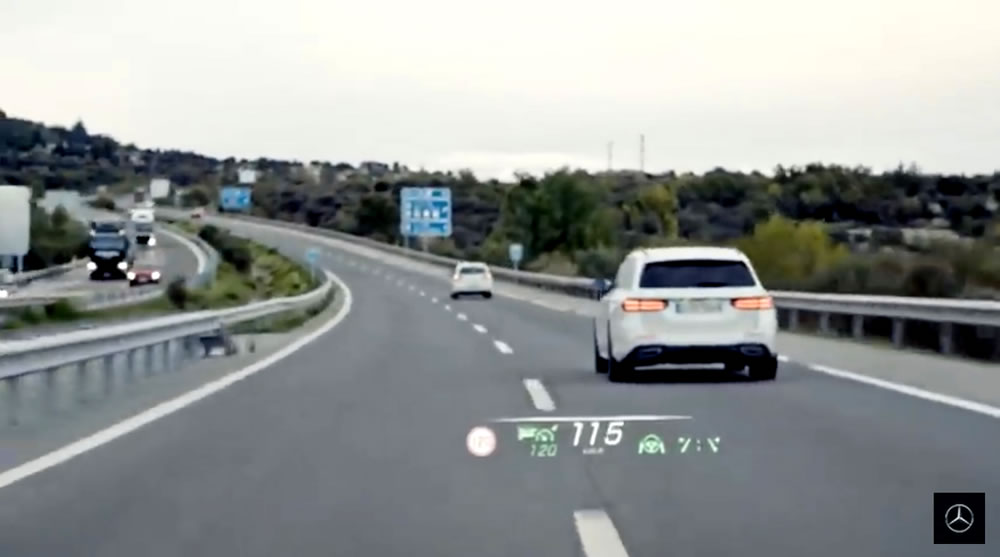
First, MBUX Hyperscreen prevents distraction by presenting the most critical information front and center. The AI-driven MBUX can suggest actions based on previous users, the time of day, and location. So, for example, if you call someone every day on your way home, a box will automatically appear on the screen suggesting you call them.
mbux display
With MBUX Hyperscreen, information such as vehicle speed and traffic signs appears on the windshield

In the end, MBUX Hyperscreen delivers an entirely new way of connecting and interacting. The system also always meets the passengers’ needs. As a result, whatever function you need in any given situation is always automatically made available to you.

Watch MBUX Hyperscreen in Action

https://youtu.be/tcJvdnR_59k

Frequently Asked Questions

The three displays sit beneath a single, curved 56-inch pane of glass. This shared glass surface creates the feel of one integrated display with no visible border between them.

The system learns the driver’s habits and can adapt the interface and suggestions to that individual. This gives faster access to frequently used functions and a personalized experience.

Related Posts

vehicle active road noise cancellation system Vehicle Active Road Noise Cancellation System how the start-stop system works How Does the Start-Stop System Work? car digital side mirror Digital Side Mirrors and Their Advantages Bosch Home Zone Park Assist system diagram What Is Home Zone Park Assist, How Does It Work? dynamic radar cruise control Toyota Safety Sense Active Safety System what is EBD in vehicles What Is EBD? What Does It Do? How Does It Work? electric power steering operating system Electric Power Assisted Steering (EPS) smart key or keyless entry in vehicles Smart Key or Keyless Entry in Vehicles
Share. Facebook Twitter WhatsApp Tumblr Email Telegram Copy Link

Leave A Reply Cancel Reply

Main Components and Advantages of Electric Vehicles
How Is Engine Oil and Oil Filter Change Done?
  • Contact
  • Terms of Service
  • Privacy & Cookie Policy

Type above and press Enter to search. Press Esc to cancel.