
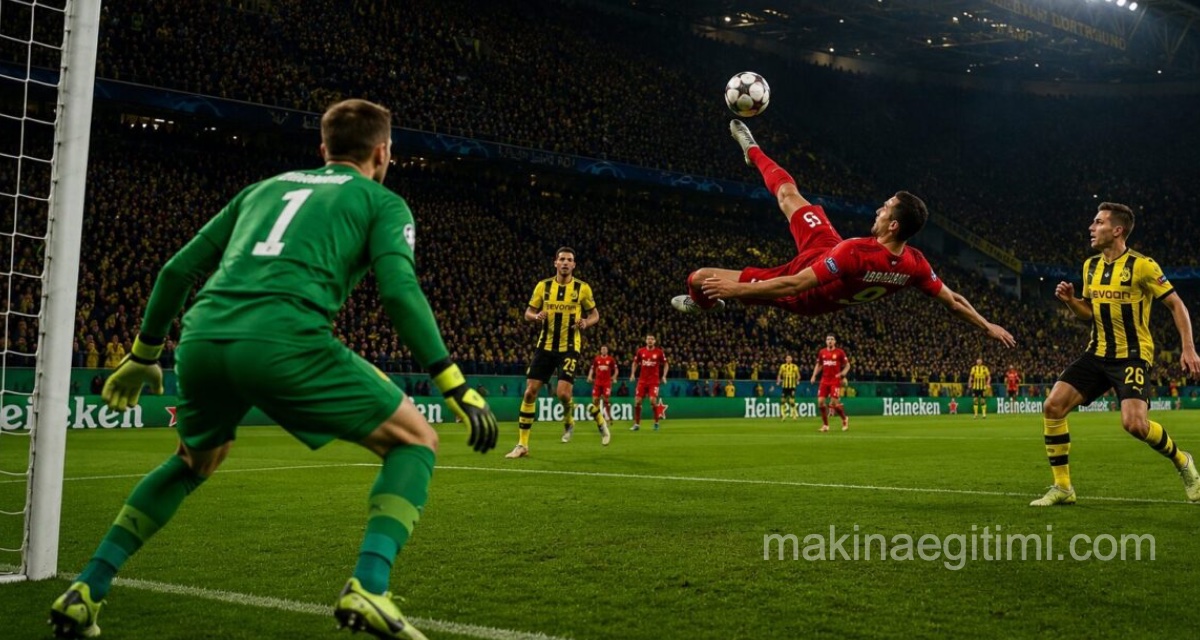
When a footballer scores three goals in a single match, the stands erupt with cries of “hat-trick.” But did you know this term was actually born in a completely different sport, from an actual hat? The story stretches back to the cricket grounds of 19th-century England, and the origin of this term — used today in dozens of sports from football to hockey, rugby to basketball — is far more interesting than you’d think.
It All Started on a Cricket Ground
In September 1858, at the Hyde Park cricket ground in Sheffield, England, the All England Eleven team faced a combined 22-man team from Hallam and Staveley. One of the key figures in the match was English bowler H.H. Stephenson. Stephenson dismissed three opposing batsmen in a row with three consecutive balls; in cricket terminology this feat is called “taking three wickets,” and it was considered an extremely rare performance for the time.
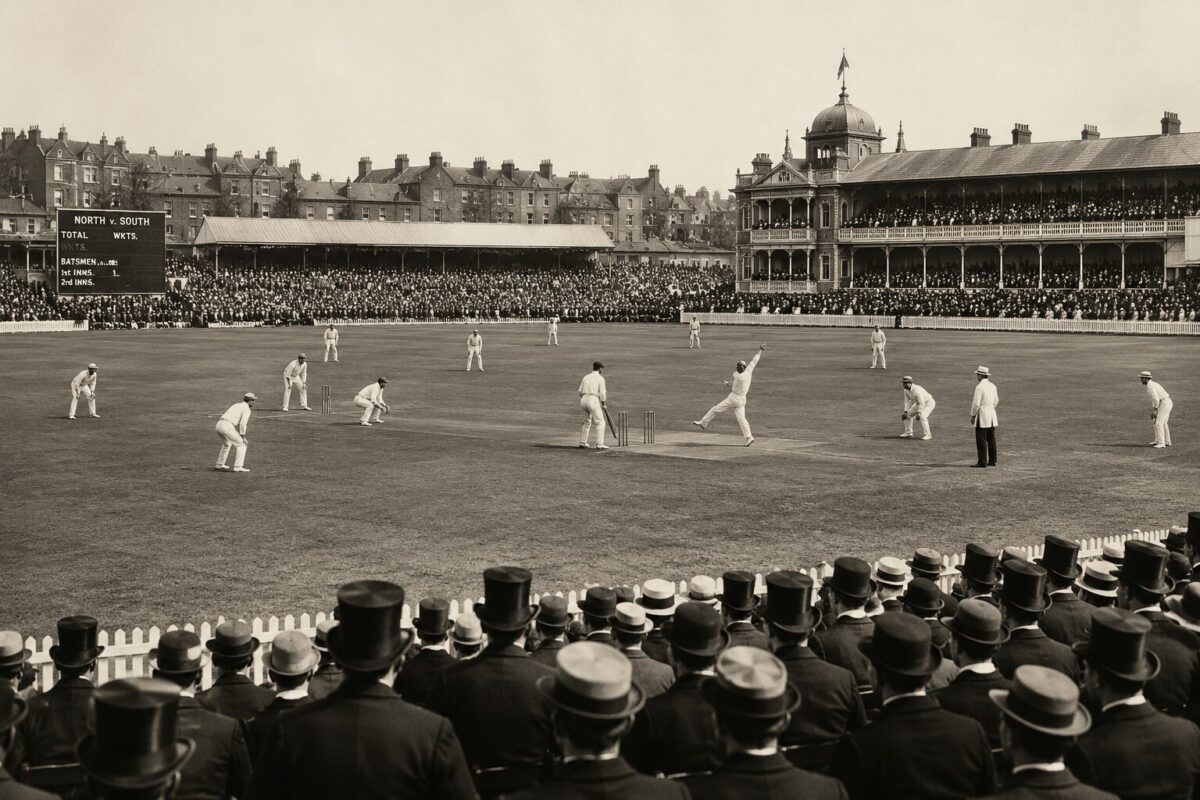
Spectators wanting to celebrate this extraordinary achievement pooled their money and presented Stephenson with a new hat. In Victorian England, it was already a tradition for cricket clubs to reward special performances with such gestures; a good shot was sometimes rewarded with a cricket ball, a good performance sometimes with a bat. Stephenson’s achievement, however, launched a “hat” tradition all its own.
A Name Born from a Play on Words
An interesting detail: the term “hat-trick” itself came about as a play on another concept that already existed at the time.

In the 1840s and 1850s, the expression “hat trick” was used to describe magicians’ rabbit-from-a-hat tricks. Someone dubbed Stephenson’s “magical” three-in-a-row feat a “hat-trick,” referring both to this magic-trick pun and to the actual hat he won. The term’s first known appearance in print dates to 1865, in England’s Chelmsford Chronicle newspaper.
From Cricket to Other Sports: A Term’s Journey
Toward the end of the 1800s, cricket terminology spread around the world through British colonial influence. Over time, the term “hat-trick” moved beyond cricket and began to be used in sports such as football, ice hockey, and rugby to mean “succeeding three times in a single match.”

In ice hockey, this tradition is preserved quite literally: when a player scores three goals in a match, fans genuinely throw the hats off their heads onto the ice. This visual spectacle is regarded today as one of the most exciting moments in hockey games.
Hat-trick in Football: What Is a “Perfect Hat-trick”?
In football, a hat-trick means a player scoring three goals in a single match. However, football culture also has the concept of a “perfect hat-trick”: a player scoring all three of their goals in different ways — one goal with the right foot, one with the left foot, and one with a header. This is considered a far rarer achievement than an ordinary hat-trick, requiring greater technical versatility.
One of the most legendary hat-tricks in World Cup history belongs to English forward Geoff Hurst, scored in the 1966 World Cup final.
Hurst became the first player to score a hat-trick in a World Cup final with the three goals he scored as England beat West Germany 4-2 in the final; this record went unmatched by anyone for a full 56 years.
 Geoff Hurst Hat-Trick v West Germany – 1966 World Cup Final
However, at the 2022 World Cup final, French star Kylian Mbappé became the second name to join this club with his own three-goal performance; in an interesting coincidence, this final also went to penalties, and France lost.
The 2026 World Cup: A Feast of Hat-tricks
The 2026 World Cup, hosted jointly by Canada, Mexico, and the USA and played for the first time in a 48-team format, became one of the most hat-trick-rich tournaments in history.
In one of the tournament’s opening matches, Lionel Messi recorded his first-ever World Cup hat-trick with three goals against Algeria; with this performance he became, at 38 years and 357 days old, the oldest player ever to score a hat-trick in tournament history, and he also equaled Miroslav Klose’s long-standing World Cup goal record of 16 (a record he later surpassed alongside Mbappé).
Following Messi, Canadian Jonathan David, French Ousmane Dembélé, and English Bukayo Saka (in a wild 6-4 third-place match against France) each also scored a hat-trick.
With a total of four hat-tricks recorded in the tournament, the 2026 World Cup, together with 1938, 1982, and 1986, became the second-richest World Cup in history in this regard, behind only the 1954 tournament’s eight hat-tricks.
How Does Cricket’s Own Hat-trick Work?
In fact, even though cricket is the sport where the term hat-trick was born, it still preserves the word’s strictest and most original meaning: a bowler must dismiss three different batsmen with three consecutive balls. Unlike in football, three goals scored in any order over the course of a match aren’t enough; in cricket, the success must be uninterrupted and consecutive. This makes the cricket hat-trick a far rarer and more difficult achievement than its versions in other sports.
Frequently Asked Questions
The term was born in 1858 when English cricketer H.H. Stephenson dismissed three opponents in a row, and spectators presented him with a hat as a gift.
No, the term actually originated in cricket and over time spread to many other sports, including football, ice hockey, and rugby.
A “perfect hat-trick” refers to a footballer scoring all three of their goals using different methods (right foot, left foot, and header); it’s considered a rarer achievement than an ordinary hat-trick.
To date, only two players have scored a hat-trick in a World Cup final: England’s Geoff Hurst in 1966 and France’s Kylian Mbappé in 2022.
This tradition arose as a nod to the term hat-trick’s original meaning of a “gift of a hat” in cricket; when a player scores three goals, fans throw the hats off their heads onto the ice to celebrate.
Related Posts
 Why Is Kenya So Successful at Long-Distance Running?
 The ‘Mosts’ of Olympic History
 The Jaw-Dropping Dribbles That Send Football Crowds Wild
 The Miracle of Istanbul: Football History’s Most Incredible Comeback
 Michael Jordan: The Story of Basketball’s Greatest Name
 What Is a Panenka Penalty? The Best Panenka Penalties
 The Story of Muhammad Ali: From a Stolen Bicycle to Sportsman of the Century
 How Do Athletes Eat? Nutrition Disciplines Across Different Sports