
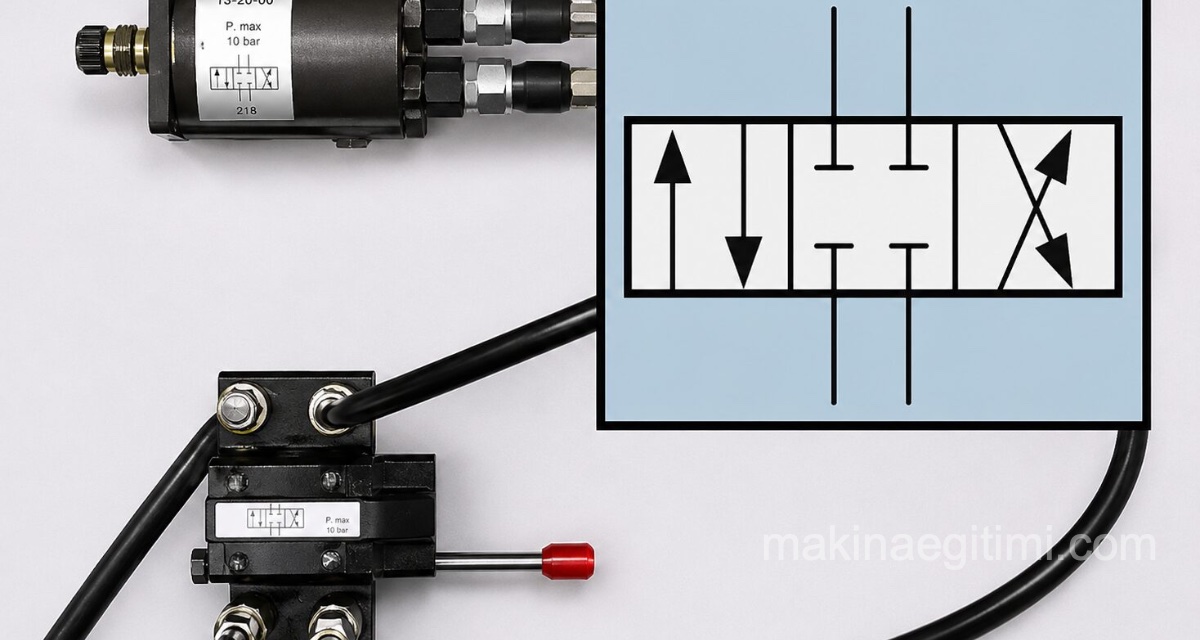
Hydraulic systems are power transmission systems based on the principle of transmitting fluids under pressure, and are widely used in industry, automotive, construction equipment, and many engineering applications. Thanks to their technical properties, they offer high efficiency, safety, and precise control. Below, we cover the main advantages of hydraulic systems in detail.
Advantages of Hydraulic Systems Over Mechanical Systems
Hydraulic Systems Operate Quietly
One of the most important advantages of hydraulic systems is their quiet operating characteristics. Since power transmission occurs through fluid, mechanical contact such as gears, belts, or chains is kept to a minimum. This results in: a low noise level, reduced vibration-related wear, and increased operator comfort. Quiet operation is a major advantage, especially in machines operating in enclosed spaces and precision manufacturing facilities.
Since Hydraulic Fluids Are Considered Incompressible, Shock-Free and Vibration-Free Motion Is Achieved
Hydraulic oils are practically considered incompressible. Thanks to this property, movements in the system occur: without causing sudden shocks, in a smooth and controlled manner, and without vibration. This property is especially important in presses, robotic systems, and molding machines that require precise positioning.
They Have High Operating Pressures, Which Allows Large Forces to Be Achieved
Hydraulic systems can operate at very high pressures (100–700 bar and above). This means: very large forces can be produced with small-sized cylinders. High performance is achieved with compact designs.

This property makes hydraulic systems indispensable for cranes, presses, excavators, and heavy industrial machinery.
Precise Speed Adjustment Is Possible
In hydraulic systems, extremely precise speed adjustments can be made by controlling the fluid flow rate. This adjustment is carried out with the help of flow control valves, or proportional or servo valves. This way, the system’s operating speed can be adjusted with millimeter-level precision, according to the application’s requirements.
Speed Can Be Adjusted While Motion Is in Progress
Another important advantage of hydraulic systems is being able to change the speed setting while operating. Without stopping the system: deceleration, acceleration, and gradual transitions can be achieved. This property offers a major advantage in terms of production continuity, energy savings, and operational flexibility.
Since Hydraulic Oil Is Used as the Fluid, Circuit Components Are Also Lubricated at the Same Time
The fluid used in hydraulic systems is generally hydraulic oil. This oil:
- Provides power transmission
- Also lubricates components such as valves, pumps, and cylinders
- Reduces wear
- Contributes to heat transfer
This way, the maintenance needs of system components are reduced, and their service life is extended.
The System Operates Safely with the Help of Safety Valves
Safety is of great importance in hydraulic systems. Thanks to safety (pressure relief) valves: excessive pressure buildup is prevented. System components aren’t damaged. Operator safety is ensured. When pressure rises above a certain value, the safety valve engages and relieves the excess pressure.
Hydraulic Circuit Components Are Long-Lasting
Hydraulic system components are long-lasting because they operate under continuous lubrication, provide shock-free motion, and experience little mechanical wear. With proper maintenance and appropriate oil use, hydraulic systems can operate trouble-free for years.
Power Density
Hydraulic systems offer a much higher power-to-weight ratio than electric motors of the same size.
Pressure Range
Industrial hydraulic systems typically operate in the 100-350 bar range, and can reach 700 bar in some specialized applications.
Precise Control
Thanks to proportional and servo valves, hydraulic systems can achieve micron-level positioning precision.
Advantages of Hydraulic Systems: Questions and Answers
Related Questions
Since power is transmitted through fluid, there’s very little direct mechanical contact, such as gears or belts, between parts. As contact decreases, so does the noise and vibration caused by friction.
An incompressible fluid transmits applied pressure almost instantly and without loss. This allows motion to occur in a controlled, smooth way, without sudden jumps.
Related Posts
 Pneumatic Application Examples, Sample Circuits
 Hydraulic Pump Selection Criteria
 Pressure Reducing Valve: Working Principle, Types, and Applications
 What Is a Check Valve. How Does It Work, What Is Its Function
 What Are the Differences Between Hydraulic and Pneumatic Systems?
 Introduction to Pneumatics and Definitions
 How Does a Hydraulic Jack Work?
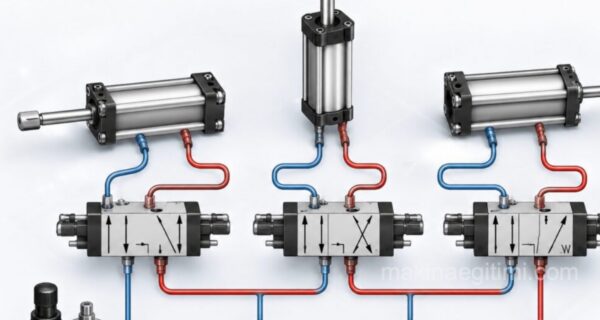 Controlling Multiple Cylinders with Directional Control Valves