
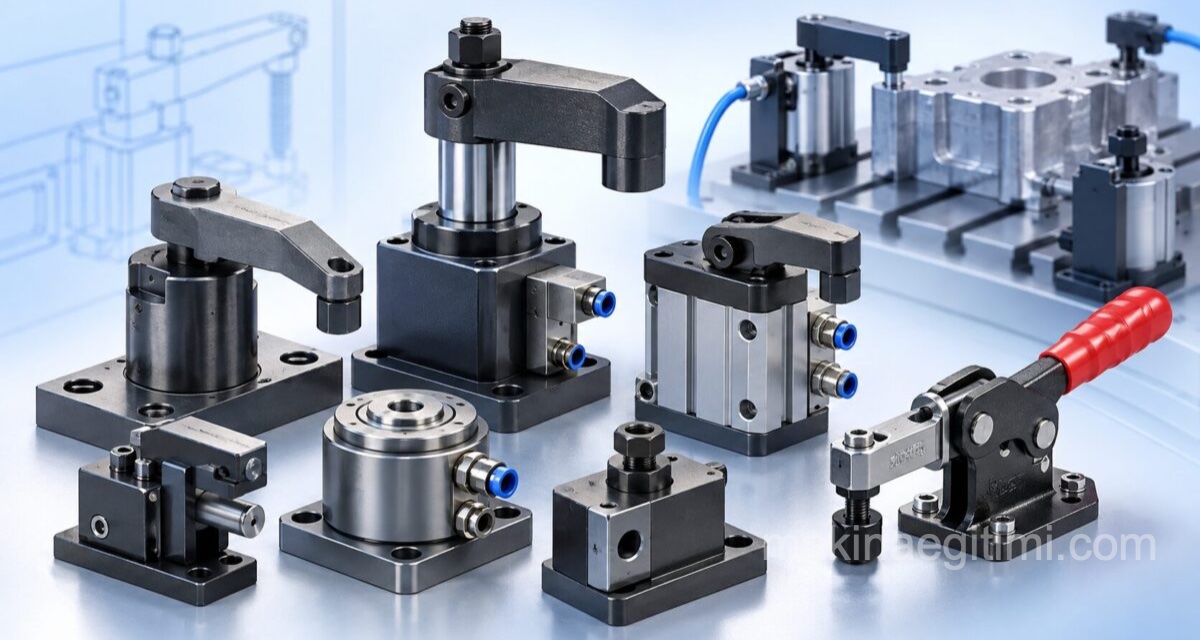
In the Hydraulic Pneumatic Systems category, this article is about hydraulic pneumatic clamping elements. We’ll cover hydraulic pneumatic clamping fixtures and their advantages.
Hydraulic Clamping Elements
Hydraulic clamping fixtures have the following advantages:
• High clamping force using little space
• Versatile use
• Very fast release of clamping pressure
• High rigidity of the clamping fixture
• Automatic control is possible
• Equal clamping force at all clamping points
Hydraulic clamping systems consist of a pressure-generating unit, control valves, and clamping cylinders. Hand pumps, pneumatic-to-hydraulic pressure intensifiers, and electro-hydraulic pump units are used to generate the pressure.
Hand pumps are used in mounting technology where compressed air or mains electricity aren’t available.
Pneumatic-to-hydraulic pressure intensifiers convert the low operating pressure of a compressed air system into a high hydraulic clamping pressure.
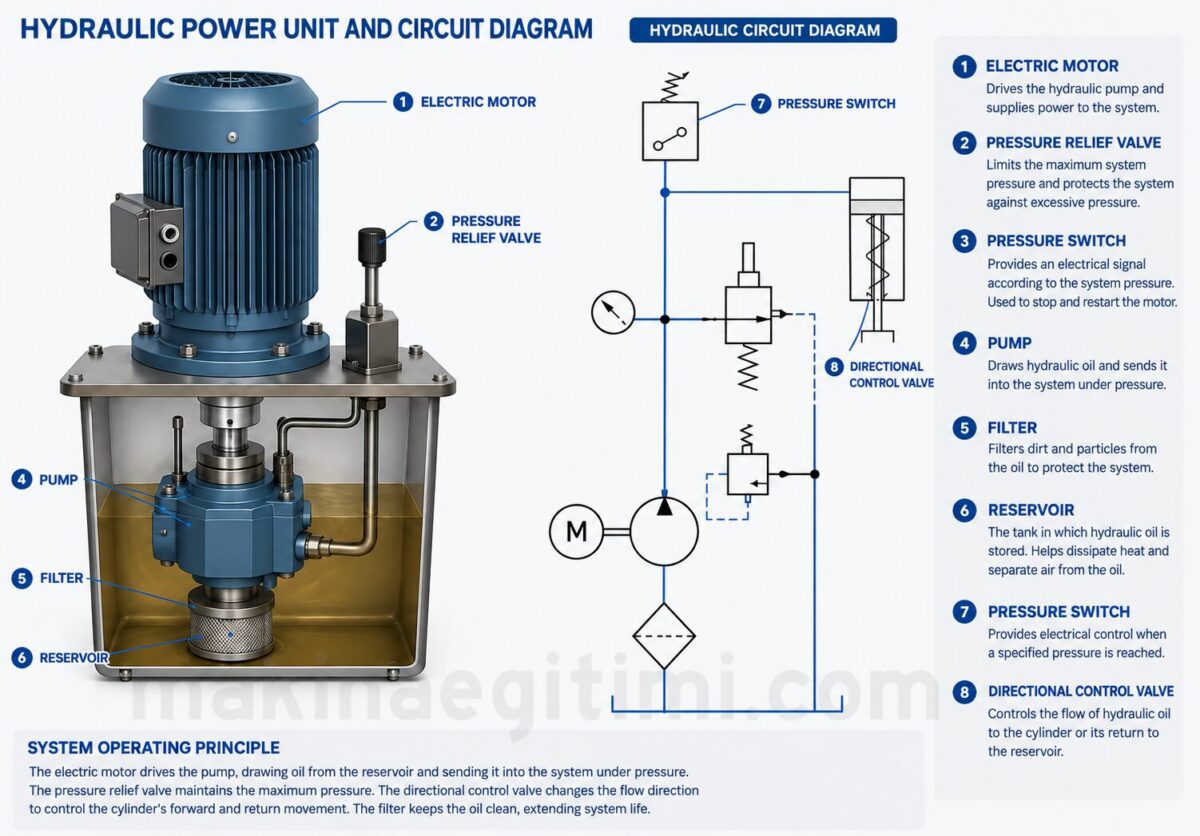
Hydraulic connection elements on machine tools are generally equipped with an electric hydraulic pump system (as shown in the figure above). These consist of an oil reservoir, an electric motor with a hydraulic pump, a pressure relief valve, a pressure switch, a directional valve, and a pressure gauge.
First, the pump, once its circuit is opened, generates the clamping pressure selected on the pressure switch inside the clamping cylinder, whose circuit is also opened. Once the pressure is reached, the pressure switch stops the motor. The clamping valves are moved back again via the pilot valve.
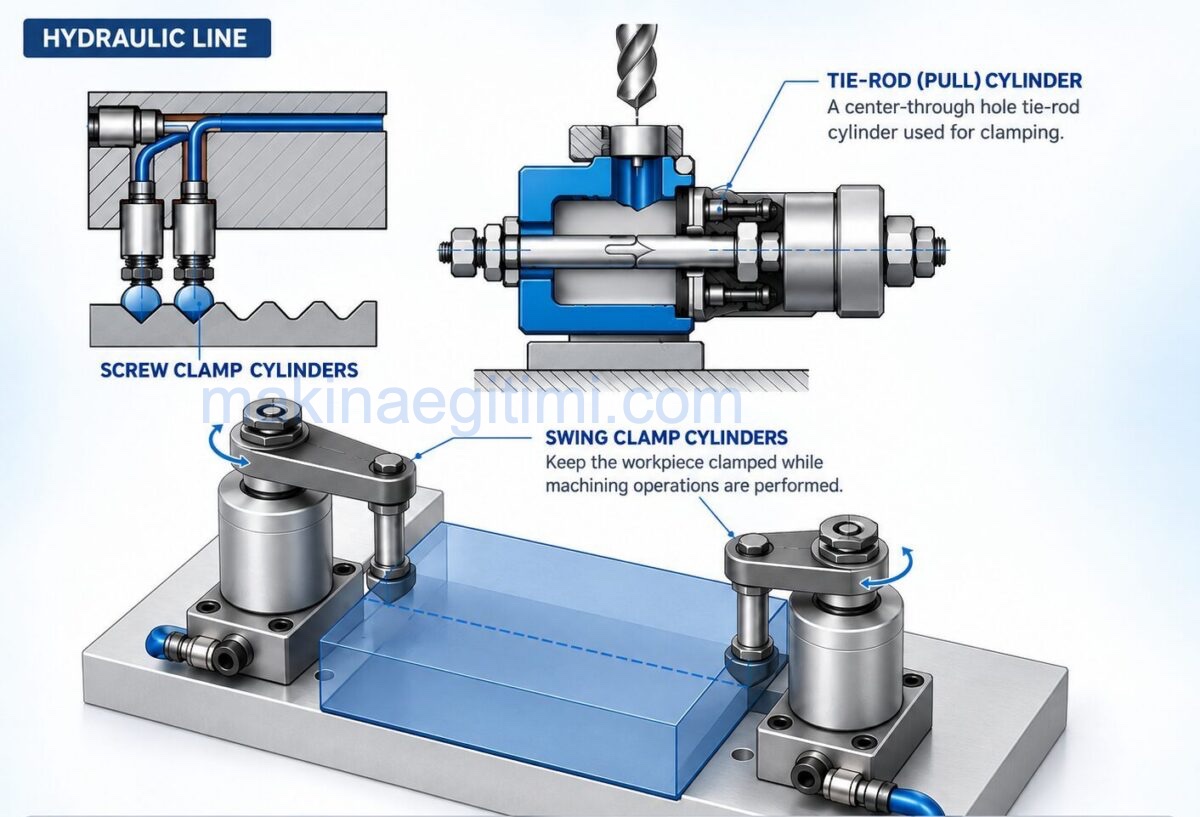
Hydraulic clamping cylinders can be screwed into the fixture as threaded cylinders, or screwed on top as pull-type cylinders. In clamping cylinders with rotatable clamping shoes, workpieces can be placed from above. (Figure above)
Multi-stage clamping fixtures are made, for example, from threaded cylinders or swivel cylinders connected with standard straps. These clamping fixtures are also used to clamp and machine large quantities of identical workpieces at the same time.


Various types of hydraulic clamping elements used on the market (above)
Pneumatic Clamping Elements
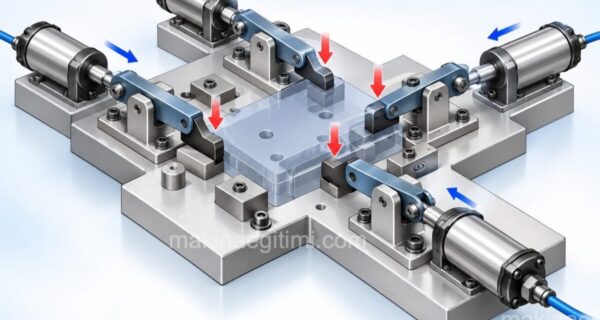
Pneumatic cylinders are suitable for the fast opening and closing movements of clamping fixtures. Due to the low, permitted operating pressure, they don’t have large clamping forces. Because of the springback (elasticity) effect of air, they deflect under overload. For this reason, pneumatic cylinders are generally used combined with self-locking, hinged clamping fixtures.
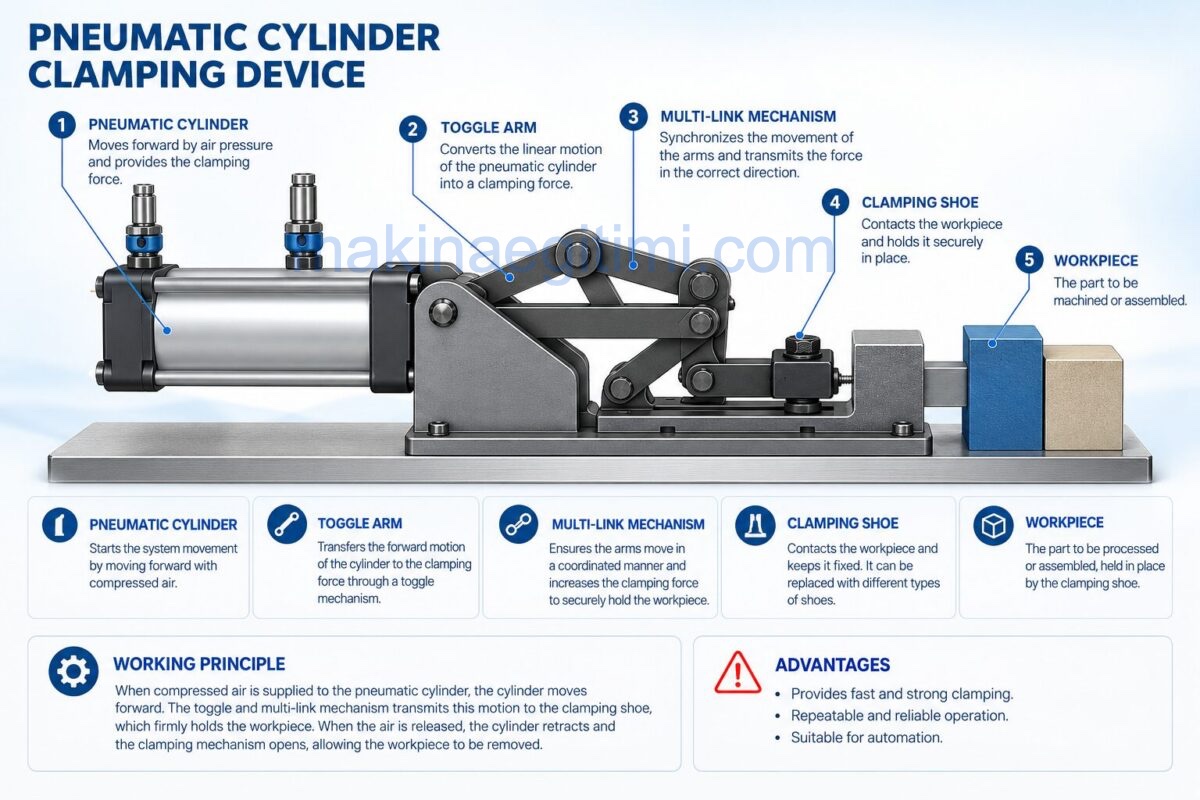
A setup that can serve as an example for hydraulic pneumatic clamping elements. A pneumatic-cylinder clamping fixture (above)
Related Posts
 Pneumatic Application Examples, Sample Circuits
  What Are the Differences Between Hydraulic and Pneumatic Systems?
  Time Delay Valve Explanation and Applications
  Advantages of Hydraulic Systems
  What Is a Pneumatic Compressor, What Does It Do?
  Pneumatic Cylinders and Their Types
  Hydraulic Filter Selection
  Hydraulic Applications – Pressure Reducing Valve