Close Menu
  • MAKİNELER ve İMALAT
    • Tools & Equipment
    • Computer-Aided Drawing
    • CAD/CAM Education
    • CNC Machine Programming
    • Casting Technologies
    • Electrical & Electronics Technologies
    • Hydraulics & Pneumatics
    • Manufacturing Processes
    • Manufacturing Technologies
    • Occupational Safety
    • Mold & Die Design
    • Solid Modeling
    • Welding Technology
    • Machine Elements
    • Mechanical Trade Drawing
    • Materials Science
    • Automotive & Vehicle Technologies
    • Robotics Technologies
    • Health Technologies
    • Defense & Aerospace Technologies
    • Descriptive Geometry
    • Technical Drawing
    • Software & Hardware Technologies
    • Innovative Manufacturing Methods
  • TEKNOLOJİ ve YAŞAM
    • OTOMOBİLLER ve TAŞIT
      • Vehicle & Engine Knowledge
      • Safe Driving
      • Sürüş Destek Sistemleri
    • Genel Kültür
      • Movies & TV Shows
      • Görsel ve Grafik Sanat
      • Books & Literature
      • Music
      • Sports
      • History
      • History of Technology
    • GÜNDELİK YAŞAM TEKNOLOJİLERİ
    • Hobbies & Entertainment
    • Internet Technologies
    • Health
    • Mobile Technologies
Makine Eğitimi
  • Machines & Manufacturing
    Machine Elements
    Hydraulics & Pneumatics
    Technical Drawing
    Computer-Aided Design & Manufacturing
    Basic Manufacturing Processes
    Manufacturing Processes
    Industry Technologies
    Other Technical Courses
    Motion & Power Transmission
    Simple Machines
    Chains & Sprockets
    Shafts & Journals
    Gears
    Cams
    Couplings
    Belts & Pulleys
    Springs
    Bearings
    Keys
    Fastening Joining
    Retaining Rings
    Screws, Bolts & Nuts
    Cotter Pins
    Flanges
    Welding
    Rivets
    Pins & Bolts
    Washers
    Calculators
    Gear Ratio Calculator
    Spring Constant Calculator
    Belt Pulley Ratio Calculator
    Other Machine Elements
    Slides & Linear Guides
    Brakes
    Flywheels
    Clamps
    Shock Absorbers
    Gaskets & O-Rings
    Seals & Sealing Elements
    Hydraulics
    Introduction to Hydraulics & Principles
    Hydraulic Systems & Applications
    Accumulators
    Filters
    Motors
    Pumps
    Valves
    Pneumatics
    Introduction to Pneumatics & Principles
    Pneumatic Systems & Applications
    Pneumatic Circuit Components
    Valves
    Cylinders
    Silencers
    Motors
    Compressors
    Dryers
    Conditioning Units
    Common Topics & Maintenance
    Hydraulic & Pneumatic Maintenance
    Study Notes, Exams & Tests
    Technical Drawing
    Introduction to Technical Drawing
    Geometric Drawings
    Perspective & Projection
    Orthographic Views
    Dimensioning
    Sectioning
    Assembly & Detail Drawings
    Tolerances
    Surface Finish Symbols
    Mechanical Engineering Drawing
    Screws, Bolts & Nuts
    Pulley Drawings
    Gear Drawings
    Shafts & Journals
    Bearing Drawings
    Pins & Bolts
    Spring Drawings
    Welds in Technical Drawing
    Washers
    Cotter Pins
    Technical Drawing Exercises
    Mechanical Drawing Exercises
    Gear Exercises
    View Extraction Exercises
    Pulley Exercises
    Pin & Bolt Exercises
    Threaded Fastening Exercises
    Descriptive Geometry
    Computer-Aided Drawing
    AutoCAD Drawing Lessons
    Solid Modeling & Animation
    Solid Model Drawing Files
    Solid Model Assembly Examples
    Solid Model Drawing Lessons
    3D CAD Software Reviews
    Solid Modeling Exercises
    CNC Programming
    CAM
    Measurement & Inspection
    Dial Indicators
    Calipers
    Gauges
    Micrometers
    Materials Science
    Steels
    Cast Iron
    Aluminum
    Plastics
    Material Testing & Hardness Measurement
    Occupational Safety
    Workshop Safety
    Safety When Working With Electricity
    Machine Safety Rules
    Hand Operations
    Filing
    Marking
    Cutting Operations
    Reaming
    Tapping
    Threading With a Die
    Drill Bit Sharpening
    Working With Machines
    Basic Turning Operations
    Basic Milling Operations
    Shaper Machine
    Machining
    Turning
    Milling
    Grinding
    Innovative Manufacturing Methods
    EDM (Electrical Discharge Machining)
    Laser Machining
    Waterjet Machining
    3D Printing
    3D Scanners
    Welding
    Rolling
    Casting
    Mold & Die Design
    Mechanical & Hydraulic Presses
    Blanking & Piercing Dies
    Bending Dies
    Drawing Dies
    Plastic Injection Molds
    Extrusion Dies
    Compound Dies
    Progressive Dies
    Blow Molds
    Spinning Dies
    Spray Molds
    Manufacturing of Machine Parts
    Automotive & Vehicle Technologies
    Motor Vehicle Manufacturing
    Raw Material Production
    History of Technology
    Health & Medical Technologies
    Defense & Aerospace
    Robotics Technologies
    Software & Hardware Technologies
    Mechanics - Strength of Materials
    Physics Topics
  • Technology & Life
    Hobbies & Entertainment
    Sports
    Music
    Vehicle & Engine Knowledge
    Vehicle Maintenance & Repair
    Safe Driving
    Driver Assistance Systems
    History
    Movies & TV Shows
    Books & Literature
    Computers & Internet
    Computer Tips
    Software Reviews
    Hardware & Peripherals
    Practical & Safe Internet Use
    Visual & Graphic Art
    Mobile Technologies
    Travel
    Science
    Health
    First Aid Knowledge
    Everyday Technologies
Makine Eğitimi
Home»Innovative Manufacturing Methods»What Is Dielectric Fluid, What Does It Do, Where Is It Used?
30 August 2026

What Is Dielectric Fluid, What Does It Do, Where Is It Used?

What Is Dielectric Fluid, What Does It Do?

What Is Dielectric Fluid?

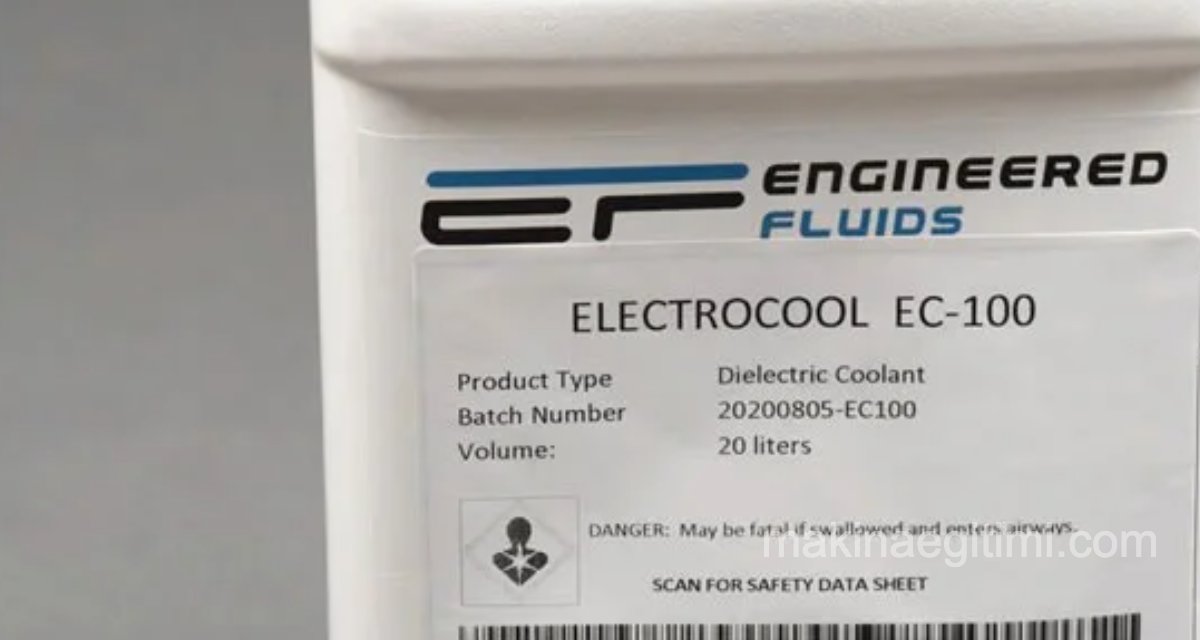
Dielectric fluid is an electrically non-conductive liquid with very high resistance to electrical breakdown, even at high voltages.

  • What Is Dielectric Fluid?
  • What Does Dielectric Fluid Do?
  • Where Is Dielectric Fluid Used?
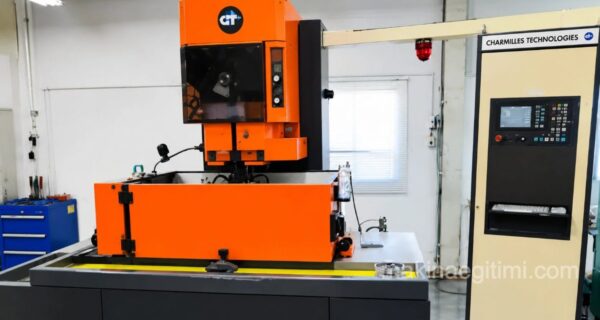
    • What Does Dielectric Fluid Do in Electrical Discharge Machining?
  • Properties Required in Dielectric Fluids
  • Related Questions

What Does Dielectric Fluid Do?

Electrical components are often immersed in, or sprayed with, a liquid to remove excess heat. A liquid’s thermal conductivity and specific heat capacity are higher than air’s, which makes the process more efficient at removing waste heat to cool high-power electronics. In other words, dielectric fluid does not conduct electricity, but it does conduct heat. This means it can be used for cooling purposes in certain electrically powered systems.

The main purpose of using dielectric fluid is to quickly prevent and suppress electrical discharges, and traditionally, dielectric fluids have been used to cool transformers, capacitors, high-voltage cables, and switching equipment, to provide electrical insulation, and to suppress unwanted electrical discharge.

Insulating Function


Dielectric fluid provides the electrical insulation needed for controlled spark formation between the electrode and the workpiece.

Cooling Function


The fluid quickly dissipates the high heat generated during spark erosion, protecting both the electrode and the workpiece.

Particle Removal


Dielectric fluid carries away the molten metal particles produced during the process, out of the machining area.

Where Is Dielectric Fluid Used?

In electric vehicles, dielectric fluids can be used to cool the battery, electric motor, power electronics, and electric transmissions. To help with efficient heat transfer and pumping efficiency, the fluids need high thermal conductivity and low viscosity (viscosity: resistance to flow).

Dielectric fluids can be used as capacitors in electrical circuits and can help store electrical energy. They can also be used as an insulating material that can conduct electrical energy while blocking the propagation of electromagnetic waves. Dielectric fluids are generally used to increase the safety of electrical and electronic equipment through insulation.

what is dielectric fluid. where is dielectric fluid used

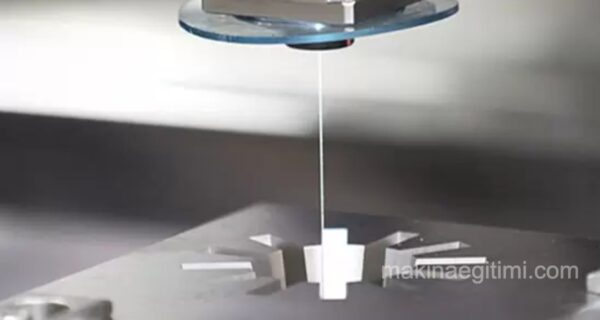
In electrical discharge machining, because of these beneficial properties, the workpiece is kept submerged in dielectric fluid. As the dielectric fluid, mineral oils or synthetic hydrocarbons are used, and in the field of electrical discharge machining, deionized (desalted) water is also used.

What Does Dielectric Fluid Do in Electrical Discharge Machining?

In electrical discharge machines, dielectric fluid performs three main functions:

  1. It protects the area where material is being removed from air currents and keeps the flow rate of the electrical spark discharge constant.
  2. It performs a cooling function and removes the small chips produced from the workpiece.
  3. It acts as a carrier, moving the chips away from the workpiece to the settling tank.

In electrical discharge machining, vigorous circulation, proper filtering, and periodic renewal of the dielectric fluid are necessary.

Due to the fumes produced and the fragmented, crumbled byproducts, extraction (aspirator) equipment must be present, and fire-safety regulations must be strictly followed.

dielectric fluid in electrical discharge machining
wire EDM
electrical discharge machining working principle and dielectric fluid
Sinker (plunge) EDM

Properties Required in Dielectric Fluids

This raises the question: what should the properties of a good dielectric fluid be?

For effective direct-immersion cooling, a dielectric fluid needs high density, high thermal conductivity, high specific heat capacity, and low viscosity.

The properties expected of a good dielectric fluid are as follows:

  • Good electrical properties – the fluid should have limited electrical conductivity to prevent arcing and also have a high breakdown voltage
  • Good material compatibility – the fluid should not damage the elastomer seals, copper, insulation materials, or any other material found in the cooling system.
  • Low volatility – lower volatility reduces evaporation losses, reducing the need to top off the fluid
  • High flash point – increases fluid safety and reduces fire risks under high-temperature conditions
  • Low pour point – the fluid should not freeze or become too viscous to pump at low temperatures
  • High oxidation stability – the fluid should remain stable at high temperatures and can be expected to perform throughout the vehicle’s service life

Related Questions

A fluid’s electrical non-conductivity and its ability to conduct heat are independent properties. Dielectric fluid can circulate around a component and absorb and remove heat without creating a short-circuit risk.

The fluid provides the necessary electrical insulation between the electrode and the workpiece, allowing the spark to form in a controlled manner. It also quickly removes the high heat and small metal particles produced during the spark.

Related Posts
Tel Erozyon Nedir Nasıl Çalışır? What Is Wire EDM, How Does It Work? Applications of Lasers Applications of Lasers laser cutting Laser or Waterjet, Which Is Better? What Is EDM, How Does It Work What Is Electrical Discharge Machining (EDM). Machining with EDM laser rust removal Laser Cleaning: Removing Rust, Dirt, and Grease Advantages and Disadvantages of 3D Printers Advantages and Disadvantages of 3D Printers Eklemeli İmalat (3D Baskı) Nedir? Yöntemleri ve Kullanım Alanları What Is Additive Manufacturing (3D Printing)? Methods and Applications laser cutting The Relationship Between Laser Cutting Quality and Material Composition
EDM (Electrical Discharge Machining)
Share. Facebook Twitter WhatsApp Tumblr Email Telegram Copy Link

Leave A Reply Cancel Reply

Diesel Engine vs. Gasoline Engine: Which Is More Powerful?
Who Is Eric the Eel? The Funniest Moment in Olympic Swimming History
  • Contact
  • Terms of Service
  • Privacy & Cookie Policy

Type above and press Enter to search. Press Esc to cancel.