Close Menu
  • MAKİNELER ve İMALAT
    • Tools & Equipment
    • Computer-Aided Drawing
    • CAD/CAM Education
    • CNC Machine Programming
    • Casting Technologies
    • Electrical & Electronics Technologies
    • Hydraulics & Pneumatics
    • Manufacturing Processes
    • Manufacturing Technologies
    • Occupational Safety
    • Mold & Die Design
    • Solid Modeling
    • Welding Technology
    • Machine Elements
    • Mechanical Trade Drawing
    • Materials Science
    • Automotive & Vehicle Technologies
    • Robotics Technologies
    • Health Technologies
    • Defense & Aerospace Technologies
    • Descriptive Geometry
    • Technical Drawing
    • Software & Hardware Technologies
    • Innovative Manufacturing Methods
  • TEKNOLOJİ ve YAŞAM
    • OTOMOBİLLER ve TAŞIT
      • Vehicle & Engine Knowledge
      • Safe Driving
      • Sürüş Destek Sistemleri
    • Genel Kültür
      • Movies & TV Shows
      • Görsel ve Grafik Sanat
      • Books & Literature
      • Music
      • Sports
      • History
      • History of Technology
    • GÜNDELİK YAŞAM TEKNOLOJİLERİ
    • Hobbies & Entertainment
    • Internet Technologies
    • Health
    • Mobile Technologies
Makine Eğitimi
  • Machines & Manufacturing
    Machine Elements
    Hydraulics & Pneumatics
    Technical Drawing
    Computer-Aided Design & Manufacturing
    Basic Manufacturing Processes
    Manufacturing Processes
    Industry Technologies
    Other Technical Courses
    Motion & Power Transmission
    Simple Machines
    Chains & Sprockets
    Shafts & Journals
    Gears
    Cams
    Couplings
    Belts & Pulleys
    Springs
    Bearings
    Keys
    Fastening Joining
    Retaining Rings
    Screws, Bolts & Nuts
    Cotter Pins
    Flanges
    Welding
    Rivets
    Pins & Bolts
    Washers
    Calculators
    Gear Ratio Calculator
    Spring Constant Calculator
    Belt Pulley Ratio Calculator
    Other Machine Elements
    Slides & Linear Guides
    Brakes
    Flywheels
    Clamps
    Shock Absorbers
    Gaskets & O-Rings
    Seals & Sealing Elements
    Hydraulics
    Introduction to Hydraulics & Principles
    Hydraulic Systems & Applications
    Accumulators
    Filters
    Motors
    Pumps
    Valves
    Pneumatics
    Introduction to Pneumatics & Principles
    Pneumatic Systems & Applications
    Pneumatic Circuit Components
    Valves
    Cylinders
    Silencers
    Motors
    Compressors
    Dryers
    Conditioning Units
    Common Topics & Maintenance
    Hydraulic & Pneumatic Maintenance
    Study Notes, Exams & Tests
    Technical Drawing
    Introduction to Technical Drawing
    Geometric Drawings
    Perspective & Projection
    Orthographic Views
    Dimensioning
    Sectioning
    Assembly & Detail Drawings
    Tolerances
    Surface Finish Symbols
    Mechanical Engineering Drawing
    Screws, Bolts & Nuts
    Pulley Drawings
    Gear Drawings
    Shafts & Journals
    Bearing Drawings
    Pins & Bolts
    Spring Drawings
    Welds in Technical Drawing
    Washers
    Cotter Pins
    Technical Drawing Exercises
    Mechanical Drawing Exercises
    Gear Exercises
    View Extraction Exercises
    Pulley Exercises
    Pin & Bolt Exercises
    Threaded Fastening Exercises
    Descriptive Geometry
    Computer-Aided Drawing
    AutoCAD Drawing Lessons
    Solid Modeling & Animation
    Solid Model Drawing Files
    Solid Model Assembly Examples
    Solid Model Drawing Lessons
    3D CAD Software Reviews
    Solid Modeling Exercises
    CNC Programming
    CAM
    Measurement & Inspection
    Dial Indicators
    Calipers
    Gauges
    Micrometers
    Materials Science
    Steels
    Cast Iron
    Aluminum
    Plastics
    Material Testing & Hardness Measurement
    Occupational Safety
    Workshop Safety
    Safety When Working With Electricity
    Machine Safety Rules
    Hand Operations
    Filing
    Marking
    Cutting Operations
    Reaming
    Tapping
    Threading With a Die
    Drill Bit Sharpening
    Working With Machines
    Basic Turning Operations
    Basic Milling Operations
    Shaper Machine
    Machining
    Turning
    Milling
    Grinding
    Innovative Manufacturing Methods
    EDM (Electrical Discharge Machining)
    Laser Machining
    Waterjet Machining
    3D Printing
    3D Scanners
    Welding
    Rolling
    Casting
    Mold & Die Design
    Mechanical & Hydraulic Presses
    Blanking & Piercing Dies
    Bending Dies
    Drawing Dies
    Plastic Injection Molds
    Extrusion Dies
    Compound Dies
    Progressive Dies
    Blow Molds
    Spinning Dies
    Spray Molds
    Manufacturing of Machine Parts
    Automotive & Vehicle Technologies
    Motor Vehicle Manufacturing
    Raw Material Production
    History of Technology
    Health & Medical Technologies
    Defense & Aerospace
    Robotics Technologies
    Software & Hardware Technologies
    Mechanics - Strength of Materials
    Physics Topics
  • Technology & Life
    Hobbies & Entertainment
    Sports
    Music
    Vehicle & Engine Knowledge
    Vehicle Maintenance & Repair
    Safe Driving
    Driver Assistance Systems
    History
    Movies & TV Shows
    Books & Literature
    Computers & Internet
    Computer Tips
    Software Reviews
    Hardware & Peripherals
    Practical & Safe Internet Use
    Visual & Graphic Art
    Mobile Technologies
    Travel
    Science
    Health
    First Aid Knowledge
    Everyday Technologies
Makine Eğitimi
Home»Safe Driving»Safe Forklift Use. Forklift Safety Rules
29 August 2026

Safe Forklift Use. Forklift Safety Rules

Safe Forklift Use

In our motor vehicles section, this article’s topic will be forklift safety rules and the fundamentals of safe forklift use. In this article, where we cover the fundamentals of workplace safety with forklifts, we’ve tried to explain forklift workplace safety in detail with illustrated examples.

  • Forklift Safety Rules
  • Safe Forklift Use
    • Appropriate conditions for safe forklift use
    • Speed and maneuver control for forklift workplace safety
    • Load control for forklift workplace safety
    • Environmental conditions for safe forklift use

Forklift Safety Rules

Perhaps the most fundamental forklift safety rule is that a forklift must not be operated by people who have not received training and certification in this area.

A forklift must only be left in areas designated as parking areas. When parked, the forks must be fully lowered, all levers set to neutral, the parking brake applied, and the engine turned off. When the forklift is not in use, the engine must be shut off, the key removed from the vehicle, and wheel chocks placed in front of and behind the tires. Daily vehicle maintenance checks must not be neglected.

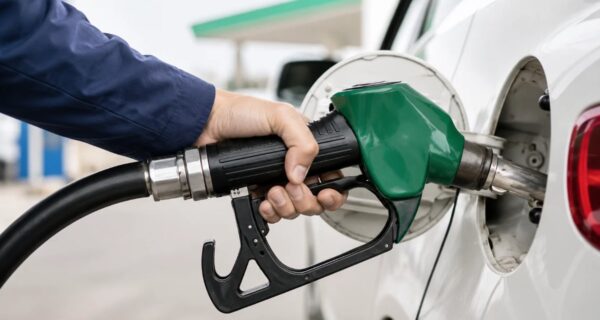
forklift safety rules - refueling

The engine must be turned off while refueling a forklift. Smoking and having flammable materials present at the refueling site must be strictly forbidden during refueling. This also applies when swapping an LPG tank. Before restarting the engine, the fuel tank cap must be closed and any spilled fuel must be cleaned up.

Forklift safety rules include some important rules regarding the use of the forklift. Let’s take a look at those as well.

Safe Forklift Use

Appropriate conditions for safe forklift use

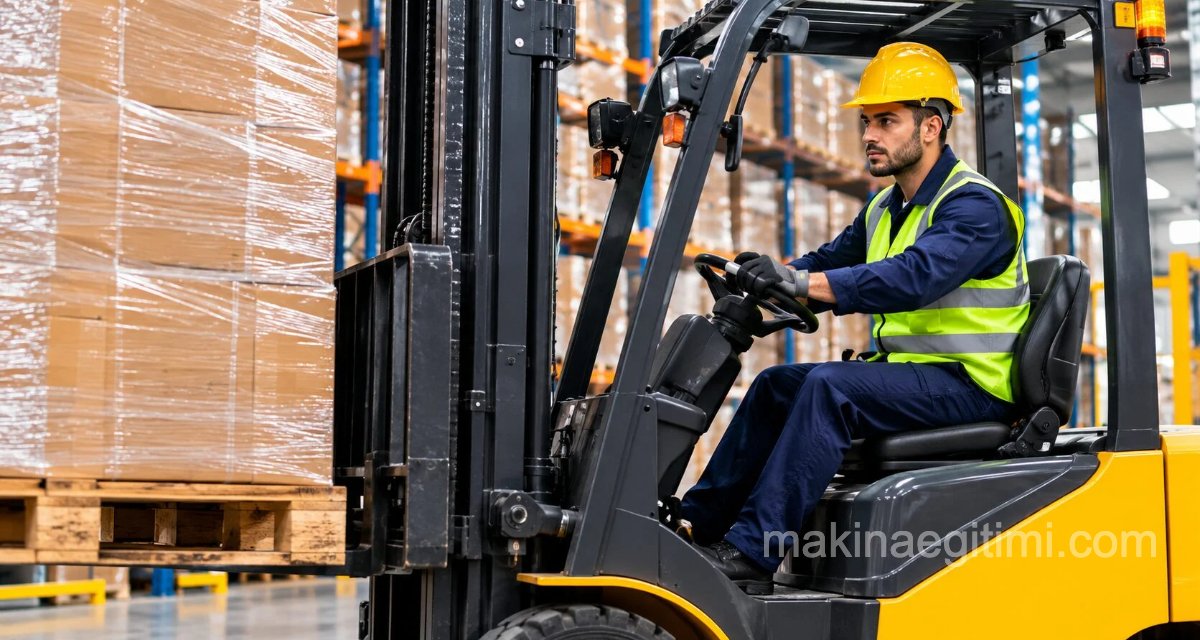
For safe forklift use, workplace safety rules must be followed. The forklift operator must wear a hard hat and safety shoes, and should prefer a one-piece coverall as work clothing.

A forklift must not be used in areas unsuitable for safe forklift operation. A forklift must not be operated without the operator seated in the operator’s seat. Arms, legs, and head must not be extended outside the operator’s cabin.

A forklift must not be operated with wet hands or wet shoes. If operated with wet hands or shoes, you can lose control of the forklift and cause an accident.

A forklift must not be used on loose or slippery ground, or on sandy, gravelly, icy, or muddy surfaces. If use is unavoidable, it must be operated slowly.

A forklift must never be used without an operator overhead guard and a load backrest.

Speed and maneuver control for forklift workplace safety

Sudden maneuvers at high speed with the forklift must be avoided, and sudden stops and starts must not be performed. Such movements can cause the vehicle to tip over. Sound the horn as a warning at turns, at building entrances and exits, and near people. Speed should be kept low.

If you feel the forklift is about to tip over, do not try to jump out. To survive, stay seated and hold on tightly.

safe forklift use

Always drive forward when going up ramps, and drive in reverse when going down. Never lift a load while on an inclined surface. Do not maneuver on inclined surfaces. When going up or down a ramp, especially while carrying large loads, have a spotter guide you from outside the vehicle.

safe forklift operation

Loading and unloading must not be performed on a slope. Turning on a slope must not be done, and the forklift must not be operated parallel to the slope.

forklift safety rules

Considering that forklifts are used in work environments, you should think as though a worker could appear in front of you at any moment. Nobody being behind you 3 seconds ago doesn’t mean nobody will be there 3 seconds from now. The operator must remain alert at all times for forklift workplace safety.

forklift safety instructions

If the load obstructs your view, driving the forklift forward will be problematic. For forklift workplace safety, if you’re not going uphill, driving the vehicle in reverse in such situations will improve your visibility.

rules for safe forklift use

One of the forklift workplace safety rules is that if loading will be done onto another vehicle, wheel chocks must be placed on that vehicle’s wheels to prevent it from moving.

forklift workplace safety rules

Do not use your forklift to tow or push another forklift. Do not allow other forklifts to push or tow your vehicle either. If your forklift isn’t working, notify service.

Load control for forklift workplace safety

forklift workplace safety

Workplace safety rules for forklift operation also include load control. Do not overload. A heavy load can cause the forklift to tip over. Excessive stacking or raising the load will also obstruct visibility. A forklift must not be operated with the load raised or the mast tilted up.

forklift workplace safety

For forklift workplace safety, do not carry anyone on the forklift’s forks. You could cause accidents you couldn’t have anticipated. Safe forklift use depends on the rules not being neglected.

The load must be carried with the mast tilted back. Do not raise a loaded forklift while the mast is tilted forward, and do not tilt the mast forward while the load is raised. Doing so can cause the forklift to tip forward.

workplace safety in forklift operation

Do not move the forklift if the load is higher than the load backrest. Be careful of the possibility of the load falling during loading. Carry the load with the forks lowered as much as possible and the mast tilted back. This will help stabilize the forklift and give you better visibility.

Unbalanced loads must not be carried for forklift workplace safety. If this is unavoidable, loading must be done by balancing the load’s center of gravity. Pallets used must be of an appropriate size. The load must be distributed equally across both forks, and carrying with only one fork must not be done.

Environmental conditions for safe forklift use

safe forklift use instructions

For forklift workplace safety, do not let anyone walk under or stand under the forklift’s load or lifting mechanism. The load could fall, causing injuries or death.

environmental conditions for safe forklift use

Extreme caution must be exercised when operating a forklift near dock and ramp edges. In particular, a safety distance must be kept between the forklift and the edges of docks, ramps, and platforms. A small lapse in attention can lead to accidents, injuries, and deaths.

A forklift must not be operated within another forklift’s work area. A safe working distance must be maintained between you and other forklifts.


In this article, we covered forklift workplace safety and forklift safety rules. Until we meet again in new articles.

Related Posts

What Is a Forklift. What Are the Types of Forklifts What Is a Forklift. What Are the Types of Forklifts Definitions Related to Traffic, Highways, and Vehicles Definitions Related to Traffic, Highways, and Vehicles Steering Wheel Grip and Turning Techniques Steering Wheel Grip and Turning Techniques How to Drive a Manual Transmission Car How to Drive a Manual Transmission Car car accident, woman with a broken leg Why Is It Dangerous to Rest Your Feet on the Dashboard? Vehicle dashboard warning light symbols Vehicle Dashboard Panel Symbols and Their Meanings fuel economy cruise control 5 Tips for Fuel Economy Traffic Regulatory Signs and Their Meanings Traffic Regulatory Signs and Their Meanings. Restriction and Command Signs
Occupational Safety Specialist Training İş Makineleri
Share. Facebook Twitter WhatsApp Tumblr Email Telegram Copy Link

Leave A Reply Cancel Reply

What Is Biodiesel? Properties, Production, and Advantages
What Is a Forklift. What Are the Types of Forklifts
  • Contact
  • Terms of Service
  • Privacy & Cookie Policy

Type above and press Enter to search. Press Esc to cancel.