

In this article, what is the history of weaving. We’ll look at who and which events shaped the history of weaving.
The History of Weaving
We don’t know how humans first came up with the idea of weaving cloth instead of using animal hides. Some claim that seeing sheep’s wool felt together led people to the idea of the art of weaving. But spinning comes before weaving.

According to medieval Christian belief, Eve was the first to spin thread. Spinning was seen as woman’s noblest task. Spinning is a thing that’s as simple as it is mysterious. If you take a tuft of wool, flax, or hemp and twist it out bit by bit, a thread forms at its thinnest point. But hidden in how this thinnest point, through twisting, becomes a thread that can barely be broken, is a law not easily understood.
Throughout the history of weaving, people spun for thousands of years without ever thinking about this law. The art of weaving, too, has been known for thousands of years.
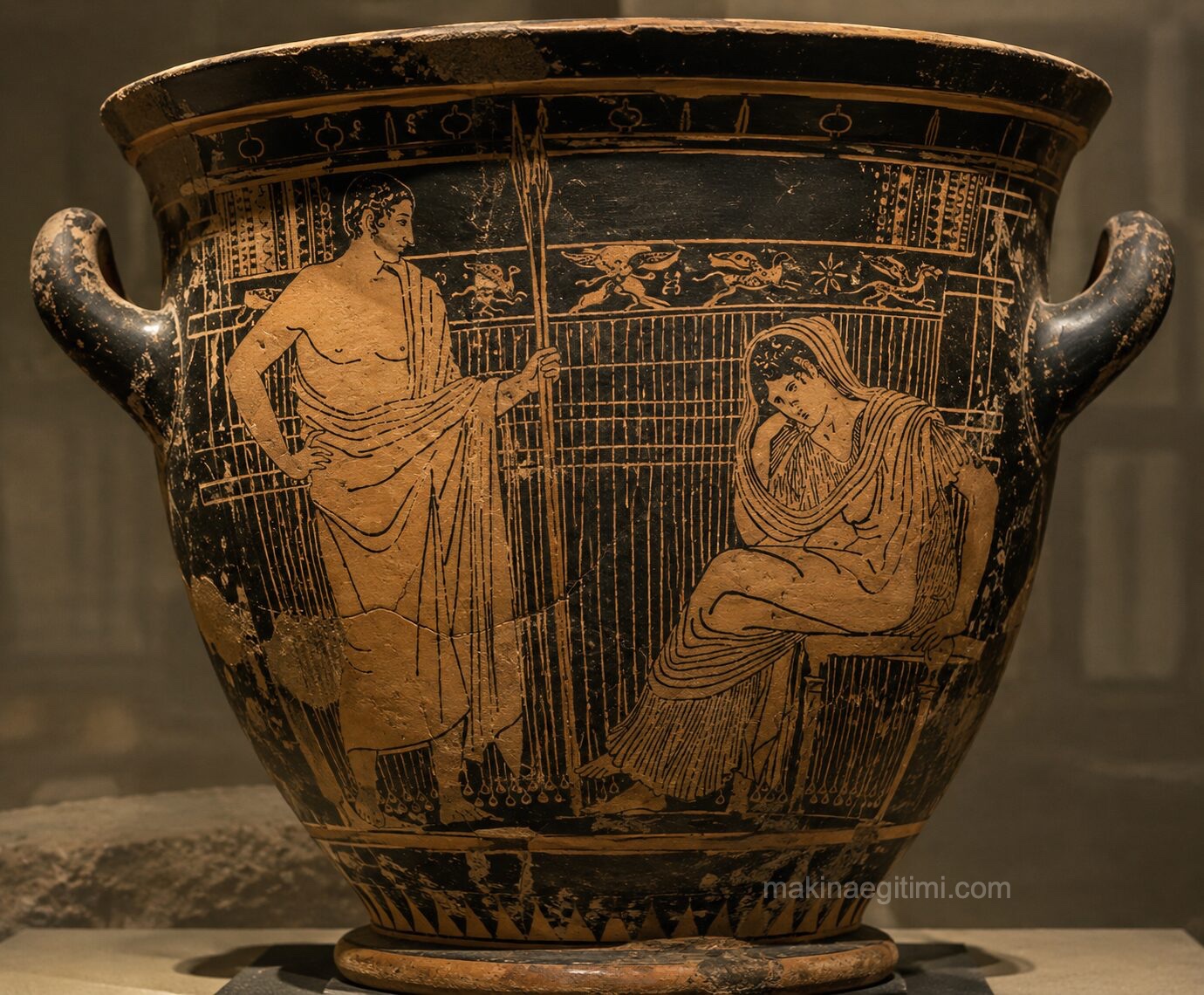
Cotton and woven fragments have been found inside very old silver vases discovered in India. These are believed to be five thousand years old. Egyptian priests wore linen garments. Long before the birth of Christ, the Chinese were wearing silk.

When Did Mechanization Begin in the History of Weaving?
The strange thing is that spinning and weaving continued unchanged for thousands of years, using the same primitive methods as the Stone Age. Mechanized weaving and spinning machines are no more than two centuries old. Until 200 years ago, everywhere in the world spinning and weaving were done by hand. Only in Germany and Western Europe was the situation different.

On hand spindles, the thread is both twisted and wound at the same time. On a spinning wheel, the spindle and the bobbin are separate. This method was also used on ancient Indian spinning wheels.
Only these weren’t foot-operated like the German spinning wheel. The clever trick of the German spinning wheel is that the spindle and bobbin don’t turn at the same speed. The difference in the rotation speeds of the spindle and bobbin is what allows the thread to wind onto the bobbin. The flaw of the German spinning wheel was that it could only spin rather thick thread. Fine thread would easily snap because the bobbin pulled too hard.
A separate guild of spinners was never established; people spun thread and wove cloth in their own homes, for themselves. Men wove, women spun; as for the art of weaving, it developed in a way where the households that wove best would do this work for others, in exchange for the others plowing and sowing their fields.
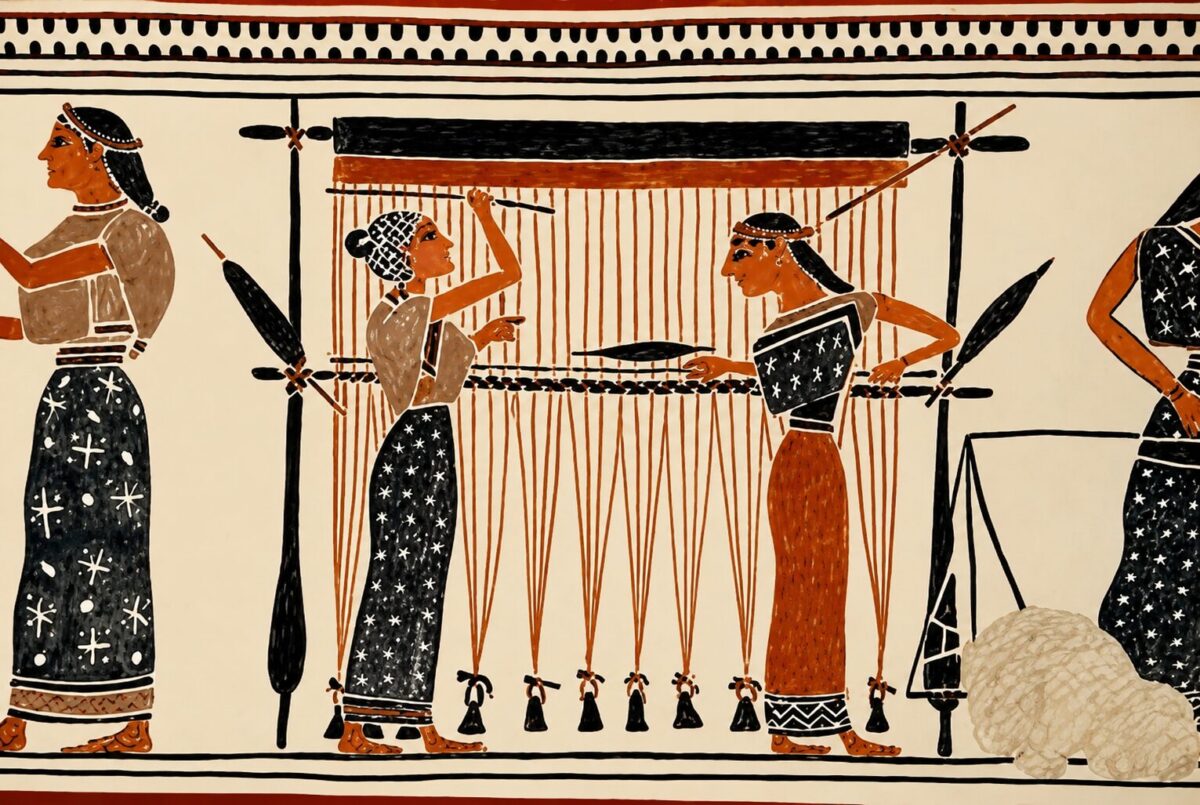
A warp-weighted loom from the ancient Greek era, 500 BC (above)
The History of Weaving and the Influence of Wars
Weaving grew even more important over time. This was because, over the last five centuries, wars had left people stripped of their belongings and in great need of new clothes. As the need grew, proportionally more thread had to be spun, and after the great religious wars, when Europe’s population grew astonishingly fast, the need for clothing grew right along with the number of people. At that point, even the very elderly were put to work spinning thread. Young, able-bodied men who had been imprisoned were also made to do jobs like spinning thread.

Women, children, the elderly, and prisoners spun thread from the dim light of morning until the dusk of evening. But a time came when even they could no longer supply enough thread. At that point, soldiers too were forced into it; children were seated at spinning wheels as soon as they turned five.
Children, women, and the elderly were gathered into spinning houses, also called thread manufactories. It wouldn’t be wrong to say that these spinning houses were the beginning of factories in the history of weaving.
Mechanization in Weaving Also Brought Rebellion with It
Spinners had to work about 16 hours a day. In return, they were paid very little.
This is how, in the thread-spinning houses, a portion of a modern proletariat came into being — poor people who had nothing but their manual skill. Their homeland was the factories. Some of them slept and lived directly inside the thread-spinning houses. When they heard that machines, not themselves, would now occupy the manufactories, they rebelled.
The History of Weaving and the Role of the English
In the 18th century, governments tried to encourage the use of the labor of the unemployed, powerless, and cheap — women, children, and the elderly. The Congress of Rastatt, in 1714, erected an elegant and respectable monument by opening a thread-spinning school for the poor children of the country. At the time, the general belief was that a human being should be put to work as early as possible. What we look back on and admire as “the honest morals of old times” was largely based on exactly this. If we today saw 5- to 7-year-old children being made to work all day, we would be horrified. Unfortunately, we see that, just like the West’s history of industrialization, the history of weaving too is remembered alongside slaves and child laborers.
At the time, however, the Austrian government paid a bonus to the operators of thread-spinning manufactories for every boy or girl child they employed; they wanted to protect young souls from the consequences of idleness.
John Kay and the Flying Shuttle Weaving Machine – 1733
In 1733, the Englishman John Kay invented the device known as the “flying shuttle.” This device gave the weaver the ability to weave fabrics wider than an arm’s length. John Kay fitted wheels to the shuttle and, with the help of a simple mechanism, made it possible to throw it across the loom. Until then, a weaver working alone could only weave fabric as wide as his arm could reach, and no wider, because he had to both throw and catch the shuttle himself. If wider fabric was wanted, two workers had to work at one loom.
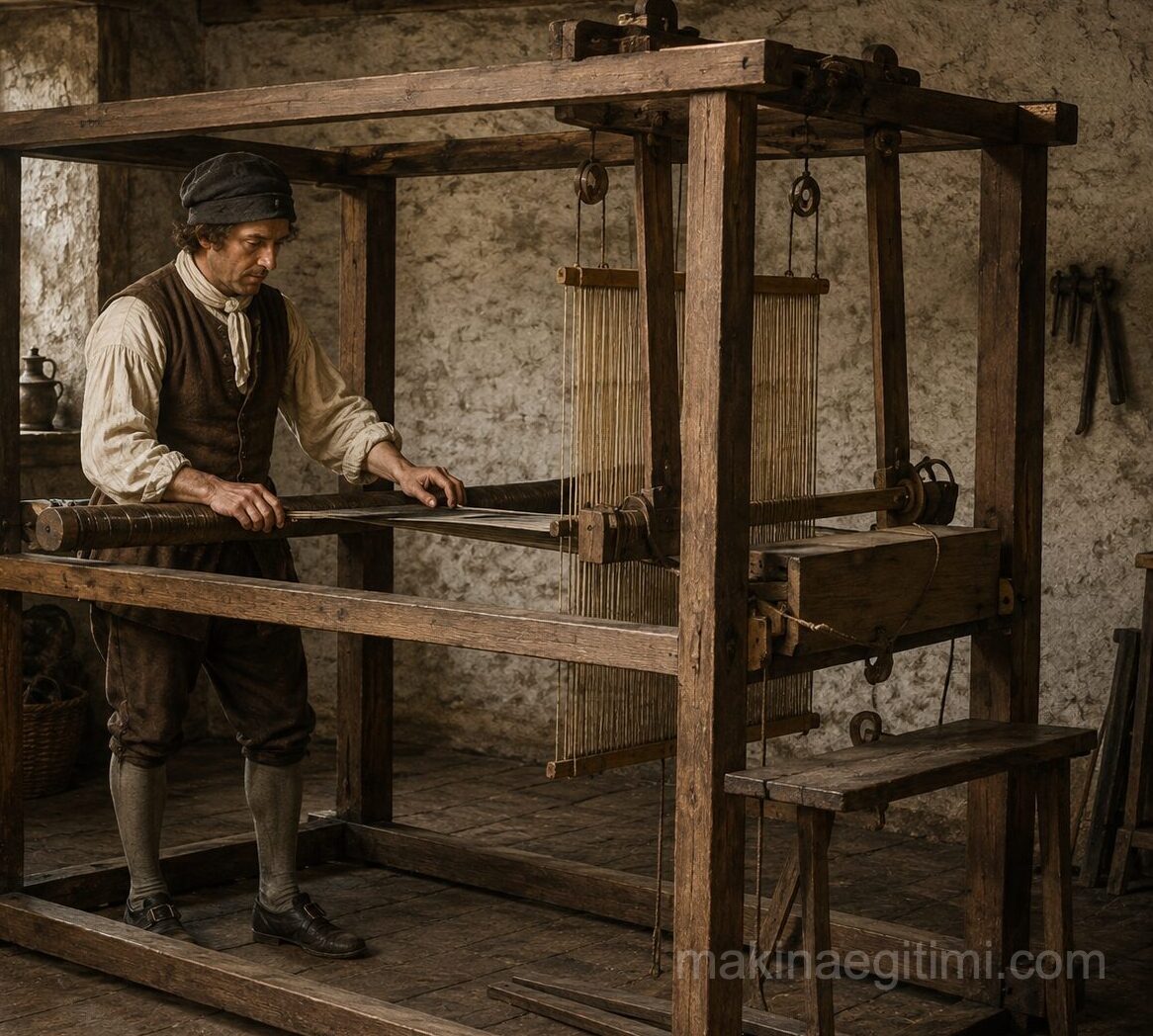
On this new loom, the shuttle was no longer thrown by hand; it was launched from one side to the other through the warp threads by a whip-like device.
Though this system seems very simple, it made the weaving process far easier and increased production enormously.
However, weavers at first refused to use the “flying shuttle,” because they feared that half of their fellow weavers would be left without a livelihood. But they hadn’t factored in humanity’s enormous need for cloth and fabric. The more fabric that was made, the more demand grew to match it.
The Growing Need for Thread
Weavers began to use the “flying shuttle” and suddenly found themselves facing a completely different problem. They could weave twice as much, but they couldn’t obtain twice as much thread. On March 16, 1751, the Society of Arts offered a prize of fifty pounds in gold to whoever built the best machine “that could twist six threads of flax, cotton, or hemp at once, operated by a single person.”
The date of this prize is significant, marking the beginning of the modern history of cotton, the rise of the American Southern states, the suffering of enslaved Black Americans, and the war between the Northern and Southern governments that was ignited by the question of slavery. This was also the date at which the foundation for England’s leadership in the textile industry was laid.
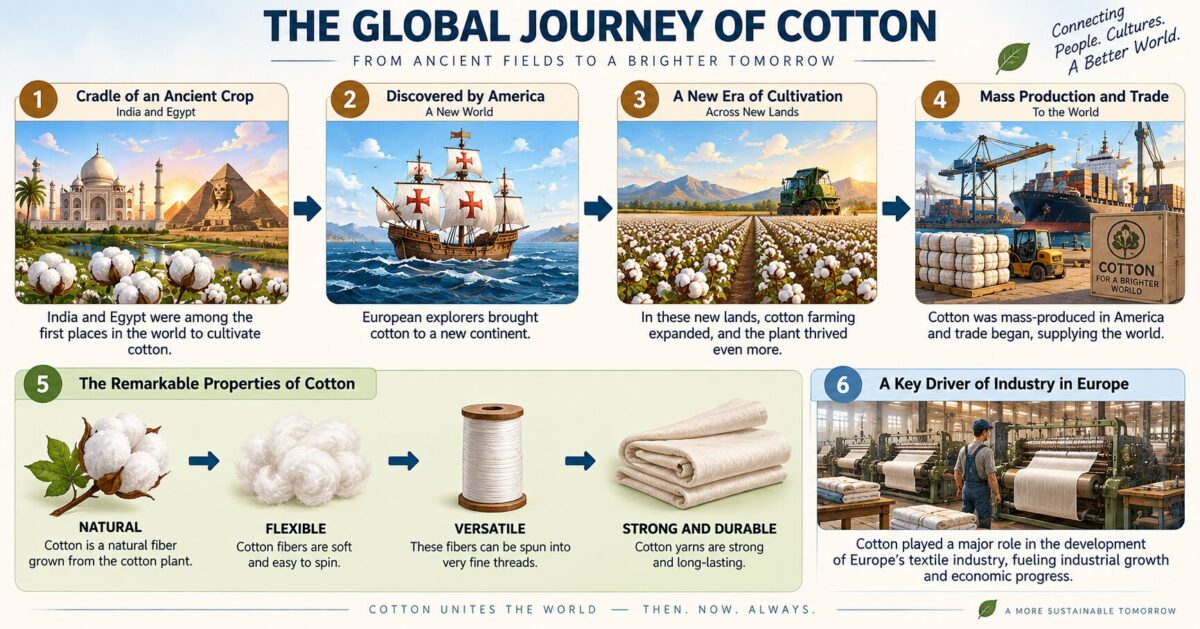
Until the end of the Middle Ages, India and Egypt were the greatest cotton-producing countries. Then America was discovered. Its discoverers saw that the cotton plant could grow, and grew very well, in this new land. America wasn’t only producing gold and silver. Cotton was being systematically grown there and brought to Europe. Because cotton fibers are elastic, they could be spun into very fine threads that were also much harder to break.
The First Thread-Spinning Machine in the History of Weaving – 1764
In 1764, 13 years after the fifty-pound prize was announced, the weaver James Hargreaves, of the town of Stanhill in Blackburn, invented the requested spinning machine.
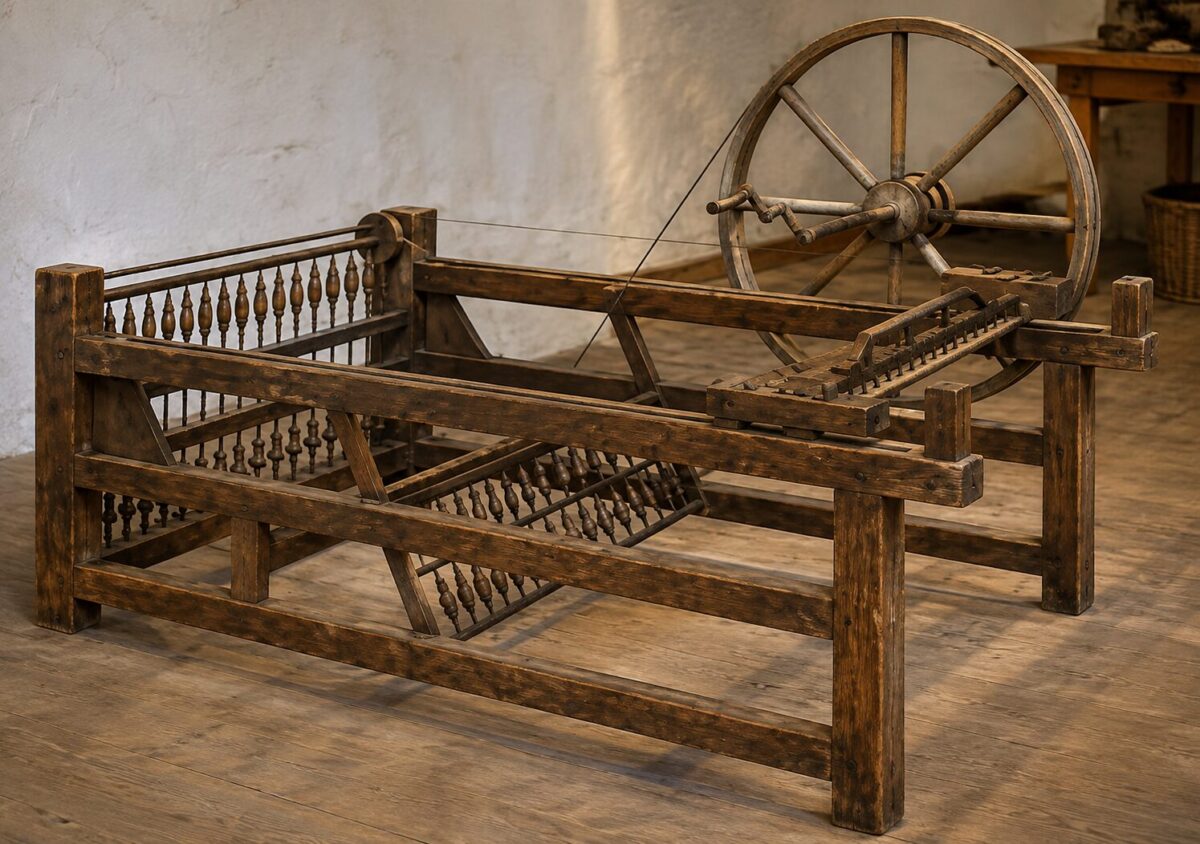
The spinning machine invented in 1764
He named this machine “Jenny,” after his daughter. The pale-faced “Jenny” no longer had to spend her morning sleep spinning thread.
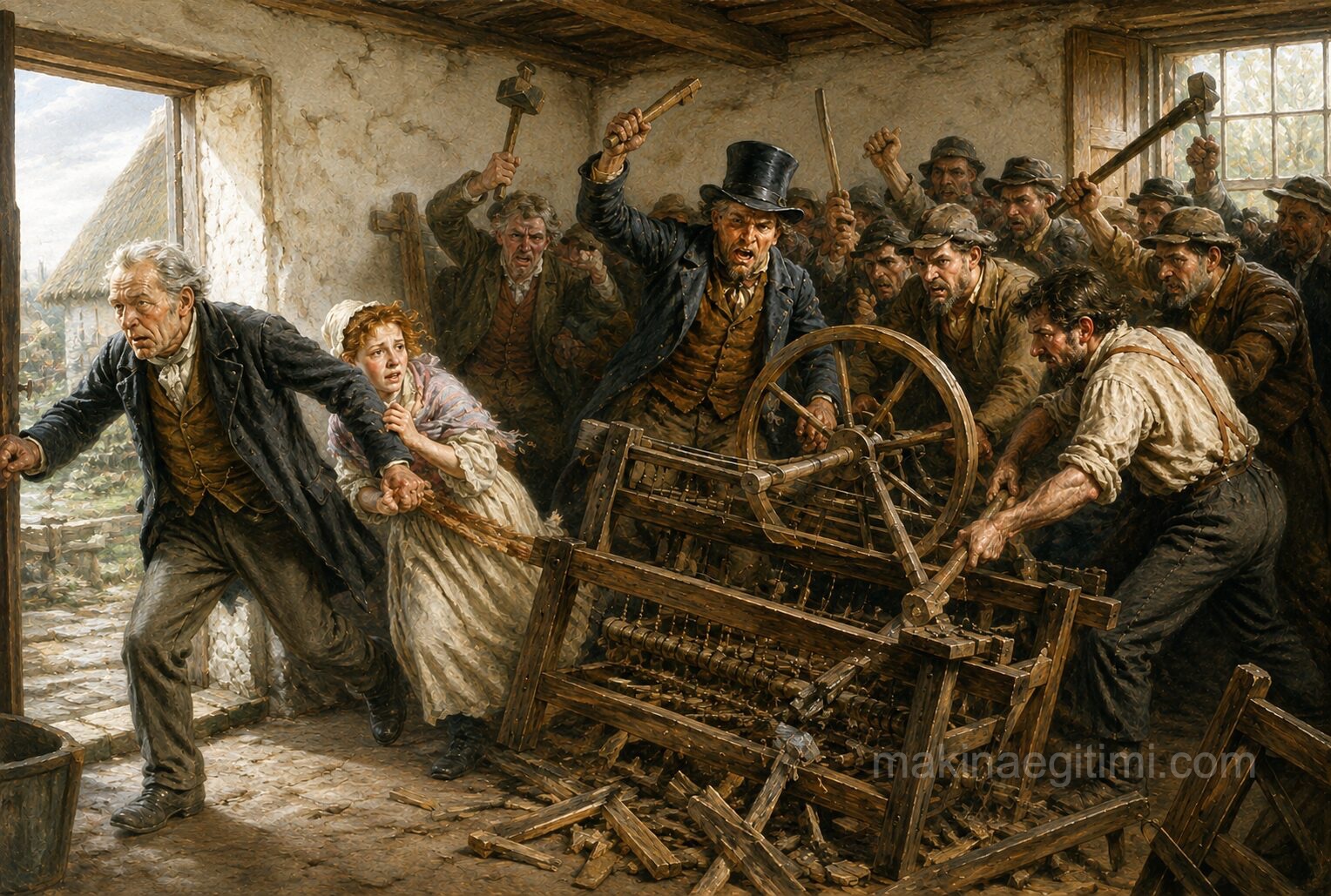
As soon as word spread of the invention of the “Jenny” machine, an enraged mob, fearing they would lose their jobs, attacked the weaver’s house and smashed the machine. Hargreaves, along with his daughter, was forced to flee just to save their lives. Although this particular Jenny never got to enjoy happiness thanks to the machine, other “Jennies” did follow. And its name was written into the pages of the history of weaving.
The History of Weaving
The History of Weaving Takes Shape with an Automatic Textile Machine – 1769
The triumph of the spinning machine began a few years later. Richard Arkwright, a poor man from Bolton who sold hair dye door to door as a barber, completed the work that Hargreaves had started. The spinning frame the Englishman Richard Arkwright developed in 1769 first drew out the thread, then twisted it as it was wound onto a spool or bobbin.
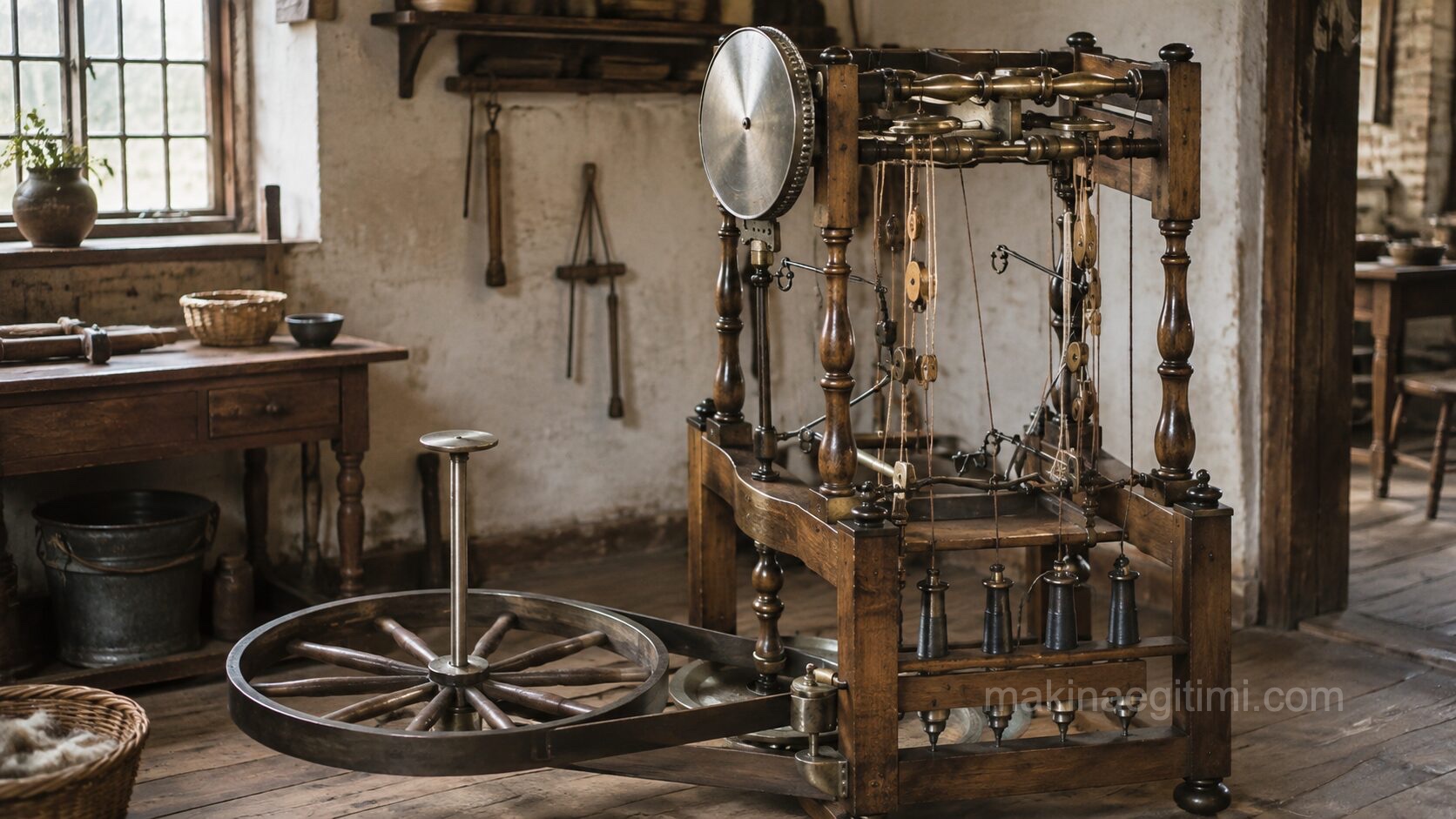
Richard Arkwright’s water frame
Richard Arkwright invented the water frame, which produced stronger threads. It was also the first powered, automatic, and continuous textile machine, and it drove the shift from small-scale home manufacture toward the factory production of textile goods. The water frame was also the first machine that could spin cotton thread.
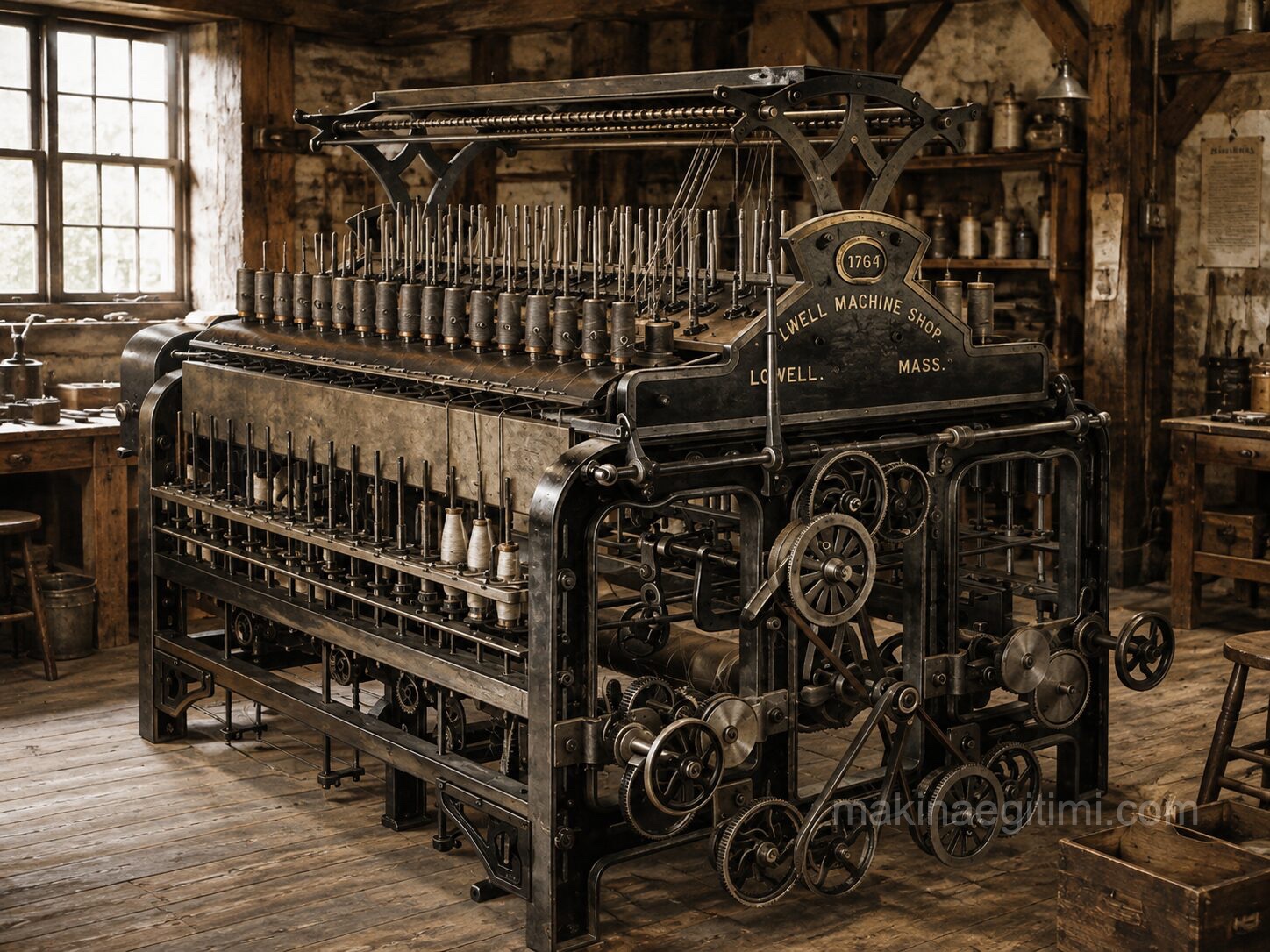
Arkwright knew that weavers couldn’t get enough thread, but that spinners would still destroy any machine that made their work easier. He managed to save up a bit of money. With it, he hired a clockmaker and a blacksmith. Shut away in a workshop with these two helpers, he built a better spinning machine than Hargreaves’s. To fool the public, he spread word that he was trying to build a self-operating engine in a rented carriage house.
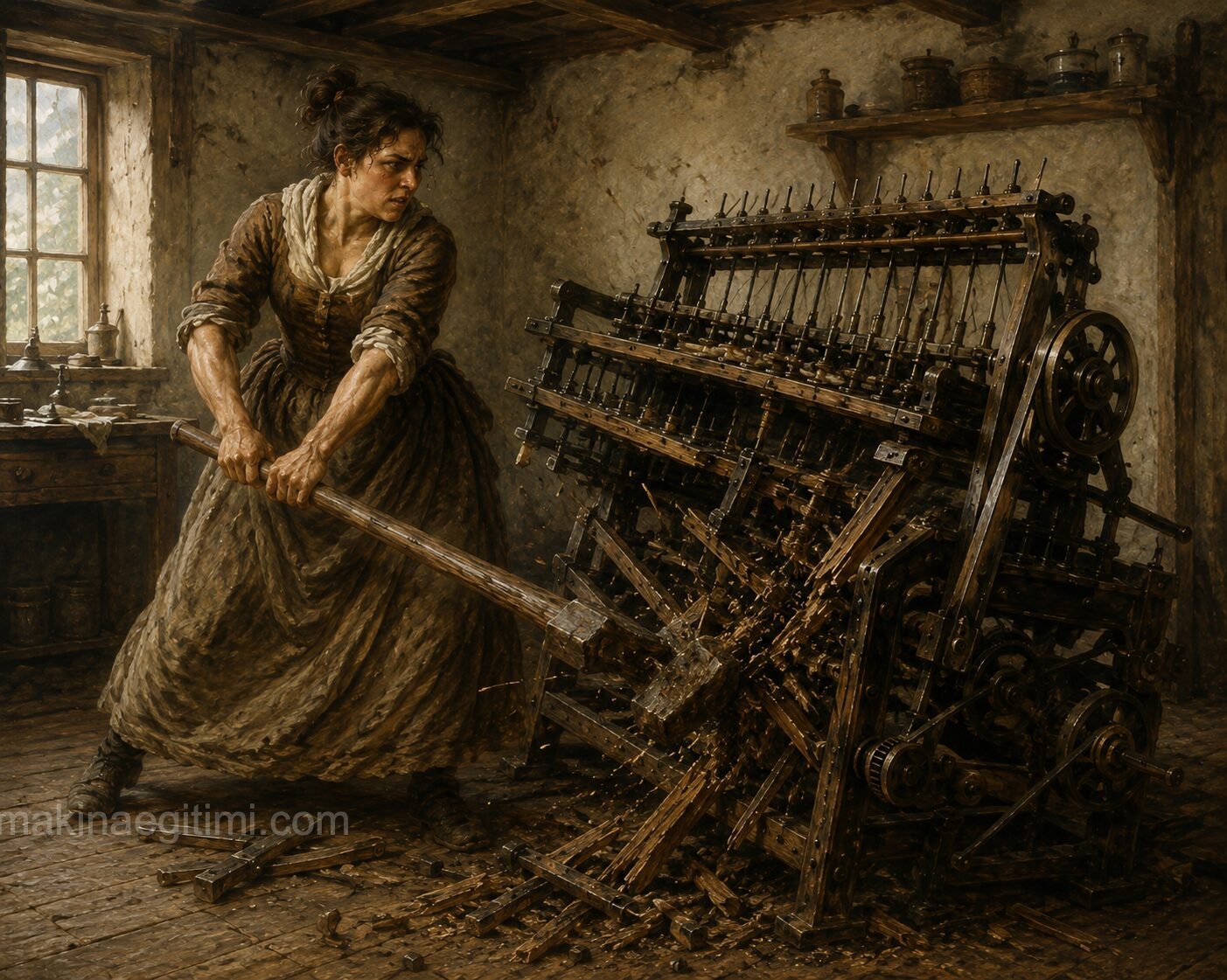
He could fool the public, but he couldn’t fool his wife. The woman realized he was on his way up in the world and that he would leave her, even though she had borne him ten children, and she smashed the first machine that had been built.
Fleeing both his wife’s wrath and his fear of the public, Arkwright escaped to another town. In the town of Cromford, in Derbyshire, using other people’s money, he built his first spinning machine. He opened a stocking-knitting manufactory, and in 1790 bought two steam engines to run his spinning machinery.
With Arkwright’s machine, England could spin the whole world’s cotton into thread. Everyone had become dependent on England. Soldiers crushed the machine-breakers, and Arkwright was granted a title of nobility. He gave each of his ten children ten thousand gold pieces in his lifetime, and when he died in 1792, he still left behind another half a million gold pieces.
The History of Weaving and the First Mechanical Loom – 1785
By now weavers’ hunger for thread had been satisfied. Farsighted people even began to fear that more thread would be produced than the weavers could ever process. Among these farsighted people was the poet and clergyman Dr. Edmund Cartwright, born in Marnham, Nottinghamshire. Cartwright is one of the people who left his mark on the history of weaving. If excess thread was going to pile up on the market, then more weaving, and more advanced looms, would be needed too.
Cartwright, who had never even seen a loom before that point, set to work. A year later, in 1785, Dr. Edmund Cartwright invented the first mechanical power loom.
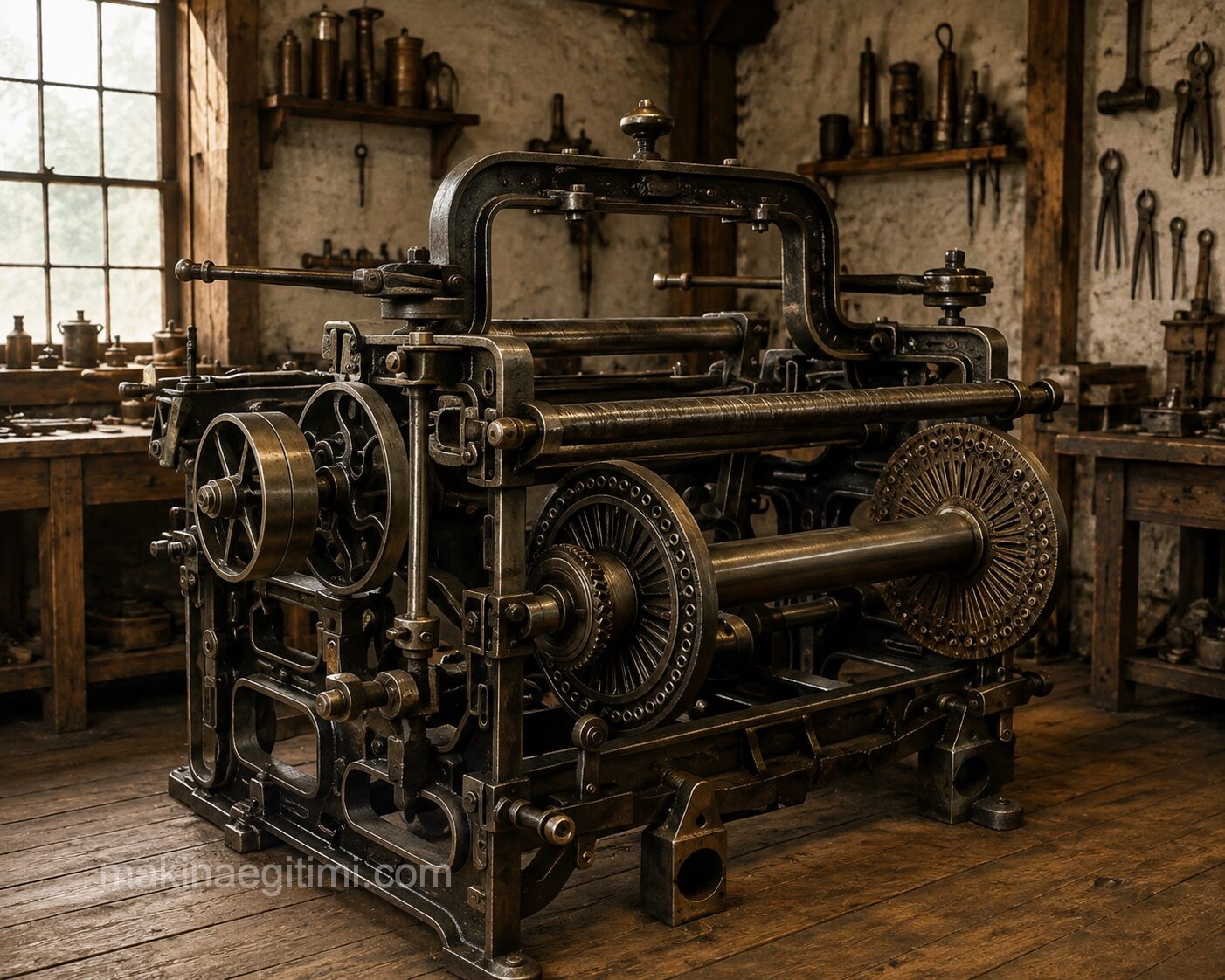
Like Arkwright, the clergyman Cartwright wasn’t a man of this trade either. Cartwright’s only advantage over the barber was his education. The barber Arkwright had worked purely out of ambition to become rich and important. What gave Cartwright his inspiration, drive, and courage was the following event:
The Event That Left Its Mark on the History of Weaving
Around that time, the Viennese financial advisor Kempelen had amazed the entire world with the chess-playing “Turk.” This was an automaton made of tin, full of cylinders and gears. There was a chessboard in front of the tin “Turk.” The greatest chess players of the age were forced to admit that the Turk played better chess than they did. It had defeated Frederick the Great and Napoleon.
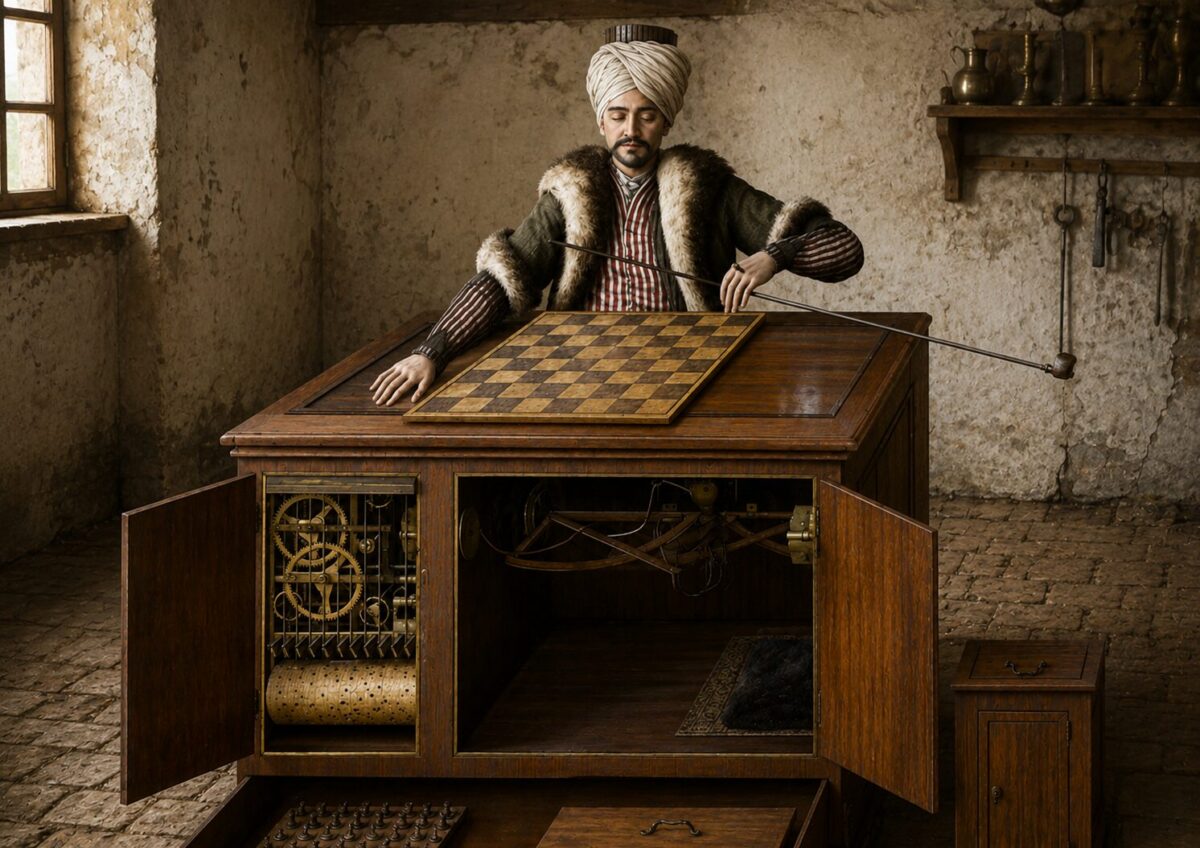
Cartwright thought to himself: If an automaton that can think has been built, why shouldn’t an automaton that can weave be built too?
But the chess-playing Turk was nothing more than an illusion: a man was hidden inside it, though Cartwright didn’t know this. If Kempelen’s trick with the automaton had come to light earlier, perhaps the weaving machine wouldn’t have been invented when it was. This is a fascinating event that left its mark on the history of weaving.
Weavers didn’t want what Cartwright was offering them. With unbelievable stubbornness, they clung to their old looms. Because of this, Cartwright opened a weaving factory, but he couldn’t keep it running. This gentle man was deeply pained that weavers kept smashing his machines. He didn’t have an iron heart like the harsh Arkwright. He left the business to others, and was satisfied when Parliament granted him a reward of ten thousand gold pieces in compensation for his exhaustion and his broken machines.

The History of Weaving and the American Civil War
Weavers smashed a hundred weaving machines in England alone. The government sent soldiers against them.
England crushed the weavers, and sent an ever-increasing number of enslaved people to the southern governments of North America. This was because the manufacturers needed the necessary cotton to be planted and harvested.
More and more fabric was being made, yet people’s need for clothing could never quite be satisfied. When the war to free the enslaved began (this was, in part, also a war fought over cotton production), friends of the Southern governments argued that abolishing slavery meant people would soon be left with nothing to wear. Even so, slavery was abolished.

Telling the history of weaving without mentioning the enslaved people who worked in America’s cotton fields would be incomplete. This was, after all, one of the causes that led to the American Civil War and, afterward, to the shape the United States took. (image above)
The Role of Steam Machines in the History of Weaving

The arrival of steam-powered machines in the cotton fields had a real impact on the history of weaving. (above)
Slavery was abolished, yet more cotton than ever was still being grown. This was made possible in part by the German engineer Max Eyth, who improved the design of the steam plow. Machines now did the work that had once been done by enslaved people. Steam plows rumbled across the fields while spinning machines clattered and looms clacked away in the factories.

A “weaver girl”: young girls worked at textile companies in Massachusetts starting at age 13. Year: 1900 (image above)
In this article, we’ve tried to tell the history of weaving through events and images. Anyone who opens their closet can understand that the need for clothing still hasn’t been fully satisfied. We all need more clothing than we currently have on hand. And the fact that people today own far more clothing than they used to is something we owe to machines that were once cursed, and whose inventors were once beaten and driven out.
Related Posts
 Leonardo da Vinci’s Machines: The Flying, Fighting and Walking Inventions of a Renaissance Genius
 The History of the Automobile. The Evolution of Vehicle Technology From Then to Now
 Nazi Germany’s Mega Structures – Super Tanks
 How Was the Enigma Code Cracked? Alan Turing and the Bombe Machine Explained
 The History of Electric Arc Welding
 The History and Evolution of Robotics: From Ancient Automata to AI-Powered Robots
 From Rivet to Weld: How and Why an Era Ended
 The Story of the Tiger I Tank. The War Machine That Became a Legend