Bearing Damage
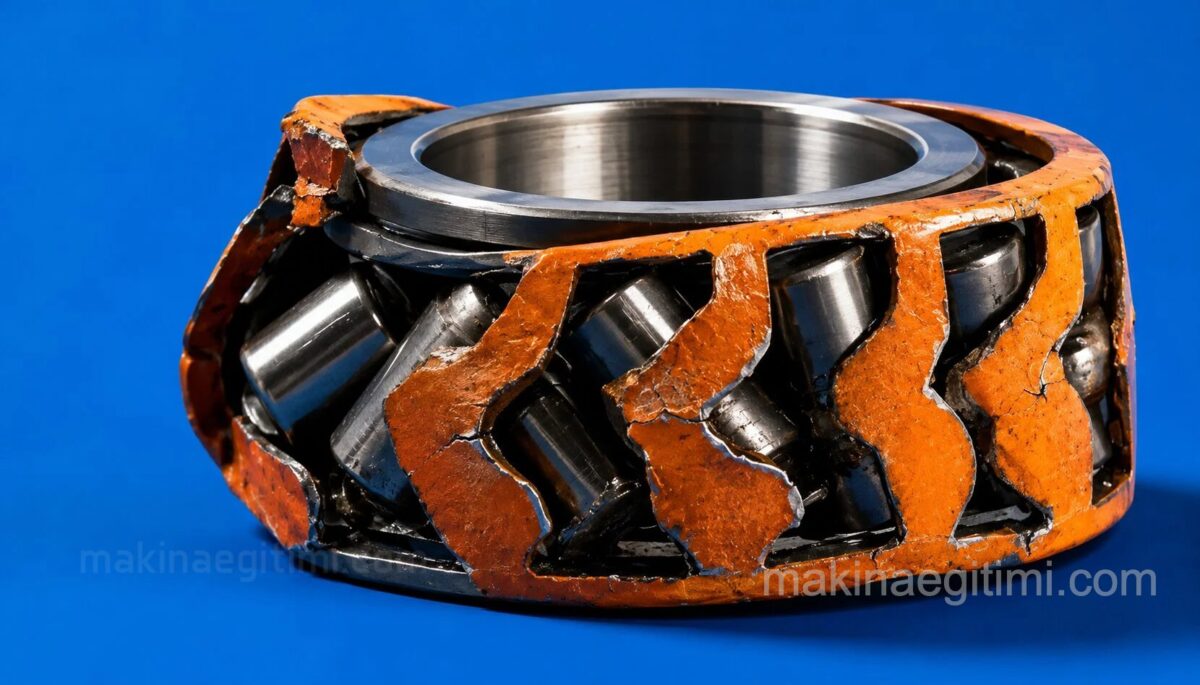
Bearings are important machine elements. Damaged bearings cause disruptions and loss of productivity in operations. In this article, we’ll look at how we can prevent bearing damage.
Bearing damage also reduces a facility’s operating efficiency, decreases active uptime, and, in the worst case, can injure workers.
Insufficient Lubrication
One of the most common causes of bearing damage is increased friction due to insufficient or contaminated lubrication.
Improper Mounting Error
Bearings mounted off-axis or excessively tight can lead to premature fatigue failure.
Effects of Overloading
Bearings loaded beyond their design capacity can fail much sooner than their expected service life.
Causes of Bearing Damage
The causes of bearing damage are insufficient lubrication, contamination, overloading, and improper handling and installation. Bearing damage forces companies to repair or replace the housings the bearings are fitted into, shafts, and adjacent parts, which means extra cost.
Insufficient lubrication
Insufficient lubrication is a major bearing killer. OEMs and bearing suppliers typically specify the correct amount, type, grade, delivery system, lubrication cycle, viscosity, and additives for bearing lubricants. They can also help select lubricants based on sealing, load capacity, service conditions, and expected life for bearings.

Manufacturers and distributors should provide detailed recommendations on storage, shelf life, delivery, filtration, and other precautions. And if any condition changes, even one that seems trivial, the lubricant supplier should be consulted.
Mixing different grades and brands of grease or oil can produce adverse results. Lubricants must be compatible to keep functioning properly over time. Some lubricants should never be mixed with others because of significant chemical differences in thickening agents, base oils, additives, and other components.

Before switching lubricants, confirm compatibility with lubricant suppliers. In some cases, this may require special testing. Before suddenly switching to a new lubricant or additive, allow time to remove all of the old lubricant from the system.
Once a lubricant is selected and applied, monitor the lubricant and confirm there are no problems with your bearings. Monitor bearing temperature continuously, or at least periodically. If bearings operate at a temperature above 180°F, oil life will decrease significantly even with oxidation inhibitors.

Low ambient temperatures also challenge lubricants, thickening them and causing them to drain improperly. Consult bearing suppliers for the acceptable temperature range.
Bearing damage related to poor lubrication generally follows these four stages:
Discoloration or darkening
Discoloration or darkening of the bearing due to metal-to-metal contact that raises the temperature.
Any kind of notching or spalling,
These indicate serious lubrication-related problems and require immediate attention. Look for marks that cut into the metal or gouge it.
Localized notching
Hot spots result from a breakdown of the lubricating film and direct contact between components. In tapered roller bearings, this can lead to notching at the large end of the roller and guiding of the rings.
High localized heat or cumulative wear
This can alter a bearing’s geometry or mounted clearance enough to cause bent rollers, a destroyed cage, metal transfer, torque or power loss, and complete bearing failure.
Contamination
Contamination from foreign particles also creates problems in bearings. Even small amounts of dust, dirt, or debris can break down the oil film and damage the bearing surface. Water is especially damaging to lubricant. As little as 1% water in grease or oil can significantly shorten bearing life.
Proper seals are critical to protecting against contamination.
• Use seals suited to the environmental and operating conditions.
• Install outer shields to prevent debris from accumulating on and around the seals.
• Regularly check radial lip seals for flexibility, hardening, cracking, and shaft contact.
• Look for leaks and replace damaged seals as soon as possible.
• Be careful when using water, steam, or compressed-air sprays for periodic external cleaning. Many rotating seals cannot withstand steam or high-pressure sprays.
• When disassembling large machinery, avoid lifting with chains, wire ropes, or dirty slings that can scratch sealing surfaces.
In addition, measures to reduce contamination:
1. Wash and dry bearings when they are removed for inspection. Then, before storage, coat them with oil or another preservative and wrap them in protective paper.
2. Regularly collect and test oil or grease samples. Ideally, they should have consistent properties. If they contain solid particles, identify their source and prevent further contamination.
3. Don’t rely on filters alone to prevent contamination. In harsh environments where filters are under heavy demand, technicians need to plan for regular filter inspection and replacement.

Sand, fine metal from grinding or machining, and fine metal or carbides from gears can abrade the rolling elements. Scoring behaves like a stress riser, raising metal around cracks, causing premature spalling and shortening bearing life.
Metal particles left over from machining, or large debris left behind due to improper cleaning, can initiate premature fatigue damage.
Hard particles like chips and metal fragments can also become embedded in soft cage material and create grooves in rolling elements (fluting). This causes improper rolling-contact geometry for the bearing and a shorter service life.
Moisture and water contamination cause abrasion or corrosion in bearings.
Or improper storage. Equipment sitting idle for long periods also becomes susceptible to corrosion, which can lead to rapid deterioration.
Overloading
Overloaded bearings are those operating beyond their rated design limits for load, speed, or temperature. As overload increases, bearing life shortens. Load-bearing components can also fracture.
While overloads can result from operator error, they can also stem from a mismatch between the bearing and the application. Warning signs of overloading include noise and vibration, rising temperatures, metallic chips in the lubricant, and reduced filter performance and output. Another sign of overloading is fatigue damage in the form of pitting or spalling of the bearing materials.
Other indications include:
Roller fracture.
Spalling.
Outer ring lower cage fracture.
Hard lines or plastic deformation at the edges of the cylindrical and non-random contact points on the raceway. These lines appear black and can be felt with a fingernail or a sharp-pointed tool.
Metal deformation at the bottoms of the raceway grooves.
Overloaded bearings must be repaired or replaced; otherwise, they can cause further damage and more serious consequences.
Improper handling and installation
Technicians must use proper methods and tools when handling and mounting bearings, because even the smallest nick or scratch can weaken performance and reliability.
Many cases of premature bearing damage occur because of improper storage. Bearings should be stored in anti-corrosive packaging until ready for installation. If a bearing needs to be removed from its original packaging for any reason, use protectants and re-wrap the parts.

Bearing components, especially cages, can be damaged. These are often made of soft steel, bronze, or brass, and can be easily damaged by improper handling or installation.
Recordkeeping is also important. Document all maintenance records, noting the date, equipment model and serial number, bearing designation and serial number (if available), and the manufacturer. Include comments on housing or shaft reconditioning and other replaced components. These records can be crucial for tracking performance, defining service intervals, and identifying trends for future maintenance planning. Records also form the basis for troubleshooting equipment issues and bearing damage analysis.
Carelessness when removing outer rings from housings or wheel hubs can create burrs or high spots on the edges of the outer ring. If a tool rounds off the housing bore, it will leave raised areas around the bore.
If these high spots aren’t scraped off or removed before the outer ring is remounted, they transfer through the outer ring and cause corresponding high spots on the inner diameter of the outer ring. This increases rolling-contact pressure and shortens fatigue life, causes irritation, or, in extreme conditions, fractures components. The sudden effect of ridges and deep scratches can include roughness and vibration and noise in the bearing.
Correct alignment during installation is important, because a statically misaligned bearing has a shorter life. If alignment is off, loads are not distributed across the rotating elements and rings. Instead, the load concentrates on only some of the rollers or balls, potentially causing fatigue.

In summary, to extend bearing life and prevent bearing damage, attention must be paid to lubrication, protection against contamination (adhesive contamination), avoiding overloading, and properly handling and mounting bearings. If this is done, we protect these important components from damage, increase workflow, extend service life, and save time and money.
Related Questions
Off-axis mounting prevents the load inside the bearing from being distributed evenly, causing much more load than expected to concentrate at certain points. This unbalanced loading causes the bearing to fatigue and fail much sooner than its normal life.
Oil forms a protective film that prevents the metal surfaces inside the bearing from making direct contact with each other. When this film is insufficient, the metal parts begin to rub against each other, causing rapid wear and heating.
Related Posts