Plain bearings are bearing elements widely used in machines and mechanical systems to support rotating shafts and moving parts, to carry loads safely and to keep friction under control.
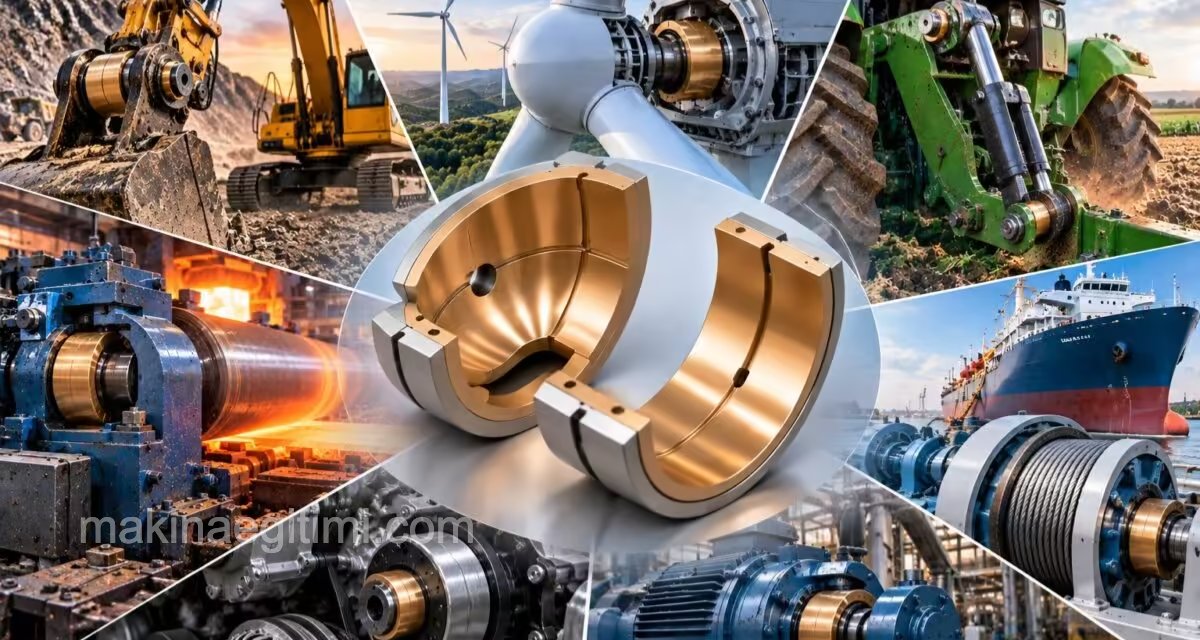
They offer particular advantages in applications with high radial loads, impact, vibration, low to medium speeds or demanding operating conditions. Plain bearings are used in a wide range of fields, from internal combustion engines to agricultural machinery, from rolling mills to power systems and all kinds of industrial machines. How they work, and why they are chosen, varies with the load, the speed, the lubrication and the working environment of each application.
Let us now look at a few examples of where plain bearings are used.
The Automotive Industry
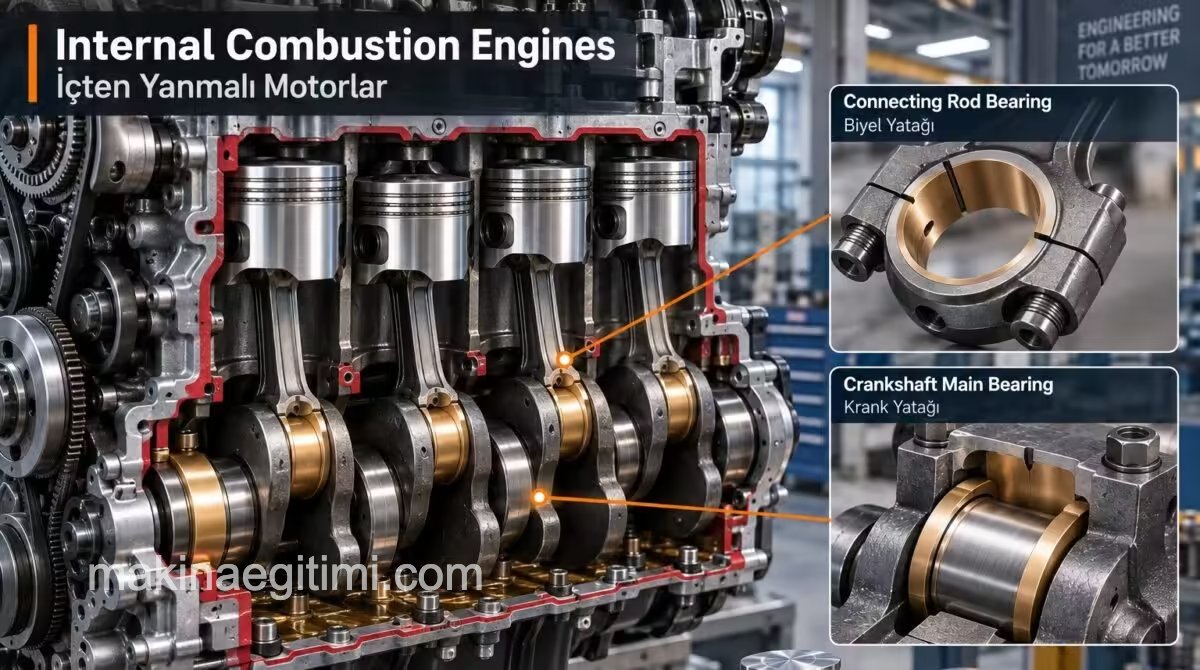
In internal combustion engines, plain bearings are used above all at the crankshaft and connecting rod journals, so that rotation takes place with low friction. Carrying the high radial loads generated while the engine runs, these bearings form a suitable oil film between the shaft and the bearing surface, preventing direct contact between the metal surfaces and reducing wear. For that reason plain bearings play an important part in keeping an engine reliable, quiet and long-lived.
Industrial Plants
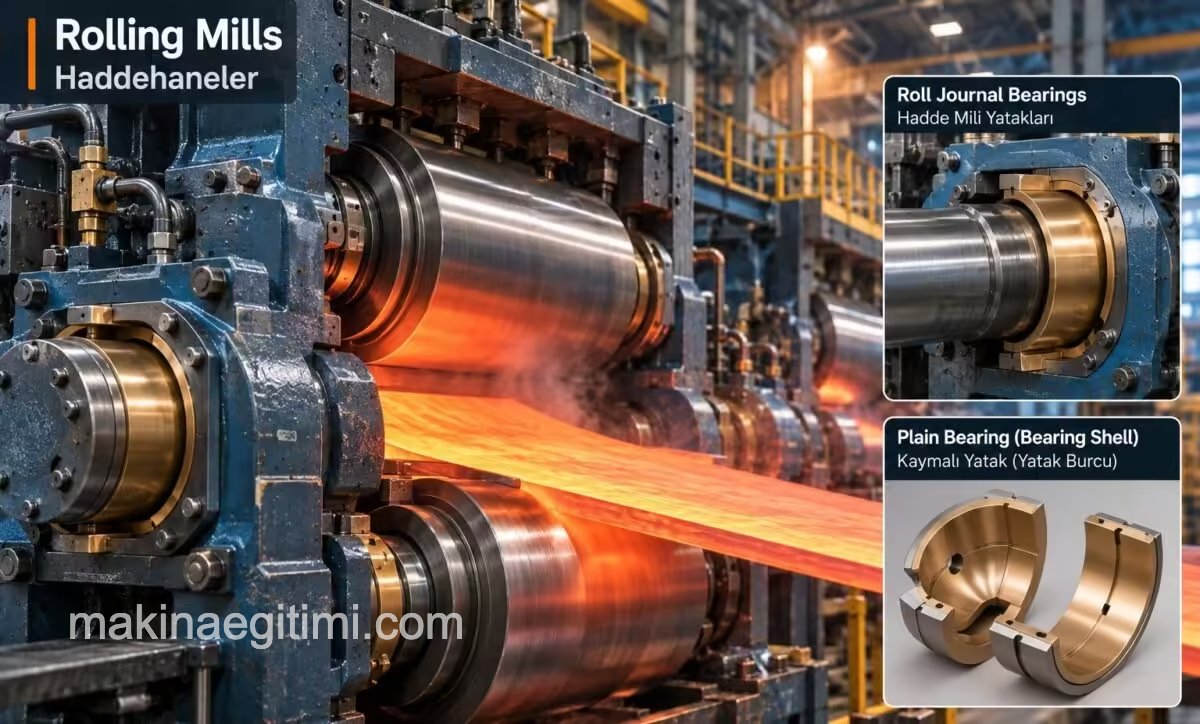
In rolling mills, plain bearings are used so that the mill rolls turn safely and steadily under high radial loads. Able to withstand the large forces and impacts that arise during rolling, these bearings support the roll shafts and, with proper lubrication, reduce friction and wear. In heavy-duty conditions in particular, they are an important bearing solution thanks to their high load capacity and durability.
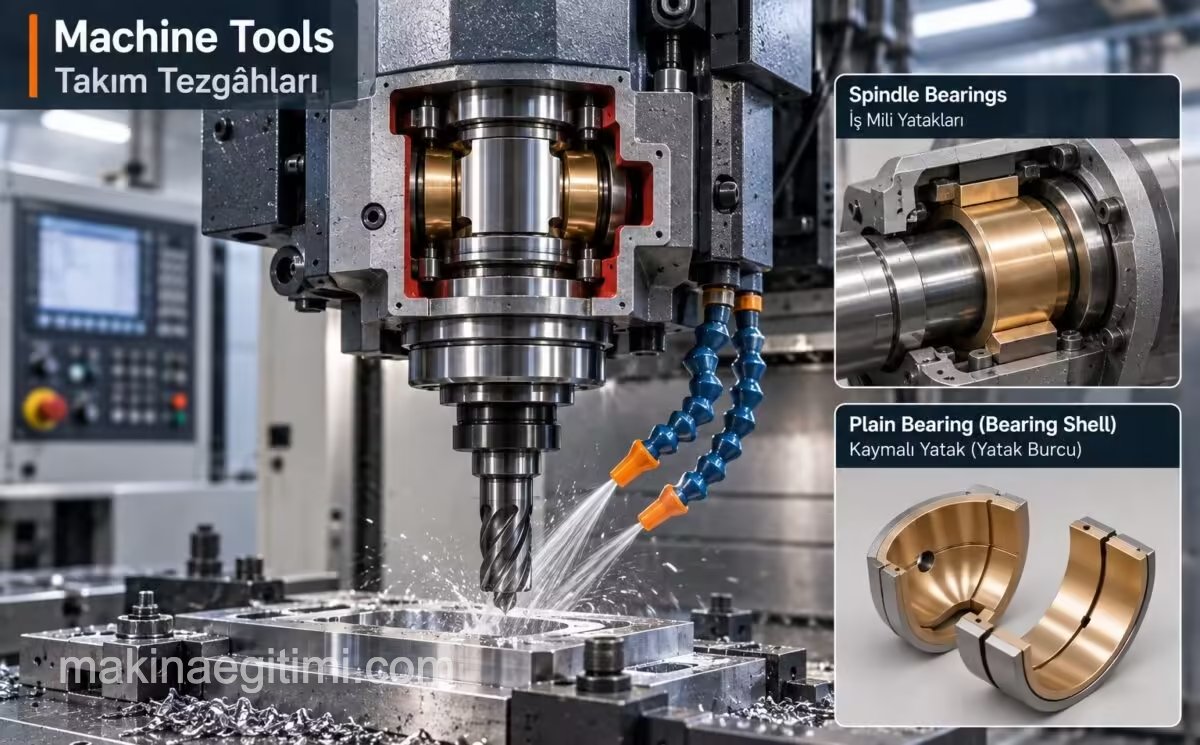
In machine tools, plain bearings are used in spindles, drive shafts and various rotating mechanisms to keep the shaft turning precisely and steadily. The bearings carry the radial loads that arise during machining and reduce the friction and wear between the shaft and the bearing surface. Used together with proper lubrication, they help to reduce vibration, maintain rotational accuracy and extend service life in machine tools.
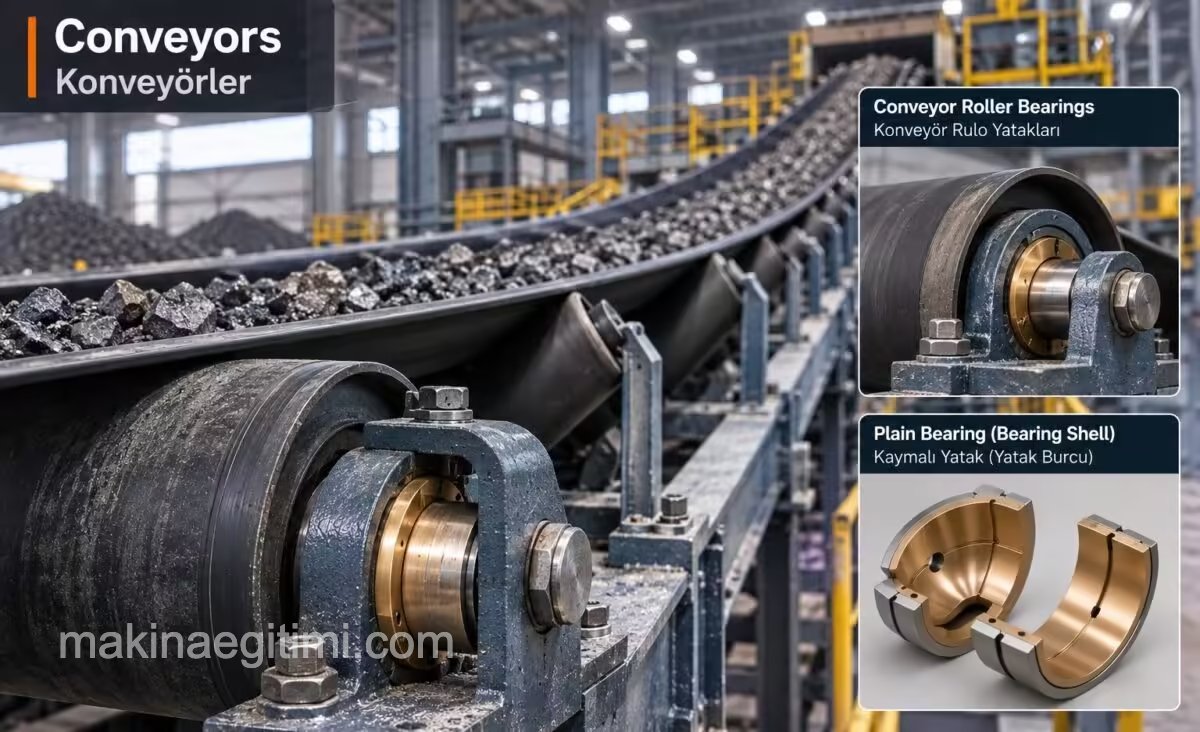
In conveyor systems, plain bearings keep the carrying rollers and drive shafts turning continuously and reliably. They carry the radial loads that arise while material is being transported and help the shaft run smoothly. Used with suitable materials and lubrication, plain bearings contribute to the durability and service life of conveyor systems, especially under demanding conditions of heavy loads, dust, dirt and impact.
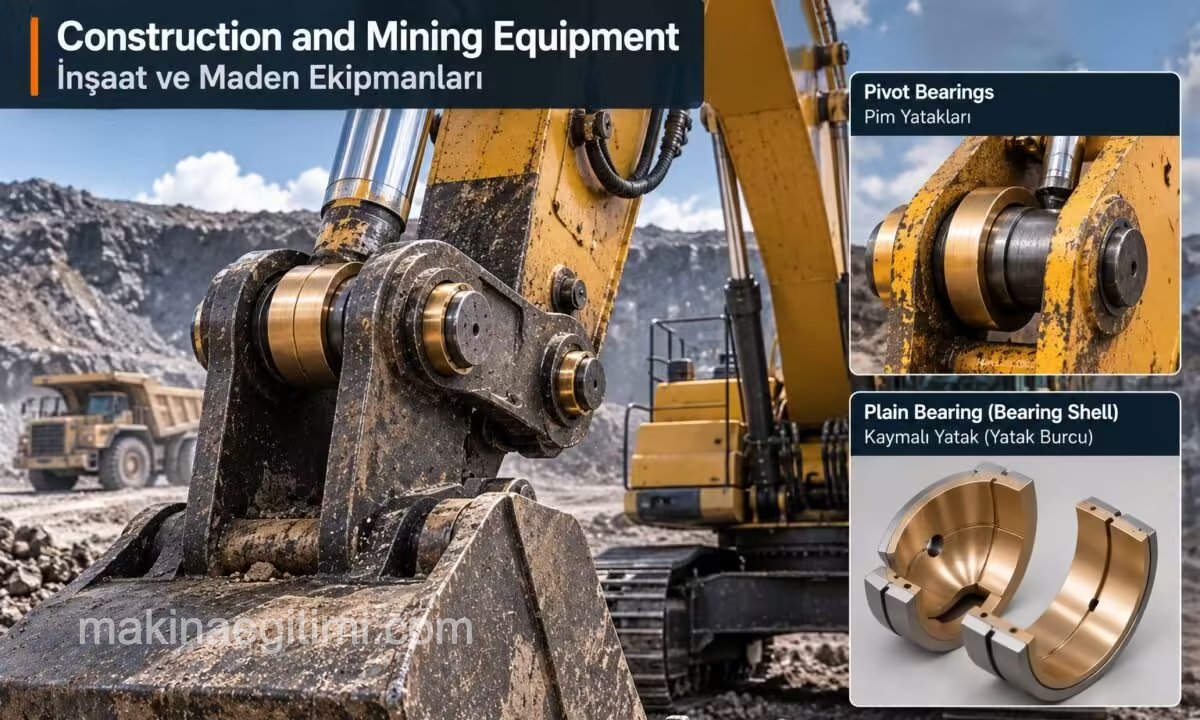
In construction and mining equipment, plain bearings are used above all in the pinned joints of the booms, buckets and hydraulic linkages of excavators, loaders and other heavy machinery. These bearings keep moving parts working reliably under conditions where high radial loads are combined with impact and vibration. By reducing the friction and wear between the pin and the bearing surface, and with proper lubrication, plain bearings improve the durability, motion accuracy and service life of the equipment.
Power Systems
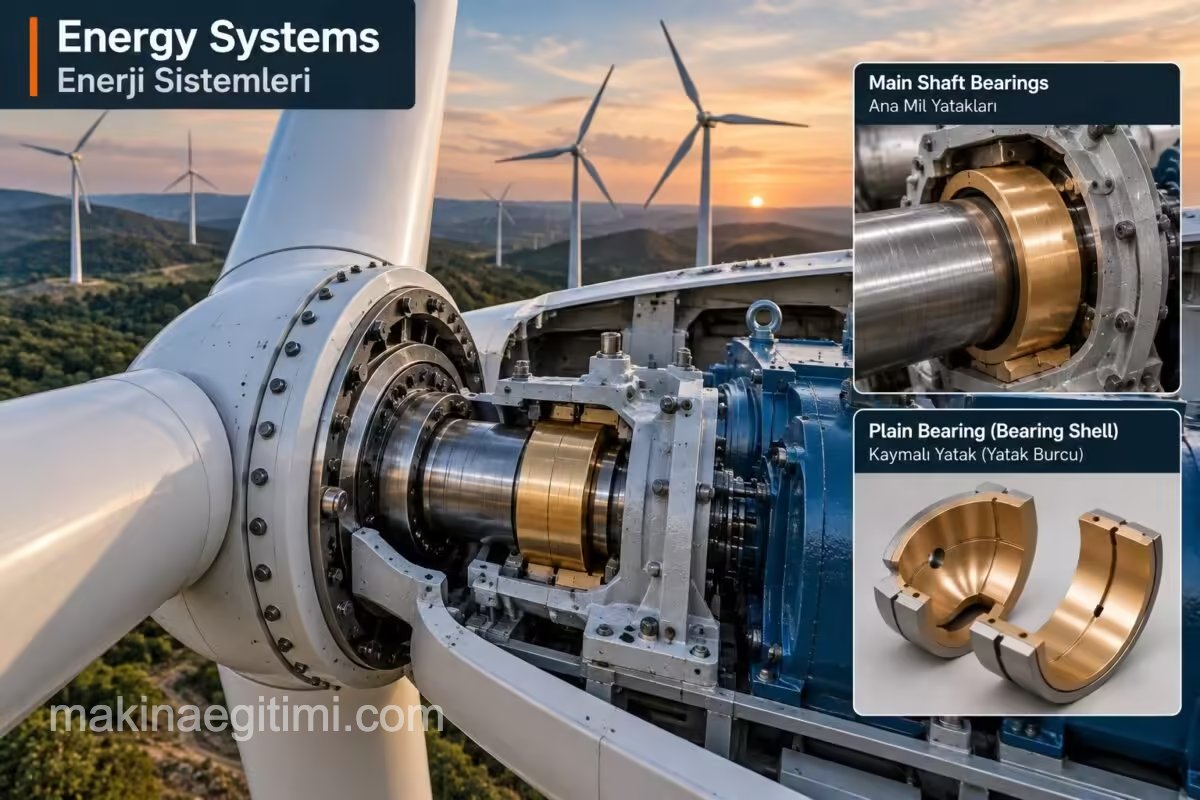
In wind power systems, shaft bearings are used so that the rotation coming from the turbine rotor is transmitted reliably and with low friction. Working under high loads and in continuous operation, these bearings keep the shaft turning smoothly and support the mechanical components safely. Plain bearings can be preferred in large-scale power systems because, with proper lubrication, they can operate under heavy loads and damp out vibration.
Agricultural Machinery
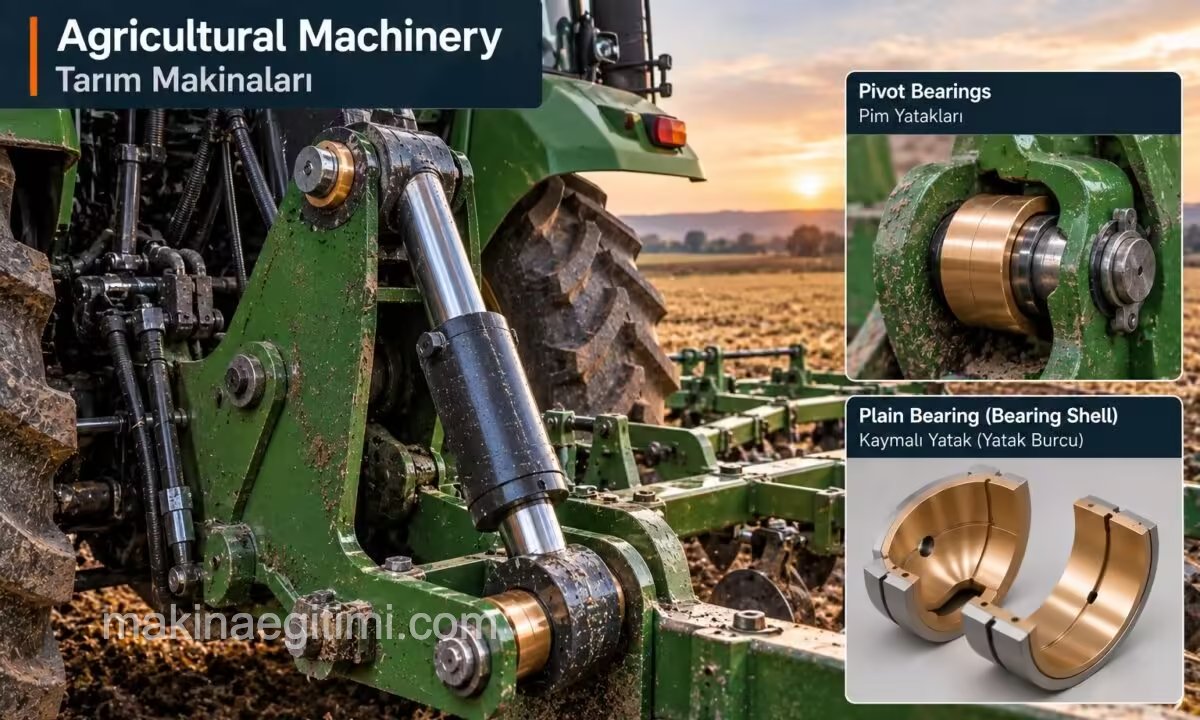
In agricultural machinery, plain bearings are used in tractor linkages, hydraulic mechanisms, joints and various moving connection points. By supporting shafts and pins, they keep the mechanism moving smoothly in agricultural applications where high radial loads, impacts and dirty working conditions occur at low and medium speeds. The construction of a plain bearing offers important advantages in durability and ease of maintenance under heavy working conditions.
Related Posts