While on the road, a flat tire is always a possibility. That’s why you should be prepared and know how to change a tire, and what to pay attention to while changing one. Knowing how to change a tire saves you time instead of waiting for roadside assistance. Follow the steps below to change your vehicle’s tire.
Changing a Vehicle’s Tire
Check your spare tire’s air pressure and condition once or twice a month. A spare tire without enough air isn’t good. As for the items you should have with you in case of a flat tire:
Tools and Materials Needed to Change a Vehicle’s Tire
Hydraulic or mechanical jack
Lug wrench
Portable air pump
Wheel chocks
Vehicle owner’s manual

Items you might need:
Raincoat (not just for protection against weather, but also to keep your clothes clean)
Gloves
A piece of wood (to stabilize the jack)
Flashlight and spare batteries
Whether they’re absolutely necessary or not, it’s best to keep all these items stored in your car. You never know when you’ll need them.
Park your vehicle in a safe location
Don’t panic when you start to feel a problem with your tires. Don’t brake or turn suddenly. Slowly reduce your speed and start looking for a clear, flat area on the side of the road. Avoid parking on curves and coming out of curves. Make sure there is enough space behind you so that approaching drivers can spot you from a distance.
Lug Nut Tightening Order
Wheel lug nuts should always be tightened in a crisscross pattern for even seating.
Jack Lift Points
The points where the vehicle should be lifted with a jack are reinforced areas on the chassis specifically designated by the manufacturer.
Torque Value Check
After a tire change, it’s recommended to tighten the lug nuts to the manufacturer’s specified torque value using a torque wrench.
How Do You Change a Tire?
After parking, follow these steps:
Engage the parking brake.
Place the wheel chocks.
Remove the hubcap.
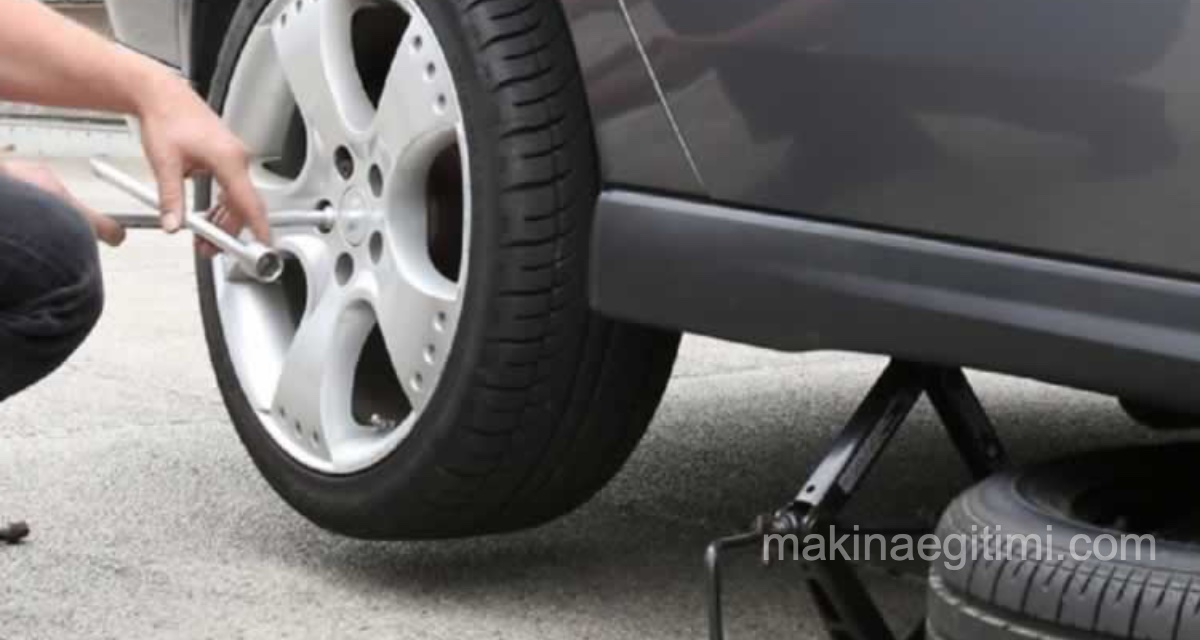
Loosen the lug nuts with the lug wrench (don’t remove them completely!).
Position the jack under the vehicle’s frame (check your owner’s manual for the jack placement point).

Lift the vehicle with the jack.
Remove the loosened nuts.
Take off the flat tire.
Mount the spare tire.
Put the lug nuts on and hand-tighten them. Don’t tighten them with the wrench yet.
Lower the vehicle slightly until the spare tire touches the ground. Don’t lower it all the way.

Tighten the nuts with your wrench. When tightening the nuts, work in a crisscross pattern, going to the opposite side rather than the adjacent one. If your wheel has five nuts, tighten them in a star pattern.
Lower the vehicle all the way, then tighten the nuts once more.
Put the hubcap back on.
Check the tire pressure. If the tire needs air, use the portable air pump to reach the manufacturer’s recommended pressure. Check your vehicle’s manual for this information.
Check all your equipment and supplies and load them back into your vehicle.
Go to the nearest technical service center and have your tire checked by an authorized mechanic.
How to Change a Tire Video
Related Questions
Since the spare tire isn’t used for long periods, its air can gradually decrease unnoticed. A spare tire with insufficient air when you need it can leave you stranded on the road again.
On sloped or unsafe ground, the jack can slip and the vehicle can lose stability. Flat, solid ground ensures the jack works safely and prevents accidents during the process.
Related Posts