A to-do list you try to keep in your head usually ends in forgotten jobs and last-minute panic. Apps like Notion and Todoist aim to gather that clutter in one place and make daily life more organised. They do not, however, do the same job. In this article we look at what each app is for, how they differ, how they are priced and how they can be used day to day.
What Is Todoist and Who Is It For?
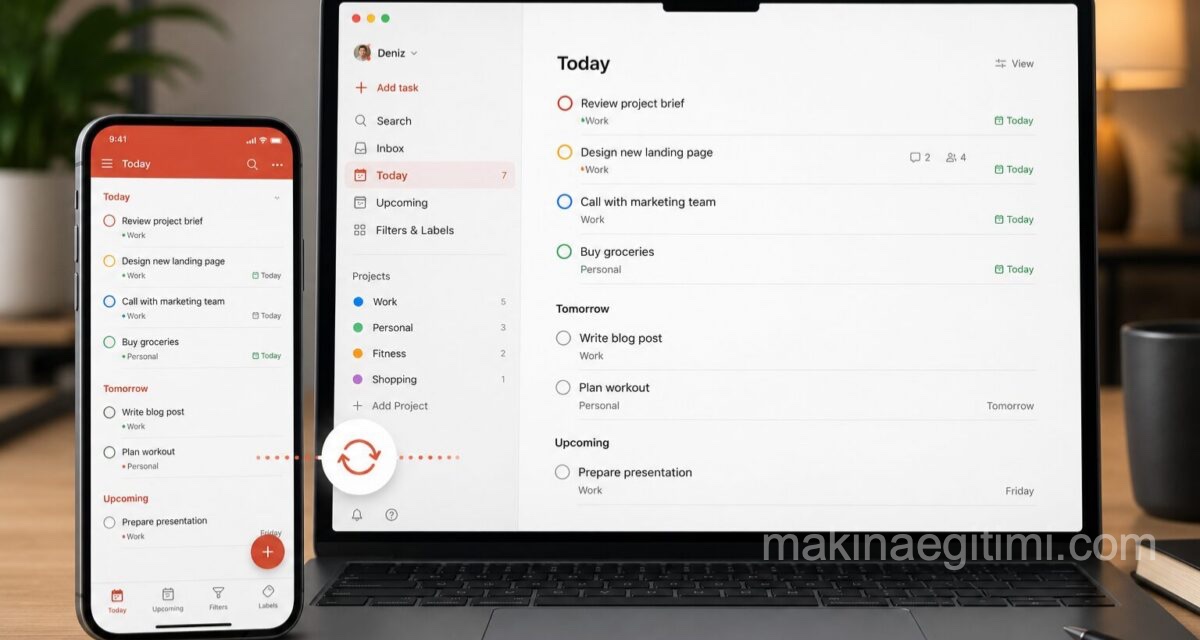
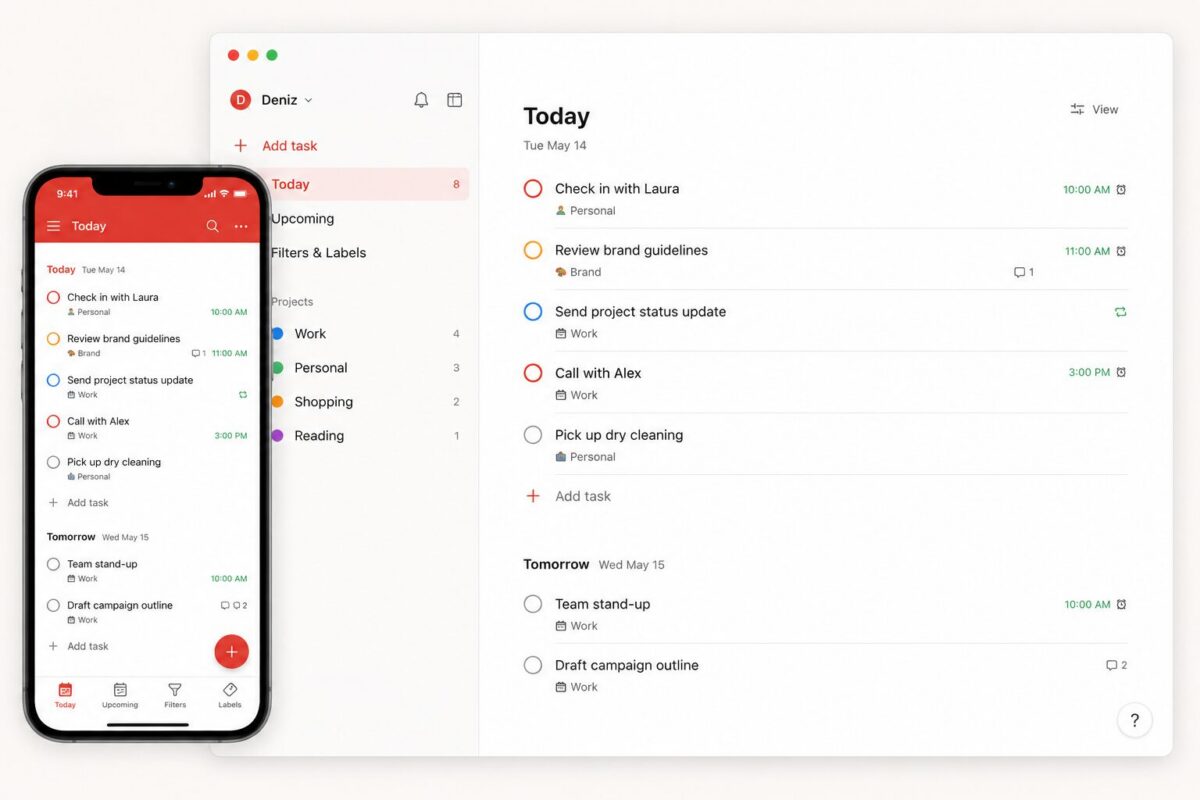
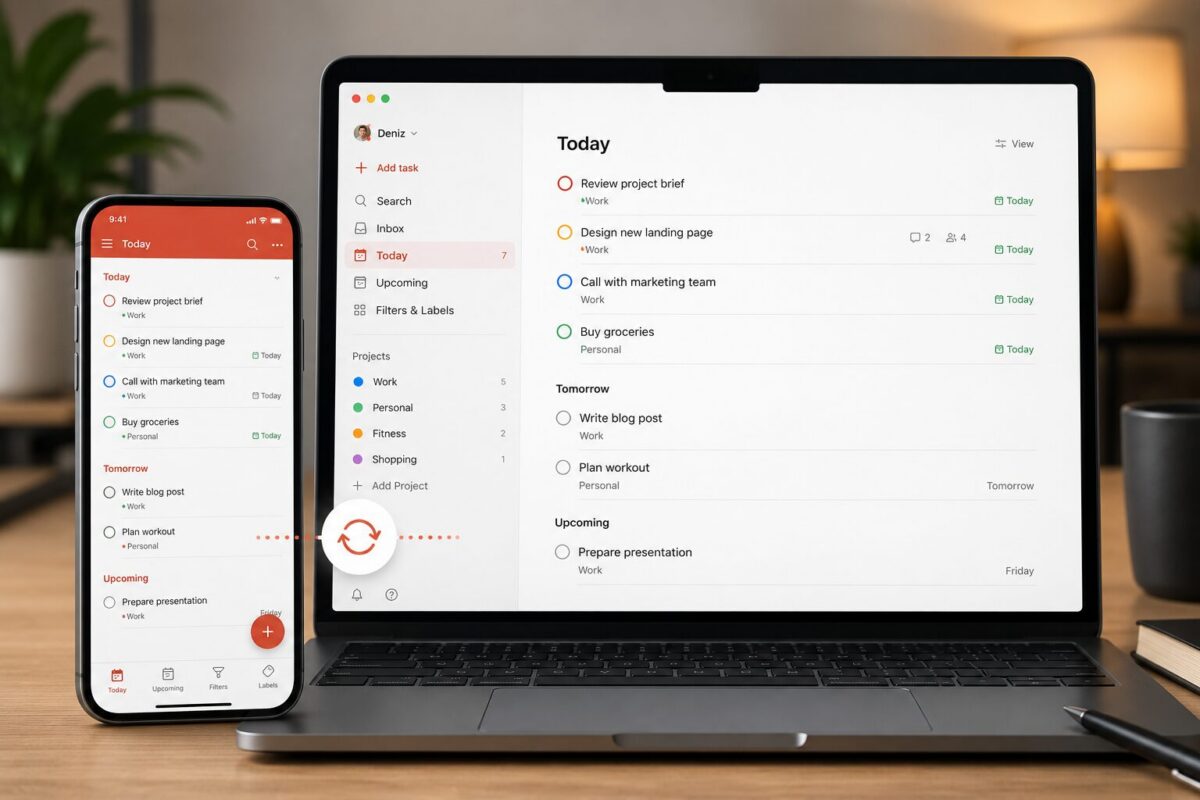
Todoist is a clean, focused task management app. The interface is uncluttered, and writing a task and adding a date, priority level and label takes a couple of seconds. Thanks to natural language input, typing “meeting tomorrow at 3pm” is enough; the app converts it into a date and time automatically.
Todoist’s strength is that it offers a four-level hierarchy (project, section, task, subtask), priority levels and more than a hundred custom filter views. A voice feature called Ramble can automatically turn a messy stream of spoken ideas into tidy tasks, and it supports a large number of languages.
In return, Todoist deliberately stays limited. It offers no complex project management tools such as Gantt charts, dependencies between tasks or a document layer. That makes it ideal for people who want simple task tracking, and inadequate for work that requires complex project coordination.
What Is Notion and Who Is It For?
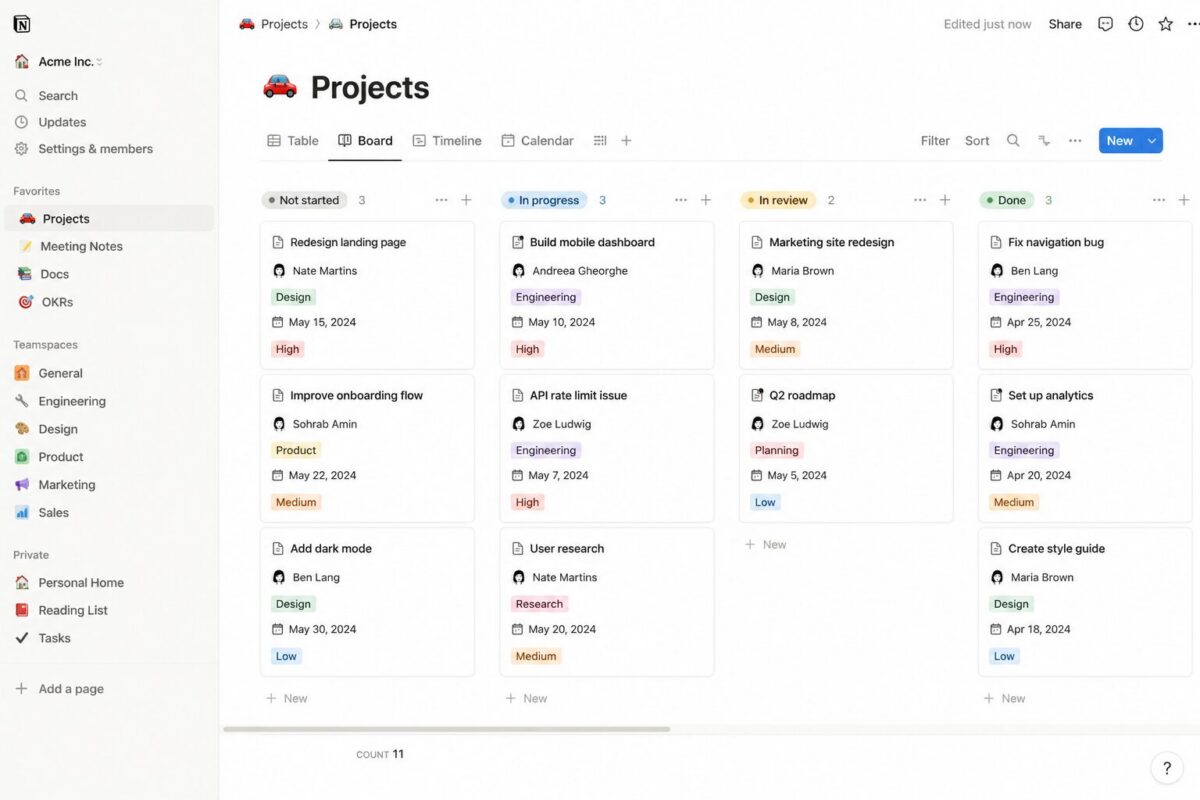
Notion is far more than a task manager. Notes, databases, projects, journals and tasks can all be brought together in the same workspace. Being able to drop a table, calendar, kanban board or a simple block of text into a page makes Notion flexible, but also makes it a tool that takes a little longer to set up.
Notion’s AI features have expanded noticeably in recent times. Writing text inside a page, summarising it and pulling action items out of meeting notes can all be done through the AI assistant.
Some of those features are billed on a credit basis, however, which can make costs harder to predict under heavy use. Performance can also drop on very large databases (thousands of records), which makes Notion a more comfortable choice for small and medium-sized personal use.
Pricing Comparison
Todoist’s free plan is limited to five active projects, and some features such as reminders and labels come with the paid plans. The Pro plan is roughly 4-5 dollars a month, and the Business plan around 6-8 dollars per user per month.
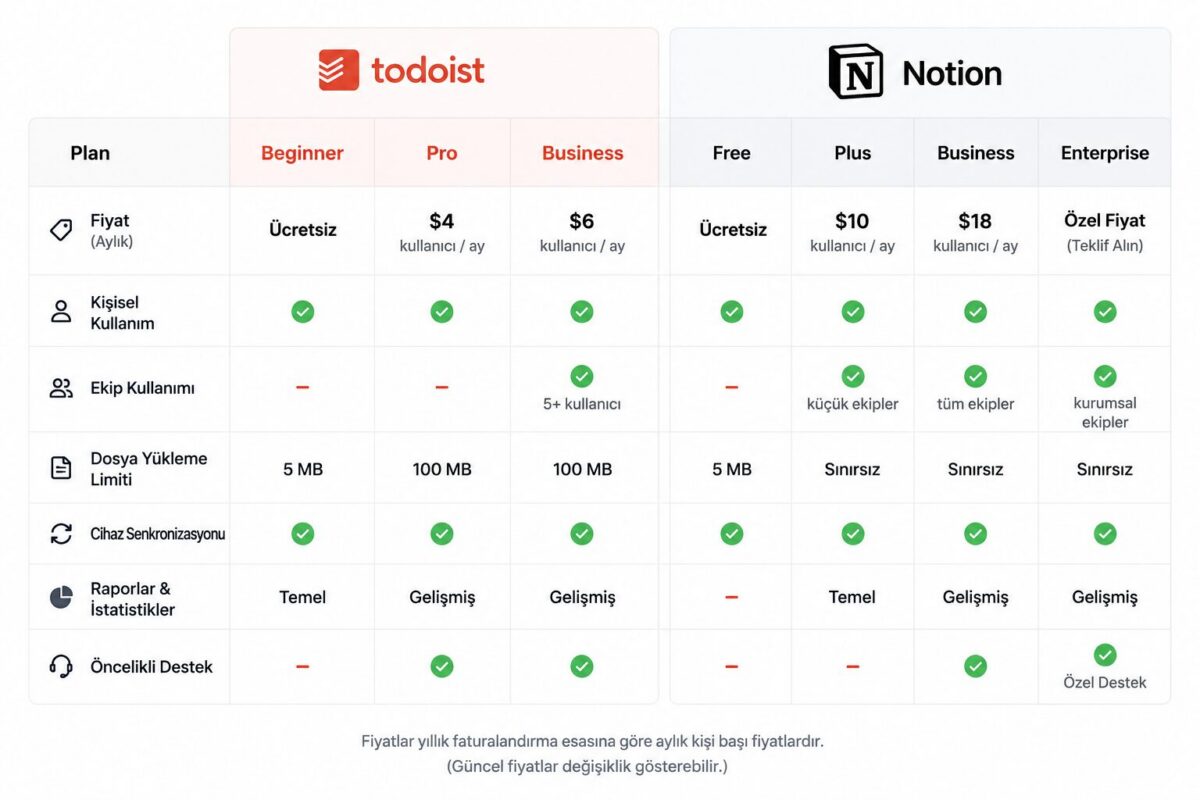
Notion’s free plan offers a fairly generous amount of room for personal use, but the AI features are billed separately. For team use and advanced features, paid plans range from 0 to 20 dollars per user per month.
The Fundamental Difference Between the Two Apps
Todoist works like a task list; Notion works like a workspace. Adding a task in Todoist takes three seconds, whereas in Notion the same job may first require setting up a database or page structure.
That is why people who want fast, simple task tracking gravitate towards Todoist, while those who want to organise their notes and projects visually go to Notion. Some users prefer to use both together: Todoist for daily tasks, Notion for long-term project and note management.
Integrations
Todoist integrates with more than eighty third-party tools, including Google Calendar, Outlook, Gmail, Slack and voice assistants, and it can even be connected to Notion. Notion, thanks to its open API, connects easily to automation tools and can allow various AI tools direct access to the workspace. In everyday use, calendar synchronisation is the most popular integration for both apps.
Practical Everyday Use Cases
Seeing the day’s tasks in a single list as part of a morning routine, turning repeating lists such as grocery shopping into templates, and adding household bill due dates as reminders are among the most common uses of these apps. On the Notion side, more comprehensive setups such as a month’s reading list, household budget tracking or travel planning can be kept on a single page.
Which App Should You Start With?
For short to-do lists, reminders and simple recurring tasks, starting with Todoist wastes less of your time. For anyone who wants to manage notes, projects and tasks together, starting with one of Notion’s ready-made templates is a more practical route than building a system from scratch.

Notion Nedir, Nasıl Kullanılır, Kullanım Alanları Nelerdir? | Notion Eğitim Seti 1 |
Notion'da Basit Yapılacaklar (To-Do) Listesi Oluşturmak
Todoist Nedir, Nasıl Kullanılır
Frequently Asked Questions
Both have a free plan. Todoist’s free plan is limited to five projects, while Notion’s free plan offers more room for personal use. Advanced features and AI tools generally come with paid plans or at extra cost.
Todoist is quicker to learn because it is an app focused on a single purpose. Notion’s flexibility takes a little more time and experimentation on first use.
Yes. Many users run Todoist for daily tasks and Notion for long-term project and note organisation, and the two apps can even be integrated with each other.
Yes. Both apps sync automatically across all devices, and a change made on one device appears on the others instantly.
Related Posts