

Standard Representation of a Washer

Matching the Inside Diameter
A washer’s inside diameter must match the diameter of the bolt or screw it will be used with to millimeter precision.
DIN Standards
Washer dimensions are generally determined according to German industrial standards such as DIN 125 and DIN 9021.
Effect of Thickness
A washer’s thickness directly affects the pressure distribution and load-carrying capacity of the joint.
Standard Washer Dimensions
Washers are represented as follows in the relevant standards, based primarily on the TS 8201 standard.

Flat washer TS 79/2 A-B d1 Fe
Type A (left) and Type B (right)

Washer dimensions for hex-head and square-head bolts (above)

Timber construction washer TS 79/12 A-B d1 Fe
(Type A left, Type B right)

Timber construction washer dimension table

Hardened washer TS 79/14 d1 Fe

Hardened washer dimension table for heavy steel construction (above)

U-Washer TS 79/18 d Fe

Washer dimensions for U and I sections (beams)

Spring washer TS 79/27 – B16 Spring steel


Washer dimension table for threaded studs
Related Questions
If the inside diameter is too large, the washer will wobble around the bolt and won’t distribute the load evenly. If it’s too small, it won’t fit over the bolt at all; this is why a precise fit is needed for the joint to seat firmly and correctly.
A thicker washer spreads the clamping force over a wider, more even surface, reducing localized pressure. A thin washer transmits the same load to a smaller surface, carrying a risk of crushing or deformation over time.
Related Posts
 Various Bolt Drawing Examples, Technical Drawings
 Spring Calculation Formula Table
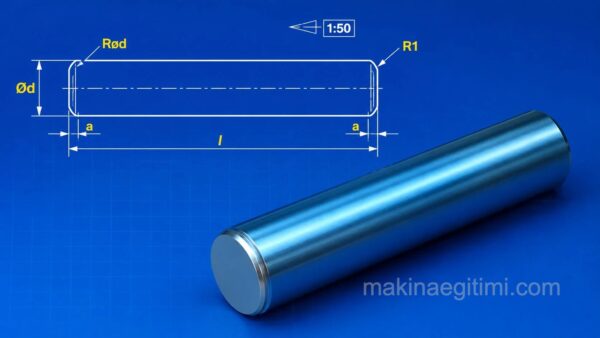 Pins and Pinned Joint Technical Drawings
 Journals and Their Types
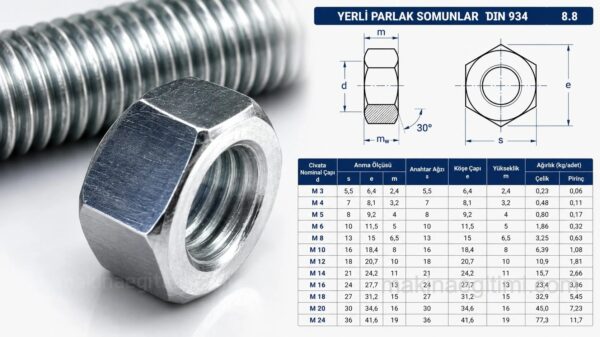 Nut Drawing and Dimension Tables
 Hex Nut and Washer Drawing Exercise
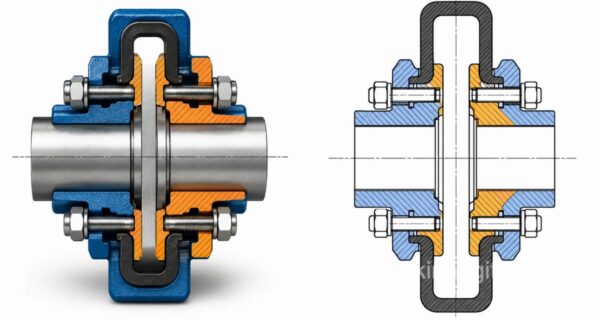 Couplings and Coupling Drawings in Technical Drawing
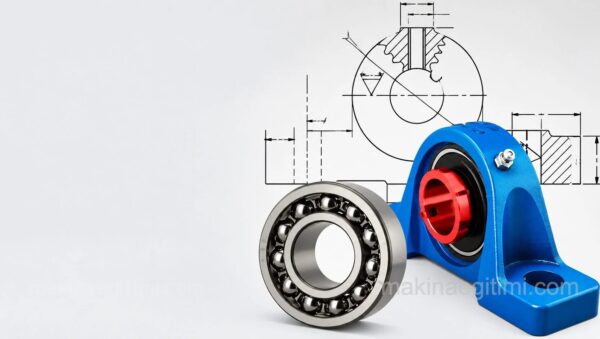 Bearings in Technical Drawing